

5 Key Elements of a Luxury Kitchen Design
Natural Stone Surfaces
Full-slab marble or quartzite countertops, waterfall-edge islands, and bookmatched backsplashes deliver a seamless, high-end appeal that instantly signals craftsmanship and quality.
Multifunctional Kitchen Island
A custom-designed centerpiece with a prep sink, seating, a wine fridge, and integrated charging stations—built to serve as the social and culinary heart of the kitchen.
Bespoke Cabinetry
Handcrafted from white oak, walnut, or lacquered finishes, with pull-out pantry systems and tailored interior organizers that make storage as beautiful as it is functional.
Layered Lighting
Three tiers working in harmony—ambient lighting from recessed fixtures or skylights, task lighting via under-cabinet LEDs, and accent lighting through pendants, chandeliers, or backlit stone panels.
Invisible Smart Technology
Panel-ready appliances, touchless faucets, smart ovens, circadian lighting systems, and wireless charging countertops — technology that improves daily life without ever drawing attention to itself.
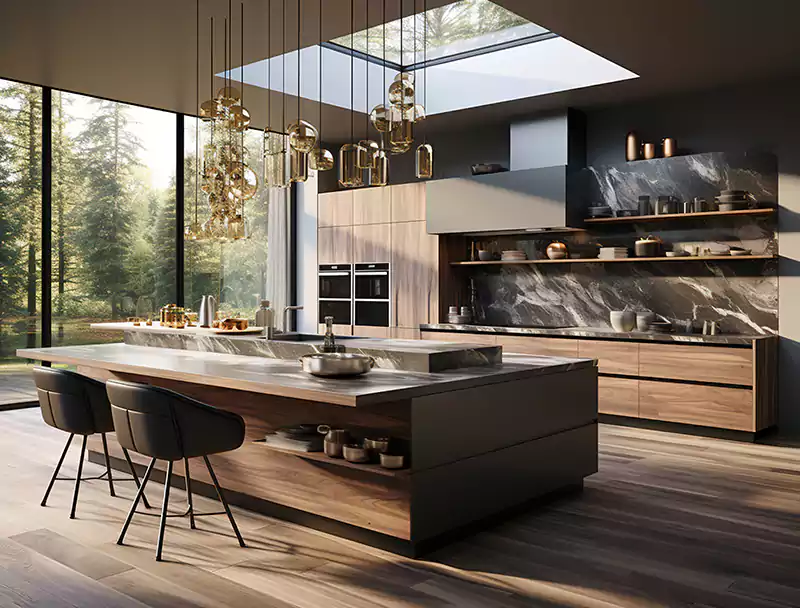
I’ve walked through many kitchens over the years—ones with jaw-dropping stone, ones stuffed with every appliance imaginable, and a few that somehow had all the “right” ingredients but still felt cold and unlived-in. Five key factors usually separate a kitchen that genuinely works from one that just looks good in photos: Not materials, not budget—decisions. How the island is positioned. We should consider whether the lighting has any warmth. Was the cabinetry built for your life or just for the look? These are the details that either pull a kitchen together or quietly undermine it, and they’re precisely what we’re digging into here.
Stone That Stops You in Your Tracks
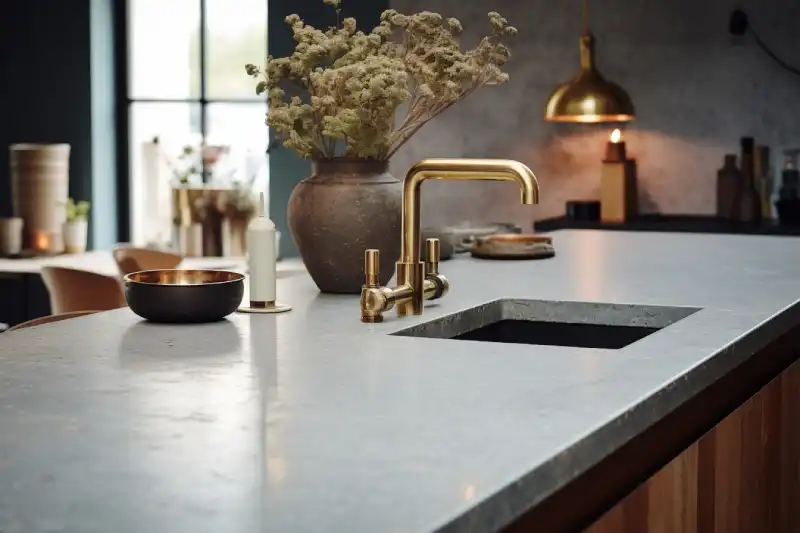
If there is one material that singularly defines luxury in a kitchen today, it is natural stone — and designers are using it with new confidence and drama. Gone are the days when a marble countertop was the beginning and end of the conversation. Now, the most spectacular kitchens deploy stone as an architectural element: full-slab backsplashes that eliminate grout lines entirely, waterfall-edge islands where the stone cascades uninterrupted to the floor, and bookmatched panels that mirror each other like an open book, their veins forming a symmetrical artwork.
Calacatta and Carrara marble remain perennial favorites for their ivory warmth and expressive gray veining, but designers are increasingly drawn to quartzite—a metamorphic stone that offers marble’s beauty with considerably more resilience—and even dramatic options like Nero Marquina, a deep black marble with bold white veining that makes every surface it touches feel like a statement. For those who love the aesthetic but need hard-wearing practicality, high-quality quartz engineered to mimic the look of natural stone delivers an almost indistinguishable result with far greater resistance to staining and etching.
The key shift is scale. Using one continuous slab across a generous island — rather than tiling or piecing it together — creates a sense of seamless, quiet opulence that immediately signals craftsmanship.
The Island, Reinvented as the Beating Heart of the Kitchen
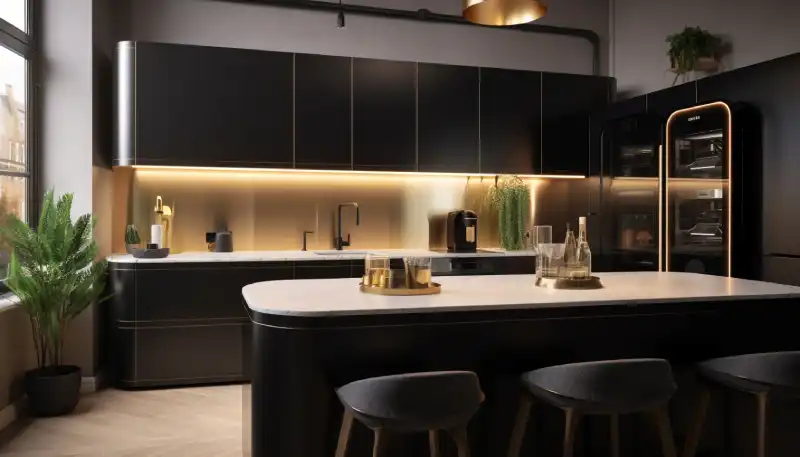
The kitchen island has undergone a quiet but radical transformation. What was once a secondary prep surface has become the undisputed centerpiece of modern luxury kitchen design—a multi-purpose hub where cooking, dining, conversation, and even work converge without friction.
In 2025, islands are being designed with the complexity of custom furniture. A thoughtfully planned island might house a prep sink on one end, a built-in wine refrigerator on the other, retractable charging stations flush-mounted into the surface, and deep drawers on one side paired with open shelving on the other for displaying cookbooks or ceramics. Seating is almost always part of the equation: a waterfall-edge overhang that accommodates barstools on one side creates a casual dining zone that makes breakfast feel like an event and dinner parties feel effortless.
Shape and proportion matter enormously here. Two islands—one for prep and cooking, the other for serving and socializing—are a growing choice in larger kitchens, creating distinct zones while maintaining an open, airy flow. For those working with a single island, the trend is toward generous length (often exceeding eight feet) with varied surface heights to create visual rhythm and functional zoning within the same piece. The island is no longer just furniture; it’s the architecture around which the rest of the kitchen is organized.
Bespoke Cabinetry: When Storage Becomes an Art Form
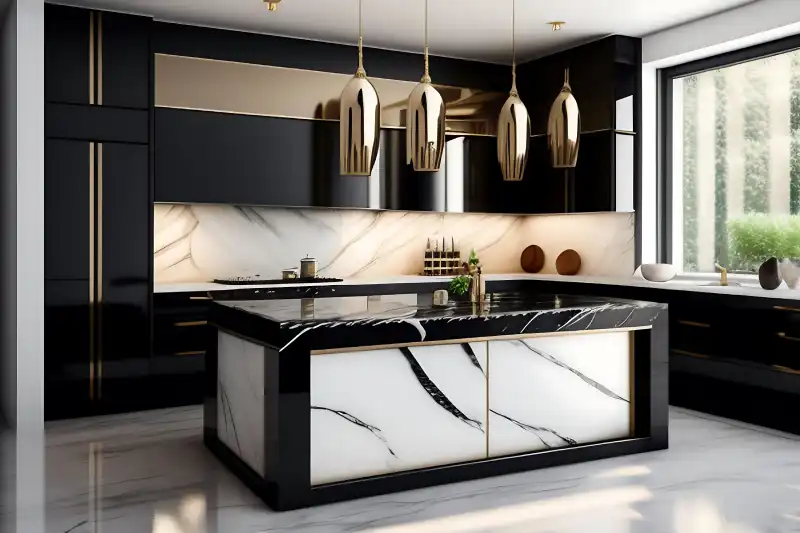
Custom cabinetry is the backbone of any truly luxurious kitchen, and the reason is straightforward: nothing off the shelf can account for the precise dimensions of your space, the particular way you cook, or the specific aesthetic vision you’re working toward. Bespoke joinery gives you all three.
The materials at play in high-end cabinetry have expanded well beyond painted MDF. White oak—with its distinctive, open grain and honey-warm tone—has become the wood of the moment, lending a sense of organic warmth that softens even the most architectural interiors. Walnut brings depth and richness, being particularly beautiful in matte finishes that resist fingerprints while feeling substantial to the touch. For those who prefer something more refined and graphic, lacquered cabinetry in deep, saturated colors—forest green, inky navy, or even matte black—is having a major moment, offering a jewel-box quality that photographs beautifully and feels dramatically sophisticated in person.
But luxury cabinetry isn’t merely about looks. The interiors matter just as much: pull-out pantry systems that make every tin and jar immediately visible, deep drawers with custom inserts for knives and utensils, appliance garages that hide the coffee machine and toaster behind a tambour door when not in use, and integrated drawer organizers tailored for specific collections of cookware. When storage is so thoughtfully designed, the kitchen stays effortlessly tidy — which is, in itself, a kind of luxury.
Layered Lighting: The Detail That Makes or Breaks Everything
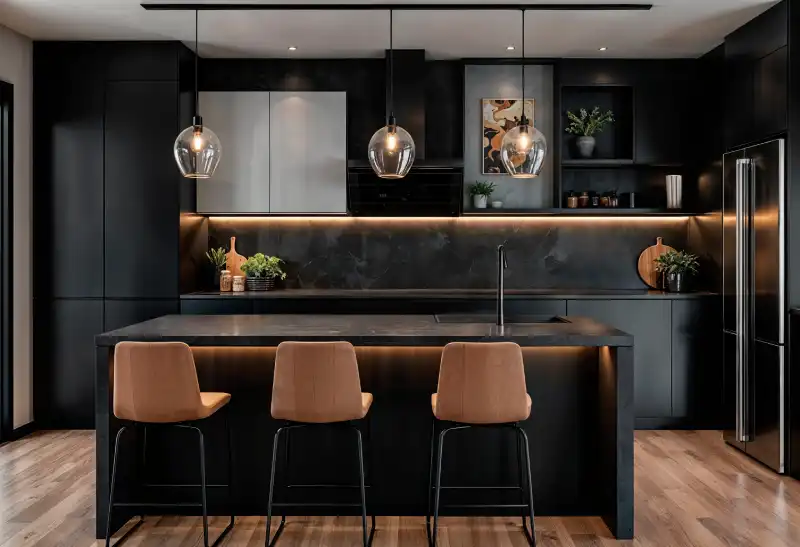
Walk into a beautifully designed luxury kitchen with poor lighting, and you’ll immediately sense something is wrong—even if you can’t name it. The light flattens the stone, washes out the cabinet colors, and makes the whole space feel institutional rather than inviting. Lighting in a high-end kitchen must be as carefully composed as any other design element, and the best schemes work in three distinct layers.
The first layer is ambient light: the general illumination that fills the room. Recessed ceiling fixtures, sometimes supplemented by a skylight or enlarged windows, form the base. The second layer is task lighting — directional, bright, and precise. Under-cabinet LED strips are the workhorses here, casting clean, even light onto countertops where chopping, reading recipes, and plating all happen. The third layer is accent and decorative lighting, which is where personality enters the picture. A pair of oversized, hand-blown glass pendants suspended over the island becomes sculptural focal points. A backlit stone panel above the range becomes a glowing artwork after dark. A statement chandelier above a kitchen dining table anchors the eating zone and signals that the space is not merely a cooking room but a place to linger.
Dimmer switches—on every circuit, without exception—are essential. The ability to dial an entire kitchen from bright and functional at breakfast to warm and atmospheric at dinner is one of the most transformative and underrated upgrades in any renovation.
Technology, Integrated Invisibly
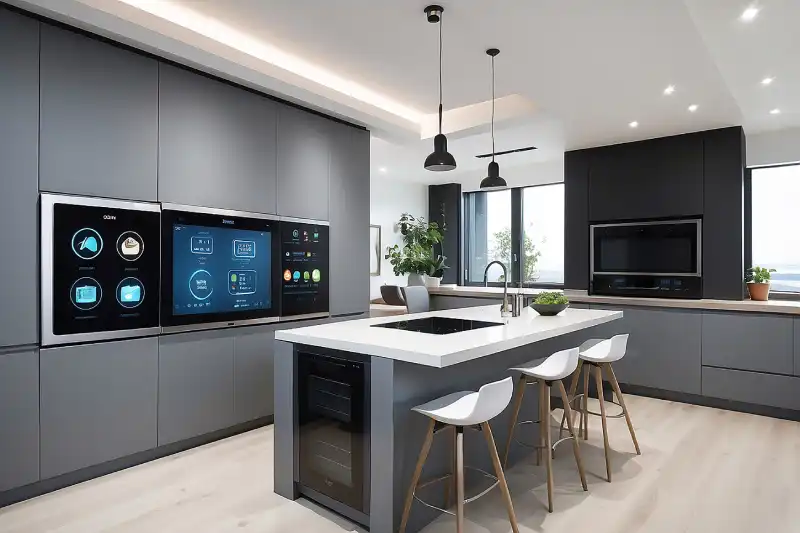
The smartest kitchens are, paradoxically, the ones where you notice the technology least. In luxury design, the goal is never to make a kitchen look like a showroom for gadgetry—it is to make the cooking and living experience feel almost effortlessly smooth, as if the space were quietly anticipating your needs.
This starts with panel-ready appliances. Refrigerators, dishwashers, wine coolers, and even some range hoods are now available with custom panel fronts that match your cabinetry exactly, allowing them to disappear into the design completely. The effect is a kitchen that reads as a single, cohesive composition rather than a collection of appliances surrounded by storage. For those who cook seriously, professional-grade ranges from brands like Wolf, La Cornue, or Gaggenau bring restaurant-level precision to the home kitchen—and their bold, architectural forms are often left deliberately visible as design focal points rather than hidden away.
Beyond appliances, true kitchen intelligence shows up in subtler ways: touchless faucets that activate when your hands are full of flour, smart ovens that can be preheated remotely via your phone, circadian lighting systems that shift in warmth and intensity throughout the day to support natural rhythms, and integrated water filtration systems that ensure every glass that leaves the kitchen tastes exceptional. Pop-up electrical outlets that retract flush into the island surface when not in use, and wireless charging panels embedded into countertops, solve the perennial problem of device management without adding a single visible cable to the composition.
The through line of all of this is intentionality: technology that earns its place by genuinely improving life in the kitchen rather than complicating it.
The Bigger Picture: Designing for the Way You Actually Live
The most important lesson from every beautiful luxury kitchen is also the simplest: design for yourself, not for an imaginary guest. The details that matter are the ones that make your morning coffee ritual feel calmer, your weeknight cooking feel more joyful, and your weekend dinner parties feel genuinely effortless. Premium materials age gracefully. Bespoke cabinetry fits your life like a tailored suit. Thoughtful technology removes friction without demanding attention. And the stone that you chose because it moved you will continue to do so for decades.
The luxury kitchen is no longer about displaying wealth—it is about investing in the quality of daily life. And that, ultimately, is a far more compelling kind of opulence.
Everything You Want to Know About Luxury Kitchen Design
What makes a kitchen look luxurious?
A kitchen looks luxurious when high-quality materials, thoughtful storage, and layered lighting work together as a unified whole. Natural stone countertops — particularly marble, quartzite, or quartz — paired with bespoke cabinetry and carefully placed pendant lighting create depth and sophistication that off-the-shelf finishes simply can’t replicate. Equally important is what you don’t see: concealed appliances, tidy interiors, and clutter-free surfaces make the space feel effortlessly polished.
What is the best stone for a luxury kitchen countertop?
The most popular choices are Calacatta or Carrara marble for their classic veining and warmth, quartzite for its marble-like beauty with greater durability, and engineered quartz for a low-maintenance alternative that closely mimics natural stone. For dramatic impact, high-end designs increasingly favor Nero Marquina—a bold black marble with white veining. The best choice depends on how heavily you use the kitchen, since acidic ingredients can etch natural marble.
How big should a luxury kitchen island be?
For a luxury kitchen, an island of at least six to eight feet in length allows you enough room to create distinct functional zones—prep on one end, seating on the other. In larger kitchens, a dual-island layout is becoming the preferred choice, with one island dedicated to cooking and prep and a second for serving and socializing. The key is proportion: the island should feel generous relative to the room without blocking the natural flow around it.
What type of cabinetry is used in high-end kitchens?
High-end kitchens almost always feature fully custom or semi-custom cabinetry, built specifically for the space rather than pulled from a standard range. Popular materials include white oak (for warmth and natural texture), walnut (for richness and depth), and lacquered finishes in deep colors like forest green, navy, or matte black. The interiors are as important as the facade—pull-out pantry shelving, knife inserts, appliance garages, and drawer organizers are what separate truly functional luxury from cabinetry that simply looks exceptional.
How should you light a luxury kitchen?
The most effective luxury kitchen lighting uses three layers working together. Ambient lighting — recessed ceiling fixtures or skylights — provides the base level of illumination. Task lighting, typically LED strips mounted under wall cabinets, ensures countertops are well-lit for cooking. Accent and decorative lighting, such as statement pendants over the island or a chandelier above the dining zone, add atmosphere and personality. Every circuit should be on a dimmer so the kitchen can shift from bright and functional during the day to warm and intimate at night.
Are smart appliances worth it in a luxury kitchen?
Yes — but only when they’re integrated invisibly. The best smart kitchens don’t look like technology showrooms. Panel-ready appliances that match the cabinetry, touchless faucets, remotely preheated ovens, and circadian lighting systems genuinely improve the day-to-day experience without adding visual clutter. The measure of excellent kitchen technology is whether you notice it at all: if it’s doing its job well, it simply removes friction from cooking and living rather than demanding your attention.
What is the difference between a luxury kitchen and a standard kitchen?
Beyond price, the real difference lies in customization, material quality, and design intent. A standard kitchen uses stock cabinetry, generic countertop materials, and off-the-shelf appliances. A luxury kitchen is built around the specific dimensions of the space, the habits of the people who use it, and a considered aesthetic vision. Bespoke joinery, premium natural stone, professional-grade or panel-ready appliances, and a layered lighting scheme are the hallmarks—but ultimately, a luxury kitchen is one designed for the way you actually live, not for how it photographs.
