
Italian kitchen cabinets are defined by five core qualities: a minimalist aesthetic with flat-panel doors, premium materials like walnut and high-gloss lacquer, smart built-in functionality, highly customizable finishes and hardware, and a timeless design that holds its value over time. Popular styles include high-gloss, matte, handleless, wood veneer, two-tone, and glass-front cabinets.
Ask most interior designers what single upgrade makes the most significant difference in a luxury kitchen, and Italian cabinetry comes up again and again. It’s not just the look — it’s the way quality materials and smart engineering combine into something that holds up beautifully over time. If you’re working on a high-end build or a full renovation, these cabinets tend to raise the bar on the whole project.
In this guide, we’ll walk through the defining characteristics of Italian kitchen cabinets, key design directions worth exploring, and some honest tips on making them work in real luxury projects.
Characteristics of Italian Kitchen Cabinets
So what actually makes Italian kitchen cabinets different? The short answer is quite a bit. Here’s what consistently sets them apart:
Minimalist Aesthetic
Restraint is baked into Italian design culture. Flat-panel doors, calm surfaces, no unnecessary detailing — the approach strips the kitchen back to what actually matters. In practice, this approach makes the cabinets a natural fit for contemporary and modern interiors where a sense of visual order is the whole point.
Premium Materials
The range of materials is broad—walnut, oak, high-gloss lacquer, glass—but what ties them together is genuine quality. These aren’t finishes that start showing their age in a few years. That durability is a big part of what justifies the investment and keeps the cabinets looking right long after installation.
Innovative Functionality
Beautiful cabinets that are awkward to use get old fast. Italian manufacturers seem to understand this intuitively—soft-close hinges, pull-out shelves, hidden compartments, built-in lighting. These aren’t add-ons; they’re part of how the cabinets are designed from the start. Function and appearance aren’t competing priorities here.
Customizable Designs
For designers, this is probably the most useful thing about Italian cabinetry: it bends to the brief. Unusual finishes, bespoke hardware, and custom storage configurations—there’s genuine flexibility built into the offering, which makes it far easier to produce something that feels tailored to a specific client rather than pulled from a catalog.
Timeless Appeal
Kitchens that follow trends too closely tend to look dated within a few years. Italian cabinetry sidesteps that problem — the design language is contemporary enough to feel current but grounded enough to age gracefully. For clients spending serious money, knowing the kitchen will still look connected a decade from now is genuinely reassuring.
Popular Italian Kitchen Cabinet Design Ideas
There’s no shortage of directions you can take for Italian kitchen cabinetry. Here are some of the most effective approaches for luxury projects:
High-Gloss Modern Kitchen Cabinets
Gloss reflects light in a way that genuinely changes how a room reads. Even a kitchen that isn’t particularly large can feel airier with high-gloss fronts. White or off-white paired with stainless appliances and a marble backsplash is a combination that’s hard to get wrong—it’s clean, it’s sharp, and it photographs well too, which clients tend to appreciate.
Matte Finish Elegance
Matte is worth considering when a client finds high-gloss too clinical. The finish absorbs light rather than reflecting it, which gives the whole kitchen a softer, more grounded quality. Soft grey, taupe, and deep navy all work well—they’re rich without being overpowering, and they sit comfortably in transitional interiors as much as contemporary ones.
Handleless Cabinets
Take the handles away, and something interesting happens to a kitchen—it suddenly looks more resolved, like there’s nothing left to add or remove. Push-to-open mechanisms and integrated groove pulls keep it fully usable without breaking the surface. It’s a detail that clients often don’t notice consciously but always respond to.
Wood Veneer Warmth
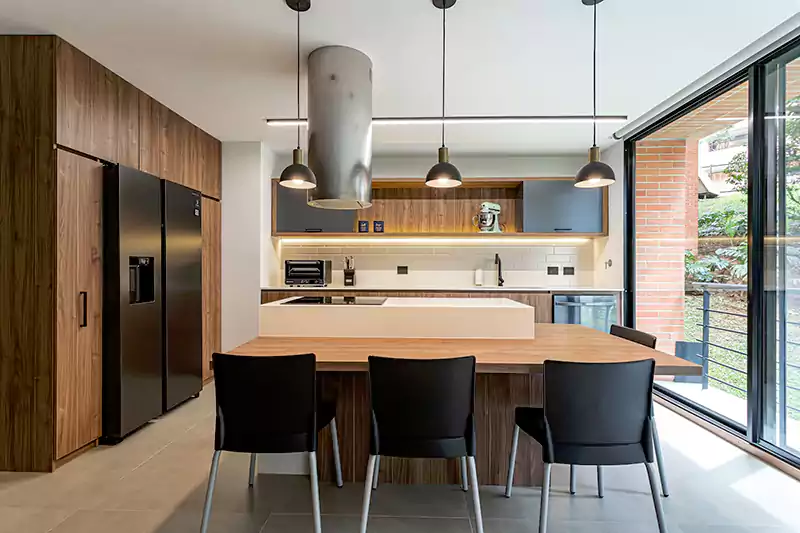
Some clients find all-lacquer kitchens a bit cold, and that’s where wood veneer earns its place. Walnut in particular has a grain and depth that no painted finish can replicate. Pair it with a honed stone worktop and some brushed metal, and the result feels expensive without trying too hard.
Two-Tone Designs
Mixing finishes across upper and lower cabinets is one of the more reliable ways to add visual interest without making the space feel busy. Dark wood lowers with a lighter upper, or matte black below against white gloss above—the contrast gives the eye something to move between. The key is keeping the tones deliberate rather than arbitrary.
Open Shelving Accents
Wall-to-wall closed cabinetry can make a kitchen feel more like a storage room than a living space. A few open shelves—for ceramics, glassware, and the things a client actually uses and likes looking at—change that entirely. It’s one of the simpler ways to make a kitchen feel personal rather than showroom-ready.
Integrated Appliances
A freestanding fridge or a dishwasher front that doesn’t match the cabinets can pull focus in all the wrong ways. Panel-matching appliances—the fridge, dishwasher, and occasionally even the microwave—let everything recede into the background so the kitchen reads as one complete thing rather than a collection of separate purchases.
Glass-Front Cabinets
If the client has dishware worth showing off, glass-front cabinets are an easy win. Frosted glass keeps things subtle — you get the lightness without full visibility. Clear glass is more of a statement, but when the shelving is well-styled, it works beautifully. Either way, it’s a detail that solid doors simply can’t offer.
Tips for Incorporating Italian Kitchen Cabinets into Luxury Interiors
Choosing the right cabinets is just one part of the overall process. How you incorporate them into the broader design is crucial. A few things to remember:
Choose the Right Color Palette
Color sets the mood before anything else does. Whites, beiges, greys, and blacks are the reliable workhorses — they sit comfortably with Italian cabinetry’s clean lines and let the material quality speak. If the client is after something more dramatic, deep jewel tones or earthy terracottas can add real character without pulling the space in too many directions.
Focus on Lighting
Don’t underestimate what lighting does for cabinetry. Under-cabinet LEDs are worth specifying on almost every project — they make countertops more functional during the day and add a warmth to the kitchen at night that overhead lighting alone never quite achieves. Island pendants, meanwhile, pull double duty: task lighting that also looks considered.
Opt for High-End Countertops
Countertops are where the cabinet design meets the surface, so the material matters. Marble is the obvious choice for luxury kitchen interiors, but quartzite and granite are worth a serious look—both are harder-wearing than marble and still look exceptional. Whichever you go with, the thickness and edge profile can make a real difference to the overall feel.
Integrate Smart Storage Solutions
Storage is one of those things clients notice most after they’ve been living in a kitchen for a while. Pull-out drawers, corner carousels, vertical racks, built-in organizers — none of it is glamorous, but all of it contributes to a kitchen that actually functions as well as it looks. That matters to high-end clients just as much as the finish does.
Add Statement Hardware
Hardware is a small detail with an outsized effect. Brushed brass reads warm and current; matte black is sharper and more minimal; polished chrome leans classic. The key is consistency — mixing too many finishes across a kitchen tends to fragment the design. Pick one and commit to it throughout.
Create an Open-Plan Layout
Where the floor plan allows, opening the kitchen into the dining and living areas tends to work well with Italian cabinetry. The clean lines carry across zones naturally, and the kitchen becomes somewhere people actually want to spend time rather than a room that gets closed off after cooking.
Why Choose OPPOLIA for Your Luxury Kitchen Projects?
Sourcing is often the part of a luxury kitchen project that creates the most friction. OPPOLIA takes a lot of that off the plate — their turnkey whole-house approach means you’re not coordinating between multiple suppliers for different elements, which saves time and reduces the margin for error.
Over 10 years in the business and more than 10,000 projects completed across 100+ countries — that kind of track record tends to show in how the process runs. From kitchen cabinets through to interior doors, OPPOLIA covers enough ground to work as a genuine single-source partner for design professionals.
Conclusion
Italian kitchen cabinets keep coming up in luxury residential work for good reason — they deliver on both the visual side and the practical side without forcing a compromise between the two. If you get the specification right, clients tend to talk most about the kitchen.
High-gloss or matte, handleless or hardware-led, wood veneer or lacquer — the options give you real room to work with. Nail the color palette, think carefully about lighting, and make sure the countertop and hardware choices reinforce rather than compete with the cabinets. Everything else follows from there.
Are you working on a luxury kitchen and want to explore what Italian cabinetry could look like for your project? OPPOLIA has the range and experience to help. Reach out today for a free quote.
FAQs: Italian Kitchen Cabinets for Luxury Interiors
What makes Italian kitchen cabinets different from regular cabinets?
Italian kitchen cabinets stand out for their combination of premium materials, minimalist design, and built-in functionality. Unlike standard cabinetry, they typically feature soft-close mechanisms, integrated lighting, and finishes—from high-gloss lacquer to solid walnut veneer—that are built to last decades rather than years.
Which Italian kitchen cabinet style works best for a luxury interior?
It depends on the overall design direction. High-gloss cabinets suit contemporary, light-filled spaces. Matte finishes work well in transitional interiors where texture matters more than shine. Wood veneer adds warmth to kitchens that might otherwise feel too clinical. For a dramatic effect, two-tone combinations—dark lowers with lighter uppers—add depth without complicating the space.
Are handleless Italian kitchen cabinets practical for everyday use?
Yes. Handleless cabinets use either push-to-open mechanisms or integrated groove pulls, both of which are reliable and easy to use daily. The main benefit beyond aesthetics is that there are no handles to catch on clothing or collect grease—something clients with young families often appreciate more than they expect.
What countertop materials pair best with Italian kitchen cabinets?
Marble is the classic pairing, particularly with white or neutral cabinets. For a harder-wearing alternative, quartzite offers a similar look with better resistance to staining and scratching. Granite works well with wood veneer cabinets, where the natural variation in both materials tends to complement each other rather than compete.
Can Italian kitchen cabinets be customized to suit a specific design brief?
Customization is one of the strongest points of Italian cabinetry. Finishes, hardware, dimensions, internal storage configurations, and panel colors can all be specified to match a client’s brief. This makes them particularly well-suited to bespoke luxury projects where off-the-shelf solutions don’t cut it.
How do I make a luxury Italian kitchen feel less cold or sterile?
The most effective fix is introducing natural materials—a wood veneer island, open shelving with ceramics, or a honed stone worktop rather than a polished one. Warm lighting, particularly under-cabinet LEDs set to a lower color temperature, also makes a significant difference to how the space feels after dark.
Are Italian kitchen cabinets worth the investment for a luxury home?
Generally, yes. The materials and build quality used in Italian cabinetry hold up far better over time than mid-market alternatives, which means lower replacement and maintenance costs down the line. They also tend to age well visually — the design language doesn’t date the way trend-driven cabinetry often does, which protects the value of the overall interior.