

In January 2024, I did something impulsive. Dropped $1,200 on gym equipment after watching one too many workout videos at midnight. Ordered a power rack, barbell, weights, bench—the whole setup. It arrived three weeks later in boxes that barely fit through my garage door.
Know how many times I used it in the first month? Twice. Both times for about fifteen minutes before I got bored and went back inside.
Fast forward to now, and that garage gym gets used five days a week minimum. What changed wasn’t the equipment—it’s the same stuff sitting in the same spot. What changed was figuring out the difference between building a gym that looks good and building one that actually fits into real life.
Let me save you from making my mistakes.
Start With Space Reality, Not Instagram Dreams
My initial plan involved a full power rack, Olympic platform, rowing machine, and assault bike. I’d seen this setup in some fitness influencer’s garage and thought, “Yeah, I need that.”
Problem: My garage is 240 square feet. With my car in there (because, you know, I actually park my car in my garage), I had maybe 120 square feet of usable workout space. A power rack alone eats up about 50 square feet when you factor in the barbell extending out.
How much space do you actually need for a home gym? Measure your available space first, then subtract 20% for an “oops, I forgot about needing to walk around stuff” buffer. A minimal setup (adjustable dumbbells, a bench, and resistance bands) works in 50 square feet. A full rack setup needs 80-100 square feet minimum. Cardio machines add another 20-30 square feet each.
My friend Dave has a one-bedroom apartment. His “gym” is a corner of his living room with a doorway pull-up bar, adjustable dumbbells, and a yoga mat that rolls up. Takes up maybe 6 square feet when stored. He’s in better shape than I am. Space isn’t the limiting factor—using what you have is.
Check your ceiling height too. I’m 6’2″, and my garage ceiling is 8 feet. Pull-ups are… tight. You want at least 92 inches floor-to-ceiling if you’re doing overhead work or pull-ups comfortably.
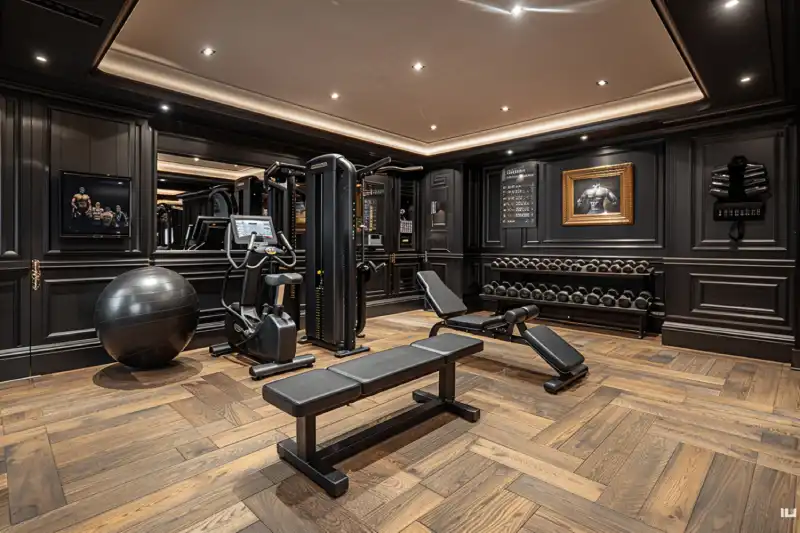
Flooring Matters Way More Than You Think
Three months in, I dropped a 45-pound plate. It bounced, cracked a floor tile, and nearly hit my foot. That’s when I learned about gym flooring the hard way.
Concrete or regular flooring won’t cut it if you’re doing any serious lifting. You need something that absorbs impact, protects your actual floor, and ideally dampens sound (your downstairs neighbors or family will thank you).
I went with rubber stall mats from a farm supply store—three-quarters of an inch thick and 4×6 feet each. They cost about $50 per mat. Are they the prettiest thing ever? No. They smell like rubber for about a week. But they’re indestructible and actually cheaper than most “gym flooring.”
What’s the best flooring for a home gym? Rubber mats (3/4″ thick minimum) for lifting areas, foam tiles for yoga/stretching zones, or vinyl for multi-purpose spaces. Skip carpet—it’s unstable for lifting and impossible to clean. Interlocking foam is fine for bodyweight work but won’t hold up under heavy weights.
If you’re renting or can’t install permanent flooring, modular rubber tiles work. They’re not as stable as glued-down options, but they’re removable and protect the floor underneath.
Buy Less Equipment, Use It More
This is where I wasted the most money initially. I bought:
- Power rack
- Olympic barbell
- 300 pounds of plates
- Adjustable bench
- Dumbbells (multiple sets)
- Resistance bands
- Foam roller
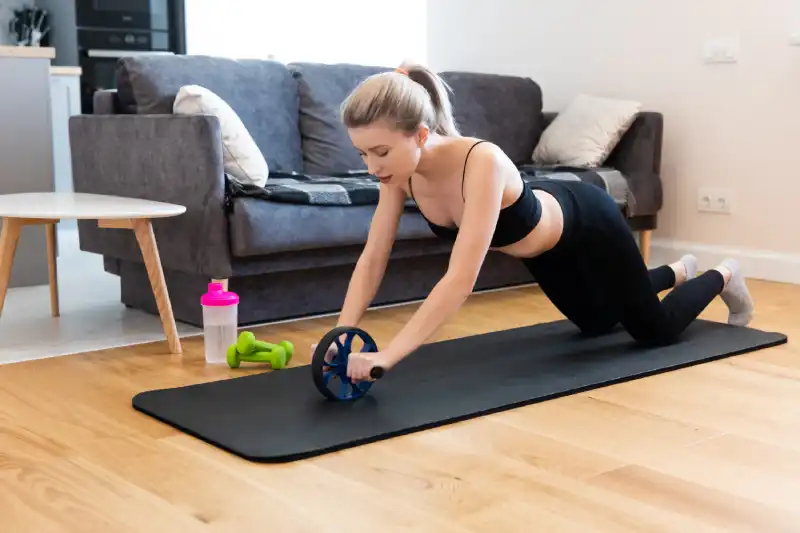
- Ab wheel
- Kettlebells
- Jump rope
- Yoga mat
You know what I actually used regularly for the first six months? The barbell, bench, and some of the plates. Everything else collected dust.
What equipment should you actually start with? Depends entirely on what you’ll genuinely use. If you’ve never kettlebell trained, don’t buy kettlebells “just in case.” Start with the absolute minimum for your preferred workout style, use it consistently for three months, then add one piece at a time based on actual gaps you’ve identified.
My minimalist friend Sarah has adjustable dumbbells (5-50 pounds), a flat bench, and resistance bands. That’s it. She does full-body workouts four times a week and has for three years. Her setup cost maybe $400 total.
The Instagram-worthy garage gyms with every piece of equipment known to fitness? Most of that stuff isn’t getting used. It’s just taking up space and making the owner feel guilty.
Natural Light Changes Everything (Or Accept That It Won’t)
I’ve worked out in my naturally lit garage and in my basement with fluorescent tubes. The difference is dramatic.
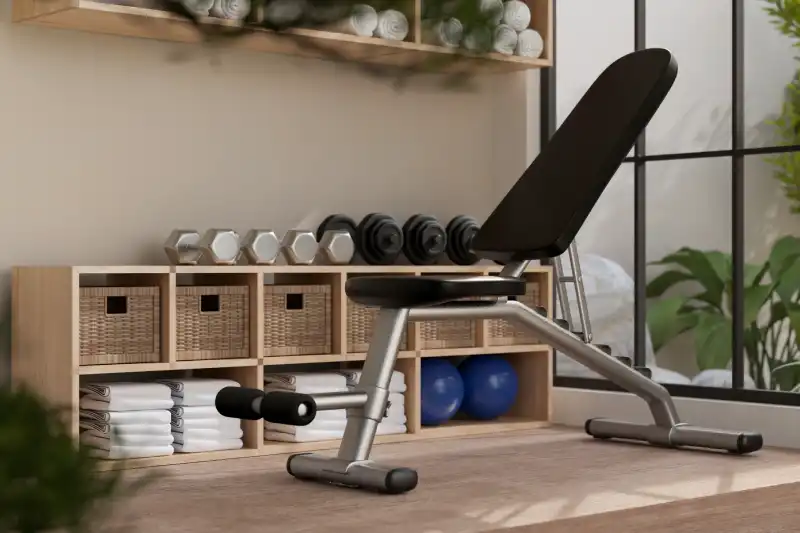
Natural light makes working out feel less like a chore. My garage has one window, and I specifically positioned my bench so I’m facing it while lifting. Sounds minor, but staring at a concrete wall versus seeing daylight and trees outside? Totally different mental experience.
Should you prioritize natural light for your home gym? If you have the option, absolutely. It improves mood and energy and makes the space feel less dungeon-like. But if your only option is a windowless basement, invest in good lighting instead—bright, even LED panels beat dim overhead bulbs.
My basement gym (yeah, I have two setups now, don’t judge) has zero natural light. I installed LED shop lights that mimic the daylight spectrum. It’s not the same as windows, but it’s way better than the depressing yellow overhead light that was there before.
Some people don’t care about this at all. My brother works out at 5 AM in his dark garage with one clip light. To each their own. But if you find yourself avoiding your gym because “it’s depressing in there,” lighting might be why.
Storage Keeps You From Hating Your Space
Month two, my garage was chaos. Plates are scattered on the floor, resistance bands are tangled in a corner, and the foam roller is blocking the door. I spent more time moving stuff out of the way than actually working out.
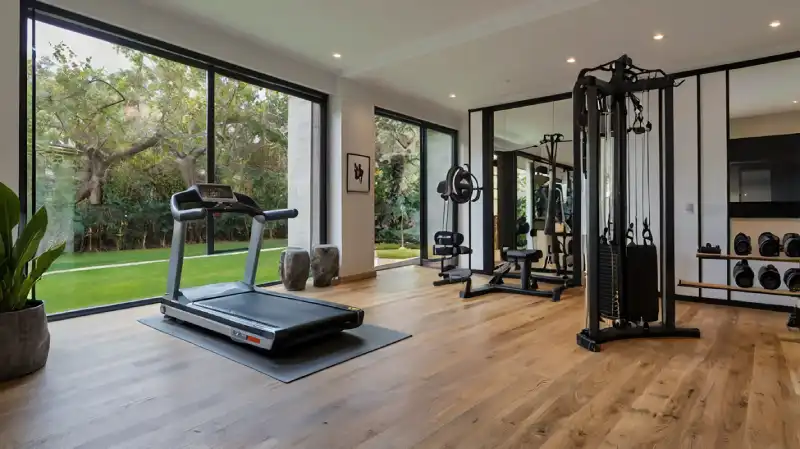
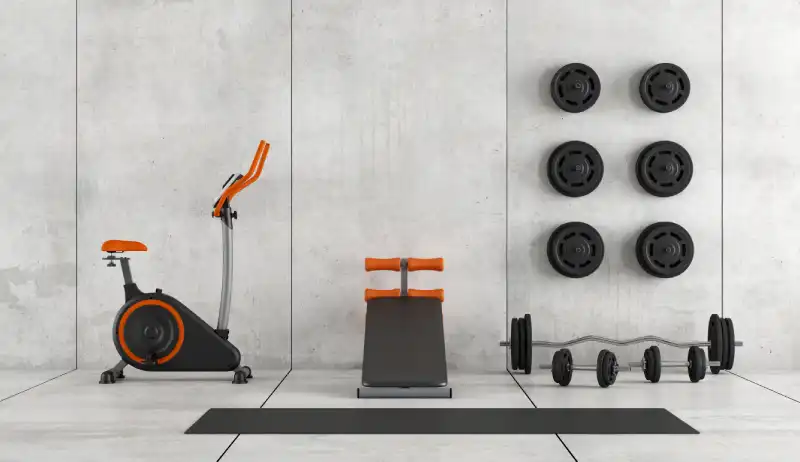
Vertical storage changed everything. Wall-mounted plate holders, hooks for bands and jump ropes, and a small shelf for smaller items. Suddenly I could walk into the gym, grab what I needed, and start working out instead of playing equipment Tetris.
How do you organize a home gym efficiently? Wall-mounted storage for everything possible (plates, bars, bands, accessories). Keep the floor clear except for large items like benches or racks. Group items by workout type—all cardio stuff together, all strength stuff together. If you haven’t used something in a month, it doesn’t belong in your prime storage spots.
The goal is that you can set up for any workout in under two minutes. If it takes longer than that, you’ve got a storage problem that’s creating friction between you and exercising.
Mirrors are storage too, weirdly. One large mirror on the wall serves double duty—form checking during lifts and making the space feel bigger. My 8×4-foot mirror cost $60 from a home improvement store. Mounted it myself in about an hour.
Temperature Control Is Non-Negotiable In Some Climates
Phoenix, Arizona, checking in. Summer garage temperatures hit 115°F. I tried working out in there once. Made it twelve minutes before I felt dizzy and had to go inside.
I added a portable AC unit ($300) and a fan. Not perfect, but it keeps the space usable from June through September. In winter, I added a space heater for early morning workouts when it’s 40°F in there.
Do you need climate control for a home gym? It depends on where you live. Moderate climates might get away with just fans. Extreme heat or cold requires active climate control unless you enjoy either heat exhaustion or frozen equipment. Basements usually stay more temperature-stable than garages.
My friend in Minnesota has his gym in an unheated garage. Uses it year-round, just wears more layers in winter. Says the cold metal barbell in January builds character. I think he’s insane, but he’s consistent with it, so who am I to judge?
If the budget’s tight, a good fan makes a shocking difference. Air circulation matters almost as much as temperature itself.
Smart Equipment Is Great Until It’s Not
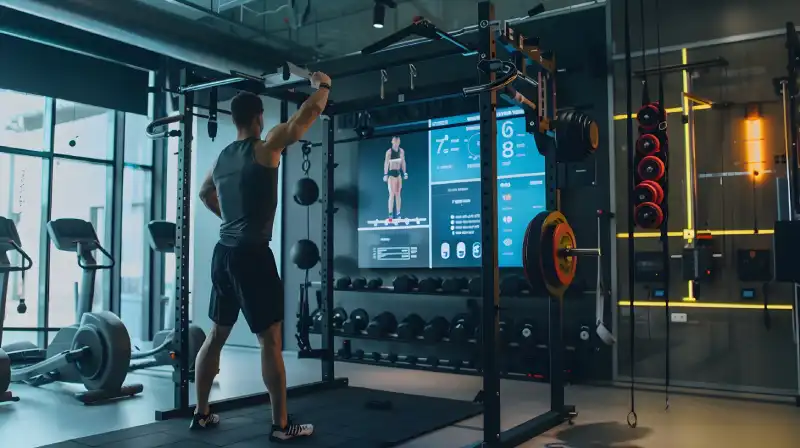
I almost bought a Tonal—one of those fancy wall-mounted digital resistance systems. $4,000 plus $49/month subscription. It looks sleek, takes up minimal space, and has all these guided workouts.
Then I talked to three people who owned one. Two loved it. One said it broke after 18 months and customer service was a nightmare. The subscription model meant he’d paid almost $1,500 in monthly fees on top of the initial cost.
Should you buy smart/connected gym equipment? Only if you’ll actually use the connected features and you’re okay with ongoing subscription costs. Many people buy smart equipment for the coaching features, use them for three months, and then just use the equipment without the subscription. At that point, you’ve paid a massive premium for features you’re not using.
That said, some people thrive with connected coaching and the accountability of tracking. My sister-in-law has a Peloton bike and uses it religiously because the classes keep her motivated. For her, it’s worth every penny.
I went with dumb equipment and free YouTube workout videos. Saves me probably $600/year in subscriptions. But I also have to be more self-motivated.
Cable Systems Add Versatility Without Eating Space
Six months in, I realized I was missing a lot of pulling movements. Pull-ups were fine, but I wanted cable work—rows, tricep pushdowns, face pulls.
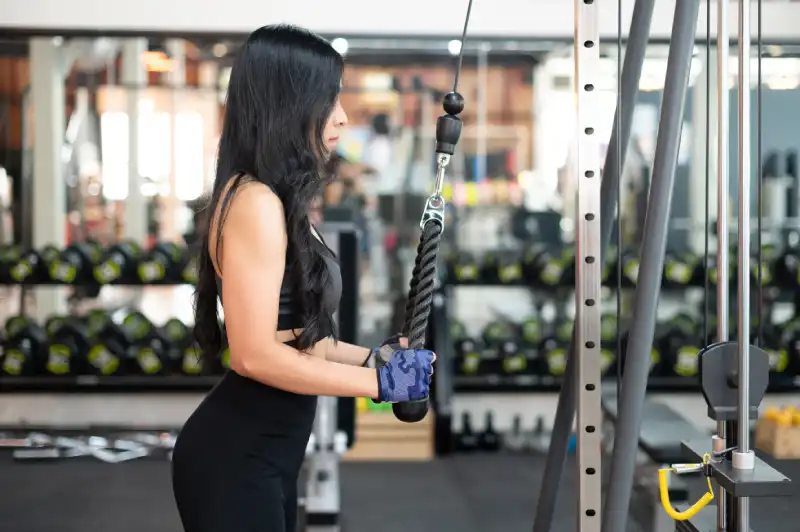
A full cable machine would’ve cost $2,000+ and taken up a quarter of my gym. Instead, I got a pulley system that attaches to my power rack. $150. Adds dozens of exercises without additional floor space.
Are cable systems worth it for home gyms? If you’re doing any serious strength training, yes. They enable exercises that are hard or impossible with just free weights. Wall-mounted or rack-mounted systems give you cable functionality without the footprint of a full cable machine.
You can also go super minimal with resistance bands attached to anchor points. Not quite the same feel as a cable system, but covers similar movement patterns for way less money and zero space.
The key is thinking about movement patterns you can’t easily replicate with what you have. If your equipment already covers push, pull, squat, hinge, and carry movements, you’re probably good. If there are gaps, that’s where you add pieces.
Cardio Equipment: The Great Space Debate
I don’t have cardio equipment in my gym. Not because I don’t do cardio—I just do it outside or on a bike trainer I keep elsewhere.
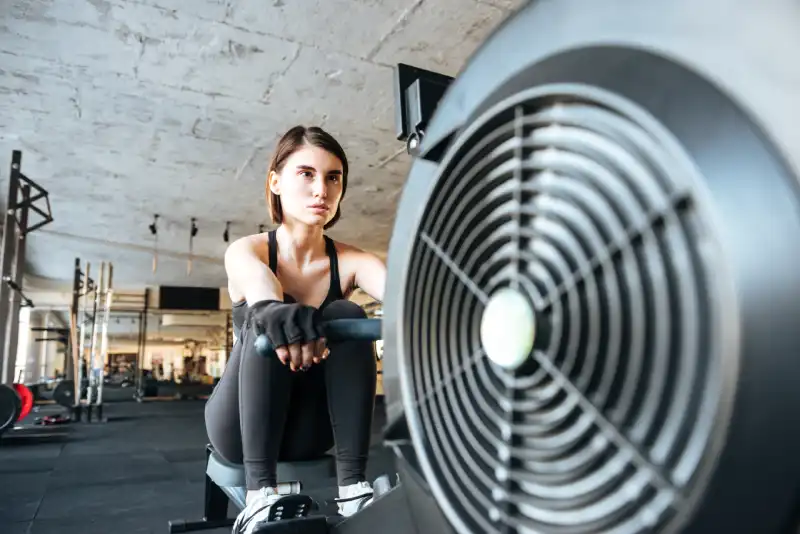
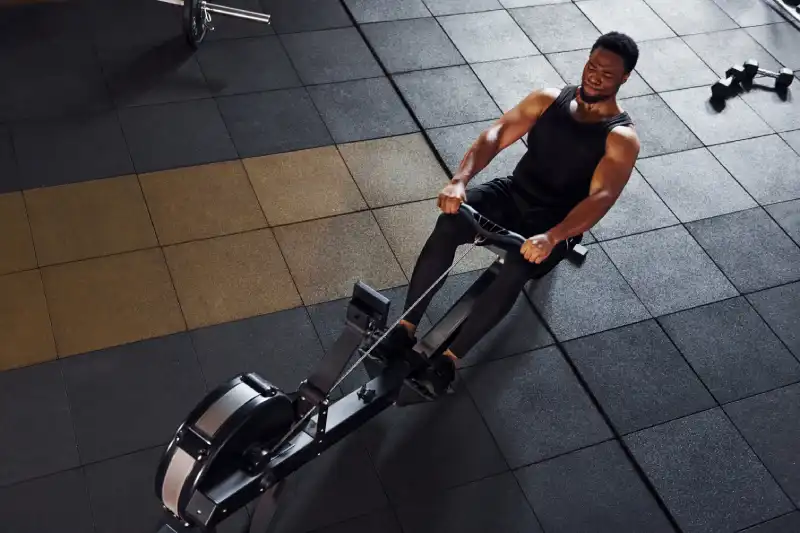
Cardio machines are huge. A treadmill takes up 25-30 square feet. Rowing machines are better (they’re long but narrow) but still require 15-20 square feet. Exercise bikes are more compact, maybe 10 square feet.
Do you need cardio equipment in a home gym? Only if you won’t do cardio otherwise. If you’ll run outside, bike, swim, or do other forms of cardio, skip the machine and save the space and money for strength equipment. If weather, safety, or preference means you need indoor cardio, get one quality piece you’ll actually use.
The best cardio equipment is the one you’ll use consistently. For some people, that’s a treadmill because they love running and the weather is unreliable. For others, it’s a rowing machine because it’s full-body and space-efficient. For me, it’s none of the above because I prefer being outside.
Don’t buy cardio equipment because you think you should. Buy it only if you have a track record of using that type of cardio.
Adjustable Equipment Saves Space And Money
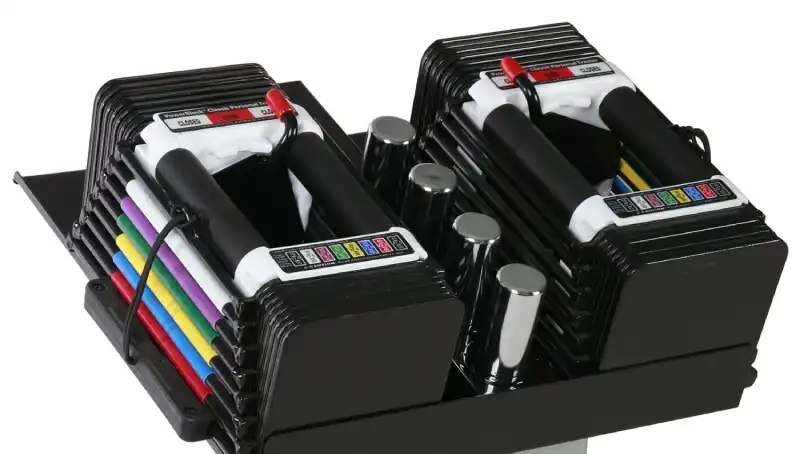
Best purchase I made: PowerBlock adjustable dumbbells. One set replaces 15 pairs of fixed dumbbells. Goes from 5 to 50 pounds in 5-pound increments.
It costs about $400. Fifteen pairs of regular dumbbells would’ve cost more and taken up an entire wall. The PowerBlocks sit in a corner when not in use.
Is adjustable equipment worth the extra cost? Almost always yes for dumbbells, usually yes for benches. Adjustable dumbbells save enormous amounts of space and money compared to fixed weights. Adjustable benches enable way more exercises than flat-only benches. Adjustable barbells (with different diameter sleeves) are useful only if you’re doing specialized lifting.
My adjustable bench goes flat, inclines at multiple angles, and declines. That one bench enables probably 50+ different exercises. A fixed flat bench would limit me to maybe 15.
The one caveat: adjustable equipment usually takes slightly longer to change between exercises. If that bothers you, fixed equipment might be better. Doesn’t bother me at all—an extra 10 seconds to adjust weight is nothing.
Common Questions About Home Gym Setups
How much does a decent home gym actually cost?
Depends wildly on your definition of “decent.” A basic setup (adjustable dumbbells, a bench, resistance bands, and a pull-up bar) runs $300-500. A solid intermediate setup (power rack, barbell, plates, bench, and dumbbells) costs $1,000-2,000. A comprehensive setup with multiple specialty pieces can easily hit $5,000+. I’m in about $1,800 total after two years and can do virtually any workout I want. My friend’s $400 minimal setup works perfectly for him. Start small and add based on actual needs, not imagined ones.
What’s the single best piece of equipment to start with?
Adjustable dumbbells, hands down. Most versatile single piece you can own. They enable hundreds of exercises, scale from beginner to advanced, take up minimal space, and cost a fraction of a full gym. If I could only own one piece of equipment, it’d be adjustable dumbbells. Everything else builds from there based on your specific goals and preferences.
Can you build muscle with minimal equipment?
Absolutely. Your muscles don’t know whether you’re using a $50 kettlebell or a $5,000 cable machine—they just know tension and resistance. Progressive overload (gradually increasing difficulty) matters way more than equipment variety. Plenty of people have built impressive physiques with just bodyweight and a few dumbbells. Equipment variety makes training more interesting and slightly more convenient, but it’s not required for results.
How do you stay motivated to use a home gym?
This is the real challenge. No commute means no psychological commitment. I stay consistent by (1) working out first thing in the morning before I can make excuses, (2) following a written program so I don’t have to decide what to do, (3) tracking workouts in an app to see progress, and (4) treating workout time as non-negotiable, like a work meeting. Also helps that I genuinely enjoy it now, but that took a few months to develop. Motivation is overrated—habits and systems matter more.
Should you insulate or finish a garage gym?
If you’re in an extreme climate and plan to use it year-round, insulation makes a huge difference. I added basic insulation to my garage ceiling—costing maybe $300 in materials and a weekend of work—and it dropped summer temperatures by about 10 degrees. Still hot, but usable hot instead of dangerous hot. Finishing (drywall, paint) is purely aesthetic. Some people love the polished look; I’m fine with exposed studs and concrete. Spend money on insulation before aesthetics if you have to choose.
How do you prevent a home gym from becoming a storage area?
Have a rule: gym equipment only. The minute you start storing holiday decorations or random boxes in there, it’s over. Keep the space dedicated to fitness. Also, use it consistently—if you’re in there five days a week, it won’t accumulate junk because you’re actively using the space. A gym that sits unused for weeks becomes a convenient place to dump stuff. Stay consistent and protect the space’s purpose.
What Actually Matters
Here’s what I wish someone had told me before I started: the best home gym is the one you’ll use, not the one that looks coolest on Instagram.
My garage gym doesn’t look impressive. The floor is rubber stall mats. The walls are unfinished. The equipment is basic. There’s no fancy paint scheme or motivational quotes stenciled on the walls.
But I use it almost every day. It’s set up for my workouts, in my space, on my schedule. No commute, no crowds, no waiting for equipment. I can lift in my garage in my pajamas at 6 AM or 10 PM without judgment.
That convenience is what keeps me consistent. And consistency is what actually gets results.
Your home gym doesn’t need to be perfect. It needs to be functional, accessible, and set up in a way that reduces friction between you and working out. Everything else is just decoration.
Start small. Use what you have. Add equipment only when you’ve identified an actual gap in what you can do. Focus on building the habit of using your gym, not building the perfect gym.
The equipment doesn’t make you fit. Using it does.