

Air Conditioner vs. Air Purifier — What’s The Difference?
An air conditioner cools the room by cycling air over cold coils and removing humidity. An air purifier filters out airborne pollutants — dust, mold spores, bacteria, and smoke — using a fan and filter system. They serve opposite purposes: one manages temperature, the other manages air quality. For the best indoor environment, especially if you have asthma or allergies, using both together is ideal.
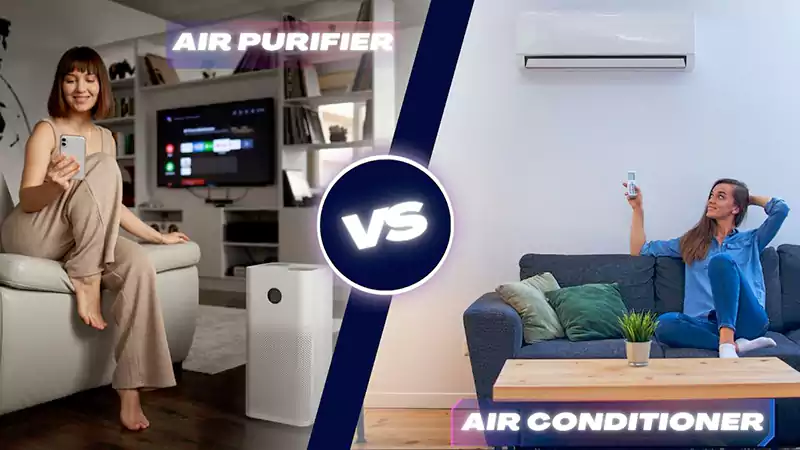
Air conditioners and air purifiers might look similar and feel like they serve the same purpose, but these two machines are completely unique. It can be difficult to understand how the two appliances differ if you’re not sure what’s going on inside your air conditioning unit or air purifier.
While both appliances are useful investments for our homes, they have different functions and features. Air conditioners regulate the temperature of your room by blowing air over cold coils. Air purifiers, on the other hand, take out harmful particles in the air, leaving it clean and safely breathable.
In this article, we explore the differences between the two to help you better understand how they function.
Air Conditioners Cool The Air While Air Purifiers Clean The Air
Performance-wise, air conditioners are designed to make you feel cool in hot weather. They don’t remove contaminants from the air, though their filters do trap some large particles, like dust and pollen.
On the other hand, air purifiers clear your home of contaminants that can be harmful to your health. While they can’t lower the temperature of a room, they can address many common indoor air pollutants like bacteria, mold spores, and smoke particles.
If you want to stay comfortable indoors during the sweltering summer months and breathe in cleaner air year-round, you can use an air purifier and your AC system or get an all-in-one unit that performs both functions.
Some air conditioning models include built-in filters that work similarly to those found in an air purifier, but these filters aren’t meant to replace a high-efficiency purifier. They’re designed to prevent larger particles like dirt and lint from entering the mechanism of your AC unit.
These filters require regular cleaning to function properly; otherwise, your AC will become less efficient over time and could break down completely.
Air Purifiers Are Great For People With Allergies And COPD
In the same vein, if you are among the roughly 25 million Americans who have asthma, air purifiers can also help you breathe easier. No matter what your allergy or respiratory condition is, whether it’s seasonal allergies, COPD (chronic obstructive pulmonary disease), or even a dust mite allergy, an air purifier can be a valuable solution.
On the other hand, an air conditioner can prove useful for people that suffer from respiratory disorders but cannot tolerate high humidity levels. If you’ve got an air conditioner in your home, consider getting an air purifier as well. However, because they work so differently and have different intents, make sure to choose one that best fits your needs and expectations.
Most Air Purifiers Have A Fan, While Most Air Conditioners Don’t
You can tell the difference between an air conditioner and a purifier by looking at whether or not they have a fan. Air conditioners don’t have fans because they rely on a compressor to cool the air.
The compressor is also responsible for removing humidity from the air, ensuring that most ACs don’t have fans. On the other hand, air purifiers use fans to circulate air through their filters. This helps capture airborne particles and make your home’s air safer to breathe.
Air Conditioners Are Great For Larger Spaces, While Air Purifiers Are Better For Smaller Spaces
When it comes to air purifiers and air conditioners, there’s a lot to consider in terms of performance, cost, and your overall needs. Air conditioners are better suited for larger spaces, while air purifiers are better for smaller spaces.
This is because air purifiers filter out the pollutants that they’re designed to trap in a small space more efficiently. For example, if you have an enclosed room or office that is in need of some cooling and cleaning, then an air purifier provides excellent results.
The downside of using an air purifier in a large room or home is that it can have trouble maintaining a clean atmosphere when the airflow demands increase beyond its capacity.
Essentially, the size of your room will dictate which appliance will work best for you.
Both Systems Require Regular Filter Cleaning Or Replacements
Both air purifiers and air conditioners require regular filter cleaning or replacements. For the most part, you will need a fresh set of filters once every few months.
The more often you use your AC or purifier, the more frequently you’ll need to replace the filters. However, if you use your unit often and make sure to have it clinically tested yearly, don’t worry: changing the filters is still less expensive than the cost of replacing an entire system.
It Costs More To Operate An Air Purifier Than It Does To Operate An Air Conditioner
The reason is simple; air conditioners are designed to cool. So they don’t need to filter the air in your home. And they don’t need to add humidity to dry out the air, which some models of air purifiers do.
Air purifiers are designed to remove tiny particles from the air and odors and gases like formaldehyde, which is found in many building materials. Some even use ultraviolet light to kill microorganisms like bacteria and viruses on surfaces.
The amount of electricity required depends on the air volume moved through the filter and the types of filters used. The more powerful the fan is, the more power it uses.
In general, air purifiers cost more to operate than air conditioners. They use about 80% more electricity than a comparable air conditioner does. This is mainly because air purifiers do not have energy-saving features like fans. In addition, most people run their air purifiers for longer periods than they run their air conditioners.
If you are using an electric heater or space heater, it will probably cost less to operate an air purifier instead of an air conditioner.
Bottom Line
Ultimately, the difference between air conditioners and air purifiers is a matter of function rather than form. The air conditioner helps to maintain a constant temperature in the room. In contrast, the air purifier helps maintain the ideal level of cleanliness and keeps pollutants from settling in the room.
Either can be used for their respective purposes, or a combination of both can provide the best solution for your problem. If your AC or purifier is not functioning as required, click here to get the high-quality repair, maintenance, and installation services for residents and businesses in Miami and surrounding areas.
FAQs: Air Conditioner vs. Air Purifier
What is the main difference between an air conditioner and an air purifier?
An air conditioner regulates room temperature by cooling the air and removing humidity. An air purifier, on the other hand, filters out airborne pollutants like dust, mold spores, bacteria, and smoke particles. One manages comfort, and the other manages air quality—and they do not replace each other.
Can an air conditioner also purify the air?
Not fully. Some AC units have built-in filters that catch larger particles like dust and lint, but these are designed to protect the machine—not clean the air you breathe. For genuine air purification, especially against bacteria, mold, or smoke, a dedicated air purifier is necessary.
Is an air purifier better than an air conditioner for people with asthma or allergies?
Yes, for respiratory conditions like asthma, COPD, or seasonal allergies, an air purifier is far more effective. It actively removes the airborne triggers—pollen, mold spores, and dust mites—that cause flare-ups. An AC can reduce humidity, which also helps, but it doesn’t eliminate pollutants from the air.
Which costs more to run — an air conditioner or an air purifier?
Air purifiers generally cost more to operate. They consume roughly 80% more electricity than a comparable air conditioner because they lack energy-saving features and tend to run for longer periods. Factor in regular filter replacements, and the ongoing expense adds up — though it’s still less than replacing an entire HVAC system.
Should I use an air purifier and an air conditioner together?
Yes, and it’s often the best approach for a healthy indoor environment. Your AC keeps the temperature and humidity comfortable, while the air purifier handles pollutants and allergens. They complement each other rather than compete—especially in homes with pets, smokers, or residents with respiratory sensitivities.
Are air purifiers better suited for small rooms or large spaces?
Air purifiers work most efficiently in smaller, enclosed spaces where they can continuously cycle and filter the air. In larger rooms, they may struggle to maintain clean air quality when airflow demands exceed their capacity. Air conditioners, by contrast, are designed to handle larger areas. Always match the purifier’s coverage rating to your room size.
