

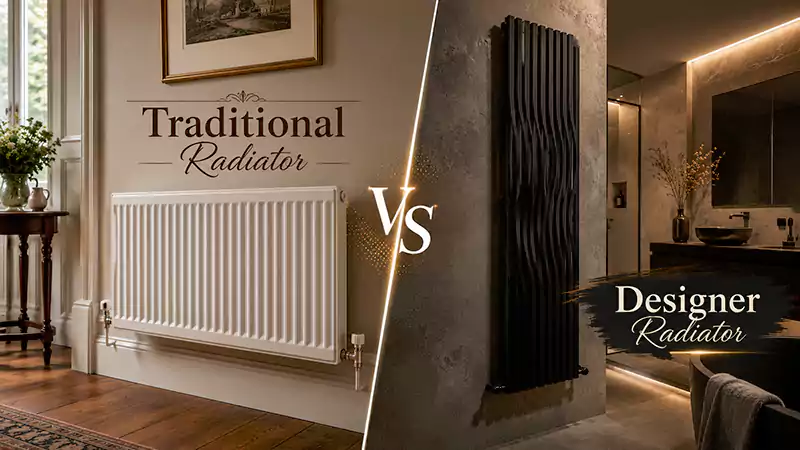
Traditional radiators sit low and horizontal, use classic vintage shapes, and come in muted tones like white or beige. Designer radiators stand vertical, use bold finishes like chrome and anthracite, and can be boosted with double or triple panels for higher BTU output.
Today’s world is home to an ever more aggressive, demanding, and hard-bargaining consumer; this much is true.
This phenomenon has perhaps been aided somewhat by the burgeoning growth of the internet, as it has allowed customers to be better informed when they head out on the high street due to the ease of research and because online retailers offer extreme value, driving prices down.
The points above apply to the home improvement industry as much as any other, from bathrooms to bedrooms and everything in between (and on all floors!). It has even gotten to the point where items that are usually overlooked are getting more attention lavished on them—by designers and buyers—than ever before. Into this category come radiators.
We intend to display some of our top-quality radiators at this year’s Grand Designs Live. The show will be taking place from 2nd to 10th May 2015 at the Excel in London, and to provide you with access to view our products for free, we are giving away five free pairs of tickets.
Read below to find out more about the radiators that we will have on display.
Traditional Radiators
This type is probably the easiest to lay out, as it’s what we’ve been used to for most of our lives!
In 99% of cases, these will be positioned horizontally, spreading low and unobtrusive along the bottom of your wall. They would also feature very unassuming colors, white, beige, and the like, and the same is the case now, too.
Traditional radiators exhibit very standard shapes, so you should avoid angular, edgy, or any other unorthodox look if you want a vintage radiator.
Designer Radiators
These, unsurprisingly, take the opposite tack to the above. Designer radiators’ whole raison d’etre is to act as a talking point, to present edgy, quality looks. Vertical radiators and stunning finishes exemplify these.
What we are talking about here is chrome, or anthracite, which provides a scintillating gleam and a rough, cool, understated darkness, respectively. Other popular gloss finishes include black and silver, while you can accentuate the modern ethos of these units by fitting them with flat panels, which gives a smooth, uncluttered finish
As is the case with the above, you can significantly boost the BTU output with the addition of supplementary panels, with double and triple models available.
Therefore, if you would like to take a look at our radiators and brand-new bathroom furniture, please visit us at the show. We will be waiting for you with a handful of free ducks to give out on stand K20. See you there!
FAQs: Choosing Between Traditional and Designer Radiators
What’s the difference between traditional and designer radiators?
Traditional radiators sit horizontally along the wall in understated colors like white or beige, following standard, unassuming shapes. Designer radiators take the opposite approach, using vertical designs and striking finishes like chrome or anthracite to act as a statement feature rather than a hidden fixture.
Which finishes are popular for designer radiators?
Chrome and anthracite are top choices, offering a gleaming or matte-dark look, respectively. Black and silver gloss finishes are also popular, and flat panel designs give a smooth, modern, uncluttered appearance.
How can I increase a radiator’s BTU output?
You can significantly raise BTU output by adding supplementary panels. Both double and triple panel models are available, giving you more heating power without changing the radiator’s footprint.
Should I choose a vintage or a modern radiator style?
If you want a classic, unobtrusive look that blends into the room, a traditional vintage-style radiator with standard shapes is the safer choice. If you’d rather make the radiator a design focal point, an edgy vertical designer model suits that goal better.
