
Water damage is one of the most stressful emergencies a homeowner or business owner can face. Whether it’s caused by a burst pipe, a leaking appliance, severe storms, or flooding, water can spread quickly and damage floors, walls, furniture, and structural components of a property. For property owners in Cincinnati, knowing what steps to take immediately after water damage occurs can significantly reduce repair costs and long-term damage.
This detailed guide explains what to do right after water damage strikes, how to protect your property, and when to call professional restoration experts.
Why Immediate Action Matters After Water Damage
Water damage doesn’t stay in one place. It quickly spreads through building materials like drywall, wood, insulation, and flooring. If not promptly addressed, even minor leaks can escalate into serious structural problems.
Within the first few hours after water exposure, materials begin to absorb moisture. After about 24–48 hours, mold can start to grow in damp areas. This is why fast action is essential to minimize damage and restore your property safely.
Professional Cincinnati Water Damage Restoration services are designed to respond quickly and prevent the situation from getting worse.
Step 1: Stop the Source of Water
The very first step after discovering water damage is to stop the water source if possible.
Common sources include:
- Burst or leaking pipes
- Overflowing toilets or sinks
- Appliance leaks (dishwashers, washing machines, water heaters)
- The roof leaks during storms
- Floodwater entering the home
If plumbing damage is the cause, shut off the main water supply to stop more water from entering the property.
If the cause is storm-related flooding, you may need to wait until water levels recede before cleanup can begin.
Step 2: Turn Off Electricity in Affected Areas
Water and electricity are extremely dangerous together. If water has reached electrical outlets, appliances, or wiring, it’s important to turn off electricity to the affected areas immediately.
You should:
- Shut off power at the breaker panel
- Avoid using electrical devices near standing water
- Contact an electrician if you suspect wiring damage
Safety should always be the top priority before beginning any cleanup.
Step 3: Document the Damage for Insurance
Before moving or removing damaged items, take photos and videos of the affected areas.
Document:
- Wet walls, ceilings, and floors
- Damaged furniture or appliances
- Standing water levels
- Structural damage
This documentation is extremely important when filing a homeowners insurance claim. Detailed records can help speed up the claim process and ensure you receive proper compensation for repairs.
Step 4: Remove Standing Water as Quickly as Possible
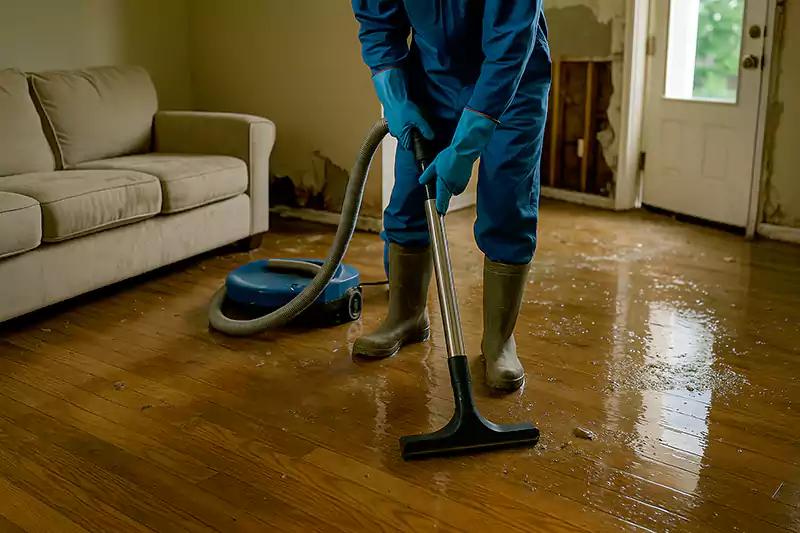
Standing water can cause severe damage if it remains for long periods. Removing it quickly helps protect flooring, drywall, and structural materials.
Depending on the amount of water present, you can use:
- Wet/dry vacuums
- Mops and buckets
- Sump pumps
- Towels and absorbent materials
For larger floods or severe water damage, professional restoration teams use industrial-grade extraction equipment capable of removing large volumes of water rapidly.
Step 5: Move Furniture and Valuables to Dry Areas
To prevent further damage, move valuable items away from wet areas.
Focus on removing:
- Electronics
- Important documents
- Furniture
- Rugs and carpets
- Artwork and photographs
If items cannot be moved, placing aluminum foil or wooden blocks under furniture legs can help prevent further moisture absorption.
Step 6: Begin Drying and Ventilation
Even after standing water is removed, moisture remains trapped inside building materials. Proper drying is essential to prevent mold growth and structural damage.
Improve airflow by:
- Opening windows and doors (if weather allows)
- Running fans to circulate air
- Using dehumidifiers to remove excess moisture
- Removing wet carpets and padding if necessary
However, household fans may not be enough for severe water damage. Professional drying equipment is often required to remove hidden moisture inside walls and flooring.
Step 7: Watch for Signs of Mold Growth
Mold can start growing in damp environments within 24 to 48 hours.
Common signs include:
- Musty odors
- Discoloration on walls or ceilings
- Black, green, or white spots on surfaces
- Increased allergy symptoms
If mold appears or moisture remains trapped in materials, professional mold remediation may be required.
Step 8: Contact a Professional Water Damage Restoration Company
While minor leaks may be manageable, most water damage situations require professional help. Restoration companies have specialized equipment and training to properly dry and restore properties.
Professional restoration services typically include:
- Emergency water extraction
- Moisture detection and inspection
- Industrial drying and dehumidification
- Cleaning and sanitization
- Mold prevention treatments
- Structural repairs and reconstruction
Many companies also assist homeowners with insurance claims and documentation, helping reduce the stress of the recovery process.
Common Causes of Water Damage in Cincinnati Homes
Understanding the most common causes of water damage can help homeowners stay prepared.
Some of the leading causes include:
- Frozen pipes during winter
- Basement flooding from heavy rain
- Sewer backups
- The roof leaks after storms
- Faulty appliances and plumbing systems
Cincinnati experiences a mix of winter freezes and heavy rainstorms, both of which can increase the risk of water damage.
Tips to Prevent Future Water Damage
Although water damage can happen unexpectedly, homeowners can reduce risks by taking preventative measures.
Helpful prevention tips include:
- Insulate exposed pipes before winter
- Maintain gutters and downspouts
- Install sump pumps in basements
- Inspect appliances regularly
- Seal cracks in foundations and walls
- Check roofs for damaged shingles
Regular maintenance can prevent many common water damage problems before they start, such as leaks from roofs or cracks in foundations and walls that can lead to significant issues if not addressed promptly.
Final Thoughts
Water damage can escalate quickly, but knowing how to respond immediately can make a major difference in limiting destruction and repair costs. Acting fast—by stopping the water source, removing standing water, documenting damage, and beginning the drying process—can help protect your home and belongings.
However, severe water damage often requires specialized equipment and expertise. Working with experienced restoration professionals ensures that your property is fully dried, cleaned, and restored safely.
By taking quick action and contacting trusted professionals when needed, Cincinnati homeowners can recover from water damage and restore their property with confidence.