

There’s this moment that sticks with me. Philadelphia, last July, a brutally hot day. I’m meeting a friend for lunch and, running late as usual, am speed-walking down Walnut Street. Then I just… stopped. Full stop in the middle of the sidewalk. This bank building caught my eye—it couldn’t have been newer than the 1920s, maybe earlier. These columns out front, massive things, caught the sunlight in this specific way that made them look almost golden.
My friend Sarah called back to me, “Are you coming or what?” She’s used to me doing this by now. I stood there for maybe ten, fifteen minutes. Just staring at how the light played off those grooves carved into the columns. People probably thought I was weird. But here’s what got me: I’d walked past that building dozens of times. Never really saw it before that day.
That’s the thing about architecture, right? Most of us are sleepwalking past incredible design every single day. We’re too busy checking phones, thinking about work, or whatever. But buildings? They’ve got stories to tell. Not the boring placard kind of story—”erected 1887, renovated 1952, donated by whoever.” “I mean deeper stuff. What did the people who built this value? What were they trying to say? What scared them, what gave them hope?
A Greek temple from 400 BC is having a completely different conversation than a mosque from medieval Baghdad or some Art Deco skyscraper in Manhattan. Each one’s speaking its own language.
So after that Philadelphia moment, I went down this rabbit hole learning about architectural history. (My friend jokes that I’ve become insufferable at parties. She might be right.) Turns out there are five major styles that didn’t just pop up, look nice for a while, then vanish. These movements actually changed how humans think about designing structures. Let me share what I found.
Classical Stuff: The Greeks Were Onto Something Big
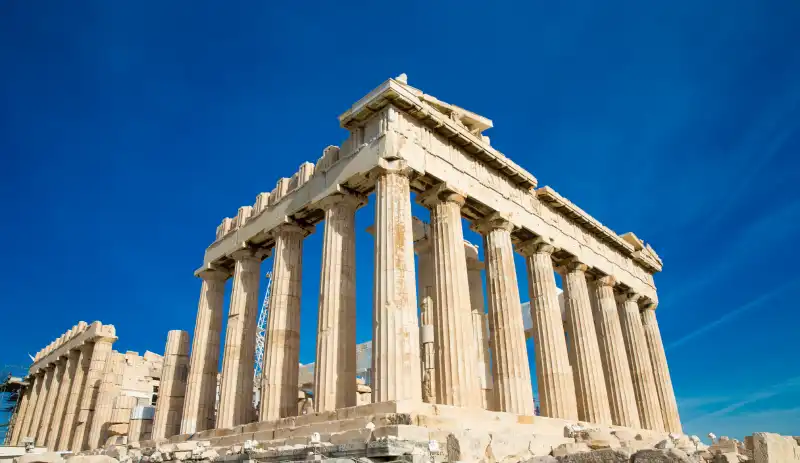
Okay so the Parthenon. Built 447 BCE in Athens. That’s 2,473 years ago from where we’re sitting now. And we’re STILL copying their column designs for government buildings. Still. After almost 2,500 years.
Think about that for a second. Fashion trends last what, maybe five years before they look dated? Technology gets outdated in months. My iPhone from three years ago feels ancient. But these design principles from ancient Greece? They lasted millennia.
The Greeks were obsessive about proportions. Like, borderline crazy about it. They didn’t just wing things and go, “Eh, looks good enough.” Every measurement had a mathematical ratio behind it. Those three column types everyone learns about—Doric (the plain chunky ones), Ionic (with the scrolly bits at the top), and Corinthian (super fancy with leaves and stuff)—each one followed specific measurements that were basically law. You couldn’t fudge them. It was like they’d discovered some secret code for what looks “right” to human eyes.
Then Rome shows up and basically says, “Hold my wine.” They invented concrete. Which, I know, sounds boring as hell. Concrete? Really? But stay with me. This changed EVERYTHING. Suddenly you could build the Pantheon with this insane dome that spans 142 feet across—still standing today, by the way, which is nuts. You could construct aqueducts carrying water across valleys and entire mountain ranges. The engineering possibilities just exploded.
So why do government buildings still copy this style?
Here’s my theory: classical architecture communicates “stable” and “trustworthy” without saying a word. When you look at columns and symmetrical facades, something unconscious in your brain registers them as permanent, important, and authoritative. That’s why courthouses and capitol buildings and banks keep recycling this look. The visual language works on some deep level we don’t even consciously process.
Islamic Architecture: Math That Somehow Feels Spiritual
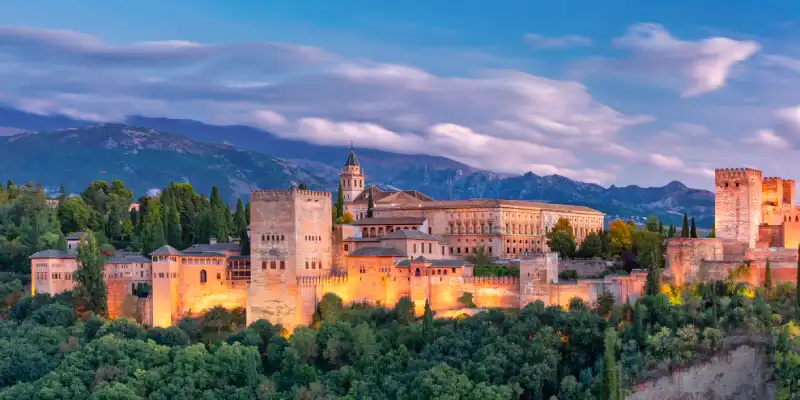
I need to tell you about the Alhambra. Granada, Spain, three years ago. I’m not religious—haven’t been to church since my aunt’s wedding in 2015—but I stood in those courtyards while sunlight came through those geometric screens. It did something to me. Hard to describe. The space felt alive. Like the building was breathing, if that makes any sense.
Islamic architects starting around the 7th century had this interesting challenge. Their religious teachings said not to depict people or animals in sacred spaces. So how do you make a mosque that inspires awe without painting Jesus on the ceiling or sculpting saints the way Christian churches did?
Their answer was geometry. Not basic geometry—I’m talking mind-bendingly complex patterns that look random when you first see them. But study them for a while, and you realize each pattern follows these strict mathematical rules. And they meant something deeper too—the underlying order of creation, the divine mathematics of reality. Pretty heavy stuff.
The pointed arch is Islam’s signature move. It looks elegant, sure, but that’s not the real reason it mattered. Pointed arches are structurally better than rounded Roman arches. They distribute weight more efficiently, which means taller buildings with thinner walls. When Gothic cathedral builders in Europe noticed this, they basically went, “We’re stealing that,” and borrowed the whole technology.
But the light thing—that’s what really gets me about Islamic architecture. Remember those screens I mentioned at the Alhambra? They create these shifting shadow patterns that change throughout the entire day. A mosque at 6 AM looks and feels completely different than the same building at noon or sunset. The architecture literally changes with time. How brilliant is that? The building’s not static—it’s having this ongoing conversation with sunlight.
Renaissance: Looking Backward To Jump Forward
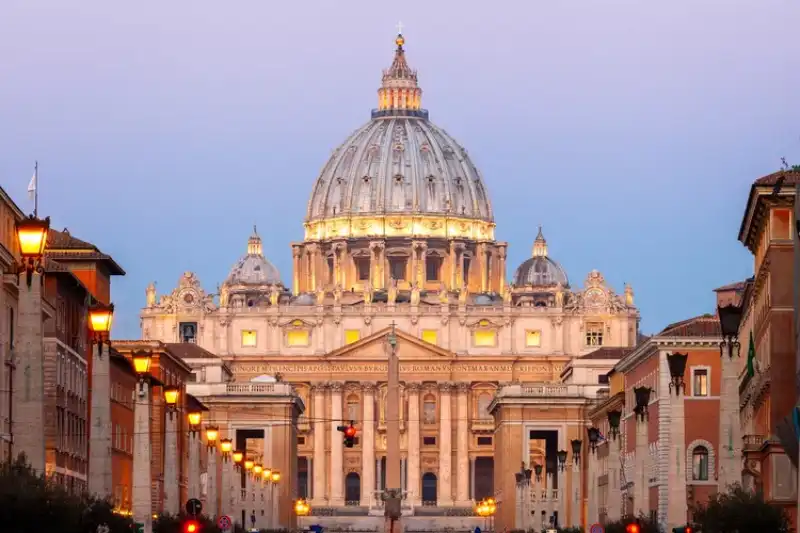
Florence, 1418. Picture this: the city’s got a problem. Their cathedral needs a dome. But the opening is too wide—nobody knows how to build a dome that big without it collapsing during construction. It’s impossible with the technology they have. Everybody agrees it can’t be done.
Enter Filippo Brunelleschi. If I could time travel and grab coffee with any historical figure, he’d be high on the list. This guy studied the Pantheon’s ancient Roman dome like it was his religion. Measured everything obsessively. Figured out the engineering principles. Then invented completely new techniques to solve problems the Romans never had to deal with.
His dome is still standing. I saw it in person a few years back—my friend dragged me through Italy; it was the best trip ever. Photos don’t do it justice. Standing underneath that dome, you feel simultaneously tiny and part of something magnificent. It’s a weird feeling.
What made Renaissance architecture revolutionary?
It wasn’t just copying old stuff. Renaissance architects took classical principles and reinterpreted them through a contemporary lens. They applied actual scientific rigor to building design—the first time that had really been done systematically. Buildings became three-dimensional mathematical expressions where every proportion was carefully calculated and every measurement related to every other measurement through specific ratios.
The crazy part? They made these intellectual exercises emotionally powerful. Florence Cathedral’s dome isn’t just an engineering flex. It stirs something in you when you see it. That combination of rigorous scientific thinking AND emotional impact? That was genuinely new.
Art Nouveau: Buildings That Look Like They’re Growing
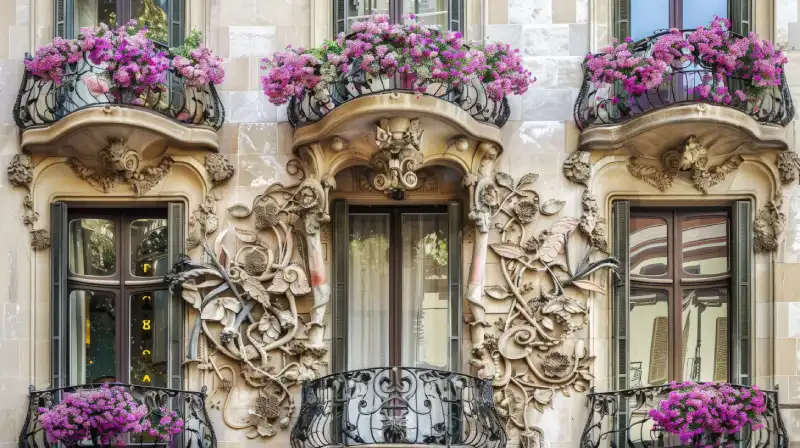
By the 1890s, people were getting sick of it. Industrial Revolution cities looked more and more the same—mass-produced buildings, straight lines everywhere, rigid geometry, no personality whatsoever. Everything felt manufactured, soulless, like living inside a factory.
Art Nouveau shows up as this rebellion. Architects and designers looked at plants, studied how things actually grow in nature, and asked the most obvious question that somehow nobody else had asked: why do buildings need right angles and straight edges at all? Plants don’t grow in straight lines. Why can’t buildings have curves, flowing lines, and organic shapes?
I stayed in an Art Nouveau apartment in Brussels once (long story involving a missed flight and booking.com at 2 AM). Even the doorknobs looked like flower stems. That’s the level of detail I’m talking about—every single element was designed as part of one unified artistic vision. The bathroom tiles, the window frames, the staircase railing—everything flowed together.
How did Art Nouveau turn industrial materials into art?
This fascinates me: iron and glass were factory materials. Purely functional stuff. Warehouses and train sheds. Art Nouveau designers grabbed those exact same materials and created flowing, plant-inspired forms that looked organic. Those famous Paris Metro entrances by Hector Guimard? They’re made of iron. But they look like they grew up out of the pavement.
The style didn’t last long—maybe twenty years at peak popularity, tops. But it proved something crucial: modern materials and industrial design didn’t have to be cold or mechanical. You could embrace technological progress while still creating beauty inspired by the natural world. That idea feels pretty damn relevant right now when we’re all thinking about sustainable, environmentally conscious architecture.
Beaux-Arts: Go Huge Or Go Home
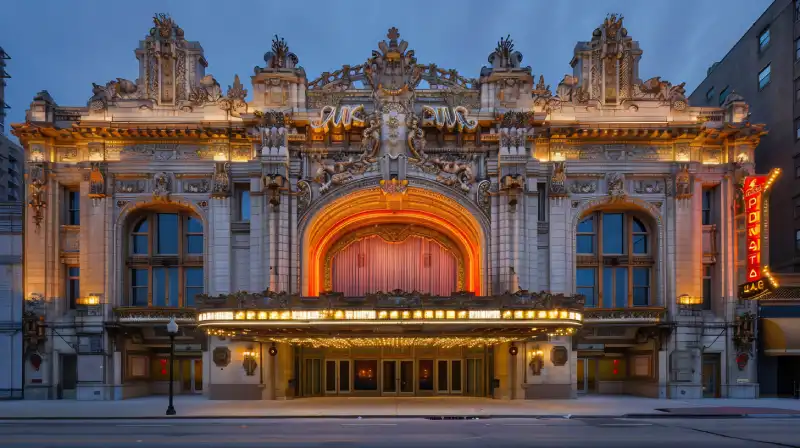
Grand Central Terminal in New York. If you haven’t been, put it on your list. Even if architecture bores you to tears (my brother claims it does), that building makes you feel something the instant you walk in.
That’s Beaux-Arts in a nutshell. This wasn’t subtle. This wasn’t minimalist. This was architecture saying, “We spared absolutely no expense, and we want EVERYONE to know it.”
The name comes from this fancy school in Paris—École des Beaux-Arts—where architecture students learned to combine classical elements (Greek columns, Roman arches, Renaissance domes) with lavish, over-the-top sculptural decoration. The result? Monumentally impressive civic spaces that basically scream “we’re important.”
Why did cities pour money into Beaux-Arts buildings?
Libraries, train stations, museums, government buildings—they adopted this style because it communicated something specific. It said, “We value culture enough to spend serious money on it.” “We’re building institutions meant to last centuries,” and “We have civic pride, and we’re expressing it through architecture.”
Critics eventually turned on Beaux-Arts, calling it excessive and old-fashioned. Fair enough—tastes change. But here’s the interesting part: people still love these buildings. Communities treasure them, fight to preserve them, and protest when developers want to tear them down. Turns out thoughtfully executed grandeur creates emotional connections that outlast changing architectural fashions by decades.
Common Questions People Ask Me About This Stuff
Why are we still copying Greek and Roman architecture?
Those ancient Greeks and Romans figured out design principles based on mathematical proportion that just… work. Visually. The column orders (Doric, Ionic, Corinthian) follow specific ratios that create visual appeal that seems almost hardwired into how humans see things. Plus, symmetry and balance appeal to how our brains process visual information—there’s actual neuroscience backing this up now. Government buildings especially favor classical design because it communicates stability, tradition, and authority without needing to spell it out. After 2,400+ years, those principles still work, which tells you they tapped into something fundamental.
What makes Islamic architecture different from European stuff?
Islamic architecture developed down a different path because religious guidelines discouraged depicting people or animals in sacred spaces. So instead of painting saints or sculpting prophets, architects went all-in on elaborate geometric patterns following strict mathematical rules. The pointed arch became their signature move—not just pretty but structurally superior to rounded Roman arches. Islamic buildings also do this amazing thing with light throughout the day using latticed screens and strategic window placement. The architecture literally looks different from dawn to sunset—it changes appearance constantly.
How did Renaissance architects improve on ancient buildings?
Renaissance architects weren’t just xeroxing ancient buildings—they were reinterpreting classical principles through contemporary understanding and new engineering. Take Brunelleschi’s dome in Florence. He studied the Pantheon’s Roman dome intensively and understood the underlying principles, then invented brand new construction methods to solve problems Romans never faced. Renaissance designers brought mathematical precision to architectural planning at a level that hadn’t existed before, creating buildings that were both intellectually rigorous and emotionally compelling—a combination that was genuinely new.
What made Art Nouveau radical?
Art Nouveau completely rejected rigid historical styles and industrial uniformity by embracing organic forms from nature. Instead of straight lines and rigid geometry, architects designed with curves, flowing lines, and botanical motifs inspired by how plants actually grow. They transformed industrial materials like iron and glass—stuff previously associated with factories—into vehicles for artistic expression. Paris Metro entrances became sculpture gardens. Apartment buildings grew balconies resembling flower stems. Though the movement only lasted about twenty years (1890-1910), it proved modern materials could create beauty instead of just utility.
Why did public buildings go for the Beaux-Arts style?
Beaux-Arts combined classical elements with elaborate ornamentation to create impressively monumental civic spaces. Libraries, train stations, museums, and government buildings picked this style because it communicated institutional permanence, cultural sophistication, and civic pride. The massive scale, sculptural decoration, expensive materials, and symmetrical compositions made powerful statements about societies valuing public institutions. Despite critics later calling it excessive, these buildings remain beloved community landmarks—proving that thoughtfully executed grandeur creates lasting emotional connections.
Can modern architects mix historical styles?
Absolutely yes. Modern architects constantly reinterpret historical principles while using contemporary materials and addressing current needs. Classical proportions might inform a new building’s facade while incorporating sustainable materials. Islamic geometric patterns inspire modern screen systems for climate control. Renaissance mathematical precision guides spatial planning. The key is understanding underlying principles rather than just copying decorative surface elements. Successful contemporary architecture honors tradition while embracing innovation and solving modern challenges.
Why This Actually Matters
You know what changed for me after diving into this? I can’t walk down any street without noticing things now. That building I passed literally a thousand times? Suddenly I’m seeing how the window proportions follow classical ratios. Or how that newer office building uses geometric patterns echoing Islamic design. Or how those balcony railings borrowed flowing curves from Art Nouveau.
Contemporary architects constantly draw from this historical vocabulary. They’re mixing ingredients—classical proportions with sustainable materials, organic forms with green technology, and traditional spatial concepts with modern functionality. Understanding where these elements came from helps you decode what you’re actually seeing around you.
But there’s a deeper thing here that I think matters more. These architectural movements remind us that buildings communicate way more than their practical function. Every structure represents choices about materials, form, and meaning. Classical design talks about order. Islamic architecture expresses spiritual transcendence. Renaissance buildings celebrated human capability. Art Nouveau championed organic beauty. Beaux-Arts proclaimed civic pride.
When someone designs a building today, they’re making choices that ripple forward through time. What materials represent our current values? How should new structures relate to their surroundings? What do we want these buildings to tell people a hundred years from now?
Take a walk around your neighborhood this week. Actually look at the buildings—really look. You’ll spot echoes of these historical movements everywhere. Classical columns updated with modern materials. Geometric patterns reflecting Islamic influence. Organic curves borrowed from Art Nouveau.
Architecture is humanity’s longest-running conversation. And whether you realize it or not, you’re part of it every time you react to a building, every time you choose to photograph one facade over another, every time you feel something standing in a well-designed space.
These aren’t just old styles from dusty history books. They’re living languages that continue shaping the world we walk through every single day.
