

Shingle vs. Tile Roof: Quick Answer
Shingle roofs cost less upfront and last 30–50 years, making them ideal for milder climates. Tile roofs cost more initially, can last up to 100 years, and better resist extreme weather, wind, and heavy snow—but they’re heavier and require stronger roof support.

Besides appearance, there are plenty of differences between a shingle and a tile roof. The shingle vs. tile roof debate has been going on for quite some time, and there are fundamental questions you need to ask yourself before settling for one option over the other. What are the differences between the two options? And when it comes down to it, which one is better than the other? Here are a few factors to bear in mind when comparing tile and shingle roofs.
Shingle vs. Tile Roof
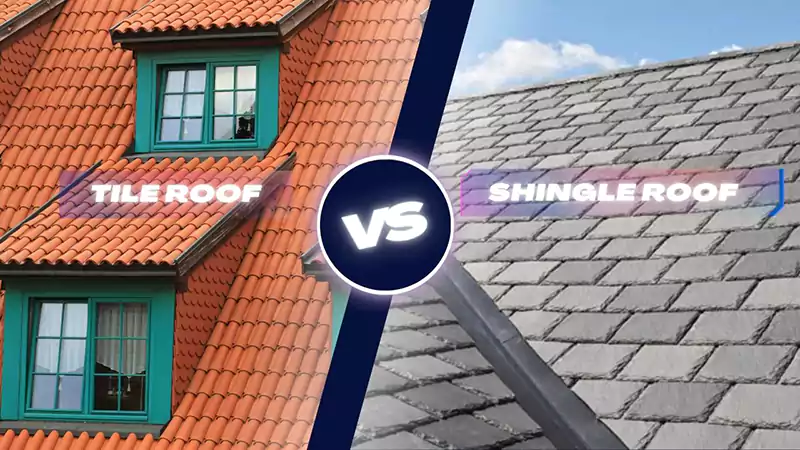
Shingle Roofs
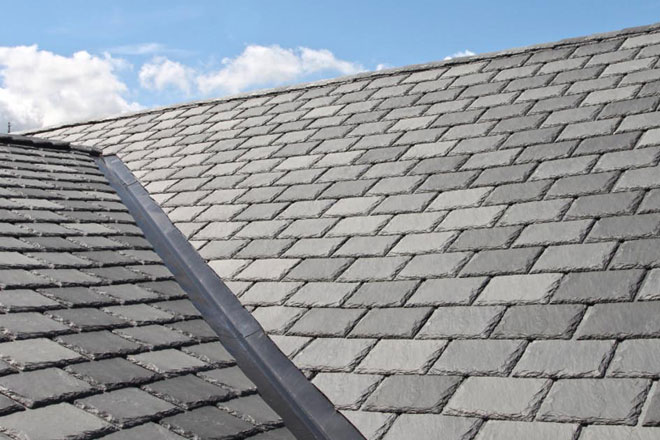
Shingle roofs are typically made of small slates that overlap, protecting from external elements. The shingles can be made from a broad range of materials, including slate, asphalt, copper, wood, fiberglass, or shake. Most shingle roofs use a combination of asphalt and fiberglass due to its enhanced durability.
Shingle roofs are easy to install and maintain and are the standard roofing material in North America. The average lifespan of a shingle roof is between 30 and 50 years.
Tile Roofs

Tile roofs are usually made of concrete or clay. They’re sealed to the roof, hang in parallel and overlap, and are similar to shingles. Installing a tile roof is a bit more complicated than a shingle roof, and if you add in a unique style, it often results in much higher initial costs. They can last up to a century before the need for a complete replacement but have an average lifespan of between forty and fifty years.
Most modern roofs are sturdy enough to withstand the weight of a tile roof, but there are lightweight tile roofs available as well.
Durability and Efficiency
When it comes to durability and energy efficiency, tile roofs hold up better than shingles. Bad weather and strong winds can also knock off shingles much easier than Tiles, which can better withstand general wear and tear as well as harsh weather conditions.
Climate considerations
Different climatic areas and regions will have varying weather patterns, seasonal variations, and temperature ranges, which can affect roofing materials you’re deciding on. Generally, shingles are well suited for milder climates, whereas tiles perform better in areas with extreme weather conditions, such as the area that gets lots of snow or the southeast, where it’s warm and sunny. The durability and density of tiles resist damage from freezing and can support snow without sustaining any damage.
Weight
The carrying capacity of your property’s overall structure will also determine the type of roofing you should choose. For instance, not every roof can handle tile, as it is heavier than the shingle. You’ll want to consult a roofing professional to determine the carrying capacity of your roof.
Price
When you consider the price alone, shingles are more budget-friendly than tiles. However, tiles are more durable and can outlast shingles. Over time, the costs balance out.
When choosing between a shingle vs. tile roof, it helps to look beyond the surface. You’ll need to consider the costs, climatic conditions, and the ability of your home to support the roof. Both options are practical, and, in some cases, it boils down to cost and aesthetic preference.
FAQs: How to Choose Between Shingle and Tile Roofing
Which lasts longer, a shingle roof or a tile roof?
Tile roofs generally outlast shingle roofs, with some tile roofs surviving up to a century compared to 30-50 years for shingles. However, both materials typically average 40-50 years of real-world performance depending on maintenance and climate.
Is a shingle roof cheaper than a tile roof?
Yes, shingles cost less upfront and are easier to install. Tiles carry higher initial costs, especially with custom styles, but their extended lifespan often balances out the price difference over time.
Can every roof structure support tile roofing?
Not always. Tile is significantly heavier than shingle, so your home’s load-bearing capacity matters. A roofing professional can assess whether your structure can handle standard tiles or if lightweight tile options are a better fit.
Which roofing material handles extreme weather better?
Tile roofs generally outperform shingles in harsh conditions like heavy snow, strong winds, and freezing temperatures due to their density and durability. Shingles tend to work best in milder, more moderate climates.
What factors should decide my choice between shingle and tile?
Base your decision on your local climate, your roof’s structural capacity, your budget, and your aesthetic preference. Consulting a roofing professional helps match the material to your home’s specific needs.
