

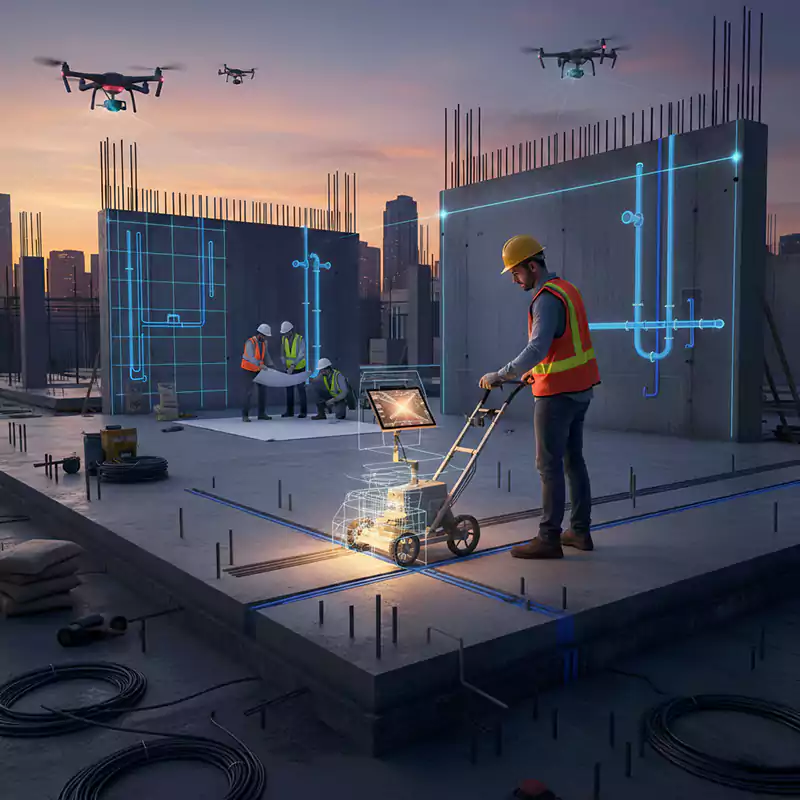
Construction projects, whether residential, commercial, or industrial, are complex undertakings with tight schedules, strict budgets, and stringent safety requirements. One area that often presents challenges is working with concrete structures. Mistakes, such as cutting into hidden pipes, reinforcing bars, or conduits, can cause delays, increase costs, and create serious safety hazards. Thankfully, advancements in technology are helping construction professionals work smarter and safer. One of the most effective tools for preventing costly errors is concrete scanning.
Concrete scanning uses advanced imaging technology to detect what lies beneath the surface before cutting, coring or drilling. By identifying embedded objects, such as steel reinforcement (rebar), post-tension cables, electrical conduits, and plumbing, scanning reduces the risk of accidents, structural damage, and expensive repairs. Here’s a closer look at how concrete scanning is shaping the future of site safety and why it’s becoming an essential part of modern construction.
What Is Concrete Scanning?
Concrete scanning, sometimes referred to as non-destructive testing (NDT) of concrete, is the process of analysing concrete structures using advanced scanning equipment. The goal is to create a detailed map of what lies within or underneath a concrete slab, wall, or beam without physically altering the material.
Common Technologies Used
- Ground Penetrating Radar (GPR): Uses electromagnetic waves to detect metal, voids, pipes, and post-tension cables inside concrete.
- Electromagnetic Scanners: Identify the location of steel reinforcement or embedded metal components.
- Ultrasonic Pulse Velocity (UPV): Assesses the density and integrity of the concrete and detects hidden voids or cracks.
Dial Before You Dig NSW methods allow engineers, contractors, and safety teams to make informed decisions before cutting or drilling begins.
Why Concrete Scanning Is Critical for Site Safety
Prevents Accidents and Injuries
Drilling or cutting into concrete without knowing what lies beneath is highly risky. Hitting live electrical conduits, water pipes or post-tension cables can result in the following:
- Electric shocks or electrocution
- Water damage
- Structural instability
- Serious injuries to workers
Concrete scanning identifies these hazards in advance, giving crews the information they need to work safely.
Protects Structural Integrity
Cutting into a rebar or post-tension cable can weaken the concrete structure, potentially leading to costly repairs or catastrophic failure. Scanning ensures that drilling or coring avoids these critical components, preserving the strength and stability of the structure.
Reduces Project Delays
Mistakes on construction sites often cause project delays. Discovering a hidden conduit or damaged rebar after cutting can halt work while repairs are made. Concrete scanning minimises the risk of such interruptions, keeps projects on schedule, and reduces downtime.
Cost Savings Through Accurate Planning
While concrete scanning may seem like an additional expense, it can actually save money in the long run. Accidental damage to pipes, wiring, or reinforcements can result in expensive repairs, project delays, and potential legal claims. By identifying hidden elements beforehand, contractors can plan work efficiently, avoid rework, and stay within budget.
Examples of Costly Mistakes Avoided
- Accidentally cutting a water pipe requiring excavation and replacement
- Damaging electrical conduits causes service interruptions and repairs.
- Compromising post-tension cables leads to structural reinforcement costs.
- Delays due to emergency inspections or repairs
Concrete scanning mitigates these risks, turning an upfront investment into long-term savings.
How Concrete Scanning Works in Practice
Step 1: Site Assessment
A qualified scanning technician evaluates the construction site to determine which areas need scanning and selects the appropriate technology based on the type of structure and project requirements.
Step 2: Scanning Process
Using GPR or electromagnetic scanners, the technician scans the concrete surfaces to detect embedded objects, cavities, voids or irregularities. The process is non-destructive, meaning the concrete remains intact throughout the assessment.
Step 3: Mapping and Analysis
Data collected from the scan is analysed and translated into detailed maps that show the location, depth, and type of material embedded in the concrete. These maps guide construction teams, ensuring accurate drilling, cutting, or coring.
Step 4: Implementation
Contractors use the scan maps to perform work safely and precisely. Clear visual guides reduce guesswork, increase efficiency, and prevent costly mistakes.
Industries Benefiting From Concrete Scanning
Concrete scanning isn’t just for commercial construction projects. A wide range of industries and applications benefit from the technology, including:
- Residential construction: It prevents damage when installing HVAC systems, plumbing, or electrical conduits in existing homes.
- Commercial buildings: Ensure safety during renovations, fit-outs or retrofits of offices and retail spaces.
- Infrastructure projects: Bridges, tunnels and roads often require precision cutting; scanning reduces the risk of compromising structural integrity.
- Industrial facilities: Factories and warehouses rely on scanning to avoid embedded mechanical or electrical systems during maintenance or expansion.
By using concrete scanning, these industries improve both safety and efficiency.
The Role of Technology in Modern Construction
Concrete scanning is part of a broader trend toward smart construction technology. Drones, 3D scanning, building information modelling (BIM) and robotics are all being integrated into projects to improve safety, precision and cost management. By combining these tools, construction professionals can create detailed plans, anticipate hazards and minimise human error.
Choosing the Right Concrete Scanning Provider
To ensure accurate results, it’s important to work with experienced, qualified technicians. When selecting a provider, consider:
- Certification and training: Technicians should have relevant industry accreditation.
- Equipment quality: Advanced GPR and electromagnetic tools deliver higher accuracy.
- Experience in your industry: Providers familiar with specific construction types will offer more reliable guidance.
- Comprehensive reporting: Detailed maps and recommendations help your team make informed decisions.
Partnering with a reputable provider ensures your concrete scanning investment delivers maximum safety and efficiency benefits.
Future Trends in Site Safety
The future of site safety relies heavily on technology like concrete scanning. As the construction industry embraces more advanced tools, we can expect:
- Faster scanning with higher-resolution imaging
- Integration with augmented reality (AR) to visualise hidden objects on-site
- AI-driven analysis to predict potential hazards before work begins
- Improved regulatory compliance and reporting
These innovations will make construction sites safer, reduce errors, and drive efficiency in both residential and commercial projects.
Final Thoughts
Concrete scanning represents a major leap forward in site safety and construction efficiency. By detecting hidden elements before cutting, drilling or coring, it prevents accidents, protects structural integrity, reduces delays and saves costs. In an industry where precision and safety are paramount, investing in concrete scanning is not just a smart choice—it’s an essential one.
With the right tools and expertise, the future of site safety is here—and it starts by looking beneath the surface.