

My sister Jen has this thing she does every morning. She sits at her dressing table—this vintage piece she found at an estate sale three years ago—and just… exists there for like twenty minutes before actually doing anything. Coffee in hand, staring out the window, occasionally picking up a lipstick and then putting it back down. She swears it’s the best part of her day.
I used to think she was being dramatic. Then I set up my own proper dressing area last fall, and okay, I get it now. There’s something about having a dedicated space that’s just for you—not for work emails, not for Netflix, not for folding laundry. Just for getting ready, feeling good, maybe daydreaming a little.
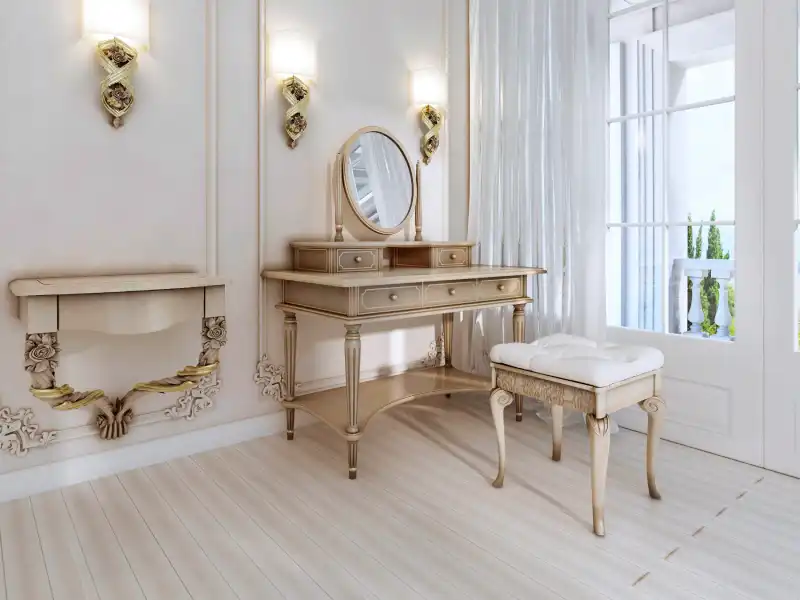
But here’s what nobody tells you: creating that perfect dressing table setup is trickier than it looks. I’ve been in friends’ bedrooms where they’ve shoved a makeup bag on top of a random desk, stuck a mirror somewhere above it, and called it done. Functionally? Sure, it works. But does it make you want to sit there? Not really.
After way too much trial and error (and one fairly expensive mirror-buying mistake I don’t want to talk about), I’ve figured out what actually makes a dressing table work. Let me save you the headaches.
Put It Where the Light Actually Is
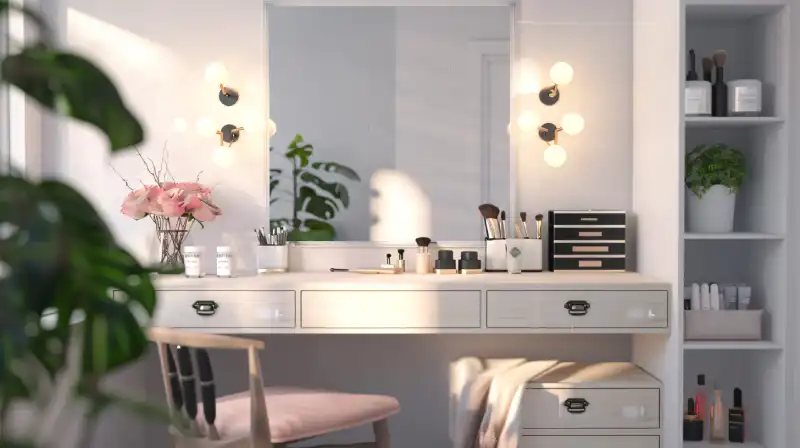
Biggest mistake I made initially? Stuck my dressing table in this “perfect” corner that had zero natural light. Looked gorgeous in photos. Terrible for actual use. I’d do my makeup, walk outside, check my reflection in my car window, and wonder why I looked like I’d applied everything in the dark. Because, well, I basically had.
Natural light is everything. If you’ve got a window, put your table near it. Not facing directly into the blazing sun—that’s its own problem—but angled so you’re getting good, even daylight on your face.
My friend Kate doesn’t have a window option in her bedroom, so she invested in these vertical light strips on either side of her mirror. Game changer. Even lighting beats overhead lighting every single time. Those ceiling lights cast shadows in all the wrong places and make you look like you’re in a horror movie.
Where should you position your dressing table? Near a window if possible, angled to catch natural light without glare. No window? Get vertical lighting fixtures flanking your mirror—they mimic natural light way better than a single overhead bulb.
Mirrored Furniture Is Either Your Best Friend or Your Worst Enemy
There’s this gorgeous mirrored dressing table at my local vintage shop that I’ve been eyeing for months. It’s stunning. Beveled glass panels, curved legs, and very old Hollywood glamour. I’ve almost bought it four times.
But here’s my hesitation: mirrored furniture shows EVERYTHING. Every fingerprint, every dust particle, every water ring from that one time you set down your coffee mug. My best friend has one, and she’s constantly wiping it down. Like, constantly.
That said, if you’re willing to put in the maintenance, mirrored tables are incredible for small spaces. They basically disappear visually while still being functional. Your room feels bigger, brighter, and more open. In a tiny apartment, that visual trick is worth the extra cleaning.
Should you get a mirrored dressing table? If you’ve got a small bedroom and don’t mind regular cleaning, absolutely. The reflective surface makes spaces feel larger. Just know what you’re signing up for maintenance-wise.
Custom Built-Ins Solve Storage Problems You Didn’t Know You Had
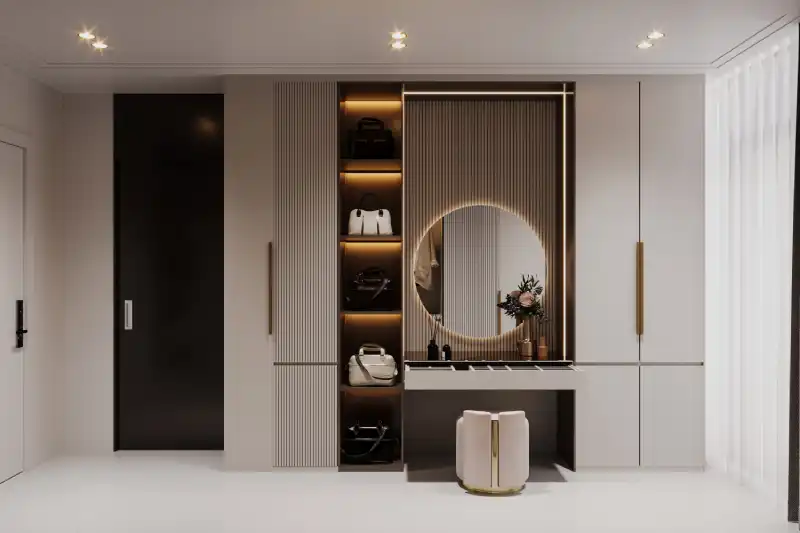
My cousin Rachel went the custom route when she renovated her bedroom last year. She had a joiner build a dressing table directly into her closet alcove with drawers specifically sized for her stuff. Sounds excessive, right?
Except now she has a drawer that’s exactly the right depth for her hair tools. Another one with dividers for jewelry. A shallow drawer up top for daily makeup. Everything has a spot. Nothing’s jumbled together in some random basket.
I’m not saying everyone needs to go custom—that’s a serious investment. But the principle matters: think about what you actually need to store and make sure your table can handle it. Generic two-drawer tables look nice but might not fit your actual life.
If a custom look isn’t in the budget, modular drawer organizers can get you pretty close to that tailored feel. I picked up some bamboo dividers from a container store, and suddenly my one big drawer became four smaller, actually useful sections.
How do you maximize dressing table storage? Map out what you need to store first, then find a table (or customize an existing one) that accommodates those specific items. Drawer organizers and dividers turn chaotic storage into organized stations.
The Chair Situation: Comfort Versus Space
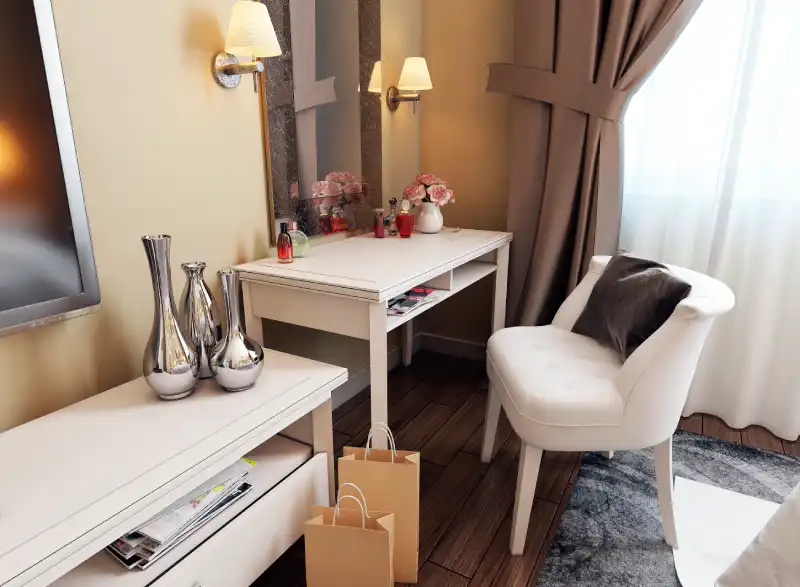
This is where I really messed up initially. Bought this beautiful velvet chair for my dressing table. It looked incredible. Photographed like a dream. Could barely fit it into the space between my table and bed. Had to do this awkward shimmy every time I wanted to sit down.
After three weeks of that nonsense, I swapped it for a backless stool that slides completely under the table when not in use. Is it as comfortable? No. Does it make my life 500% easier? Absolutely.
Should you choose a chair or stool for your dressing table? Full chairs are comfier for long getting-ready sessions, but stools are smarter for tight spaces. Measure your clearance before falling in love with seating—you need enough room to actually move around.
My sister (the morning-ritual one) has this upholstered dining chair at her place. It’s comfortable enough for her twenty-minute meditation sessions and narrow enough to not block the pathway. She found it at—you guessed it—another estate sale. The woman has a gift.
Weird Spaces Can Become Perfect Dressing Nooks
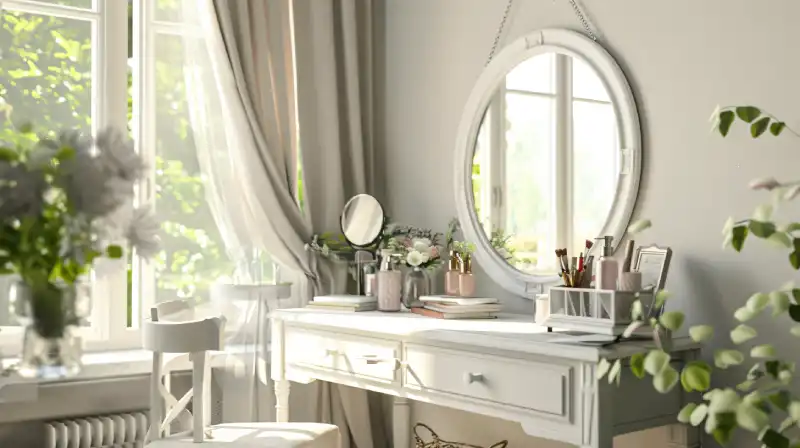
My apartment has this bizarre alcove situation—too small for a desk, too awkward for a bookshelf, just kind of… there. For two years I ignored it. Then I measured it one day and realized a narrow dresser would fit perfectly.
Now it’s my favorite spot in the whole place. The alcove creates this cozy, slightly separated feeling without actually being a different room. It’s tucked away enough that I don’t have to keep it pristine 24/7, but accessible enough that I actually use it.
Bay windows are another underused option. My friend converted hers into a dressing area with a long, narrow table that follows the window curve. The natural light situation is obviously perfect, and it transformed dead space into something functional and beautiful.
Can you put a dressing table in an awkward space? Absolutely—weird nooks, bay windows, alcoves, and even wide hallways can work. Measure carefully and consider custom or narrow tables designed for non-standard spaces.
Mirror Shape Actually Matters More Than You’d Think
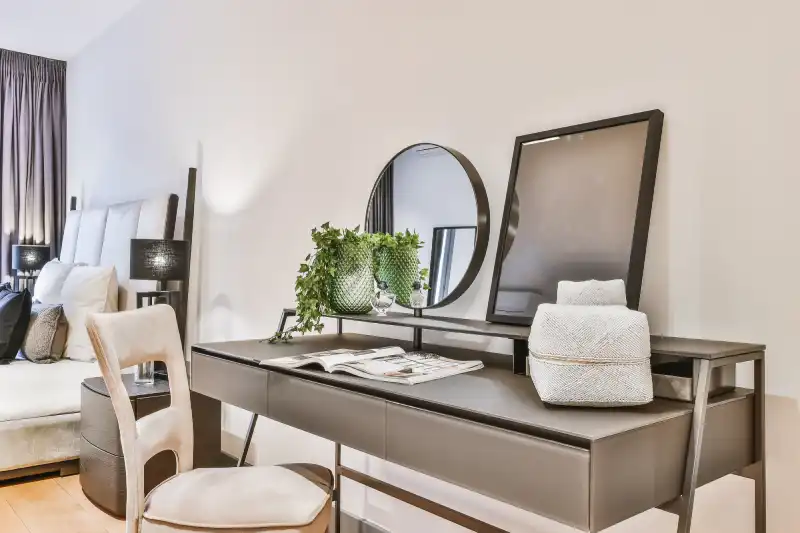
I thought mirrors were just mirrors. Rectangle, oval, round—who cares, right? Turns out the shape dramatically affects how your whole setup looks.
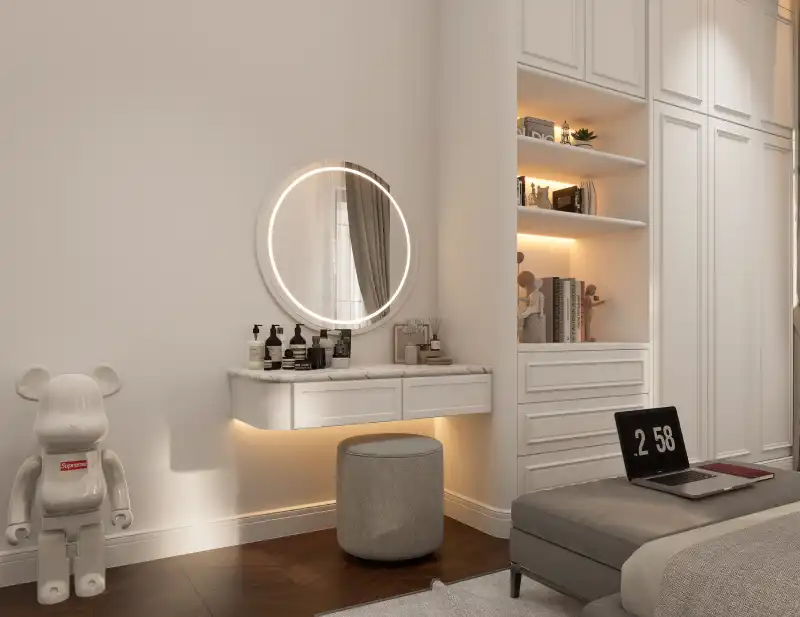
In my modern, minimalist bedroom, I initially tried this ornate baroque-style mirror. Looked ridiculous. Like I’d stolen it from a completely different house. Swapped it for a simple round mirror with a thin metal frame, and suddenly everything clicked.
How do you choose the right mirror shape? Match it to your room’s vibe. Contemporary spaces work with clean rectangles or simple circles. Traditional rooms can handle ornate frames and curved tops. The mirror should be roughly half to two-thirds the width of your table—too small looks odd, and too large overwhelms it.
Also consider height. If you’re tall (I’m 5’9″), you need a mirror positioned or sized so you’re not hunching to see yourself. Sounds obvious, but I’ve seen so many setups where people are basically bending in half to check their reflection.
Dual-Purpose Tables Need Clear Separation
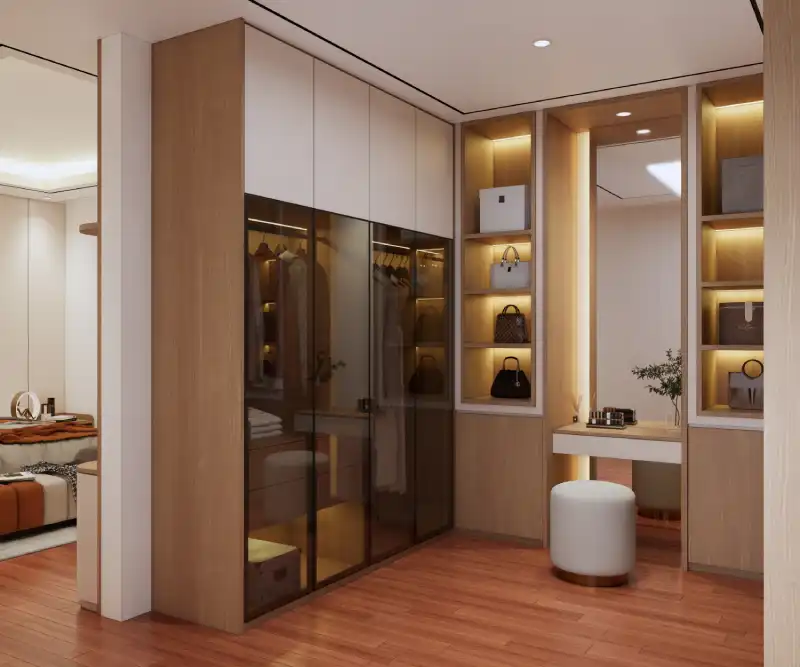
Working from home blurred every boundary in my life. My dressing table became my laptop desk, which meant makeup brushes lived next to charging cables and moisturizer next to notebooks. It was chaos.
The solution wasn’t complicated: I got a decorative screen—one of those folding room dividers—and positioned it so it visually separates my dressing area from my bed/work area. When I’m getting ready, I’m in “dressing mode.” When I’m working, the screen blocks the view of my makeup clutter.
If you’re using your dressing table as a desk too, create some kind of separation. Even a curtain or strategically placed plant can signal “this space has different functions.”
How do you separate dressing and work spaces? Use screens, curtains, or strategic furniture placement to create visual boundaries. Keep work items and beauty items in separate storage so they don’t intermingle and create clutter.
Vintage Pieces Need Careful Curation
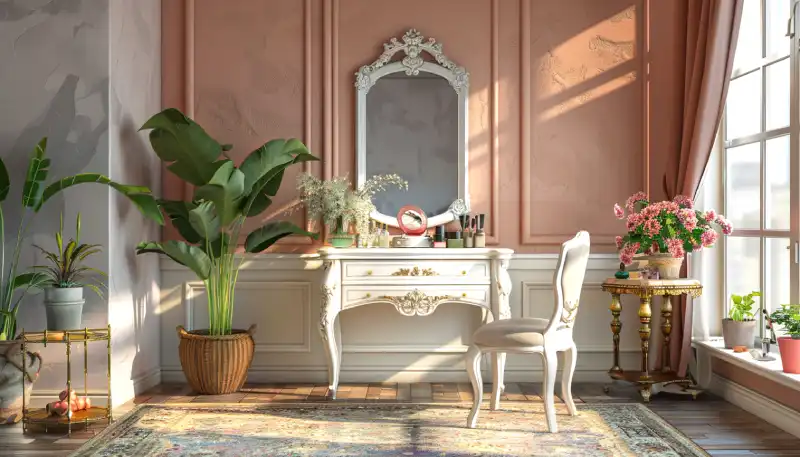
Remember my sister and her estate sale obsession? She’s got this gorgeous 1940s dressing table, but she’s really selective about what else is vintage in that space. The table, one antique perfume bottle, and a vintage hand mirror. That’s it. Everything else is contemporary and minimal.
That restraint is what makes it work. I’ve been in rooms where someone went full vintage everything—antique table, old mirrors, vintage boxes, retro lamps—and it feels like a museum, not a bedroom. Like you can’t touch anything without breaking it or messing up the aesthetic.
How do you style vintage dressing tables? One or two high-quality vintage statement pieces, then keep everything else simple and contemporary. Let your showstopper pieces actually be the show, not compete with the clutter.
The table itself can be ornate and decorative. Everything on top of it should be minimal and purposeful.
Wallpaper Behind Your Table Creates Instant Drama
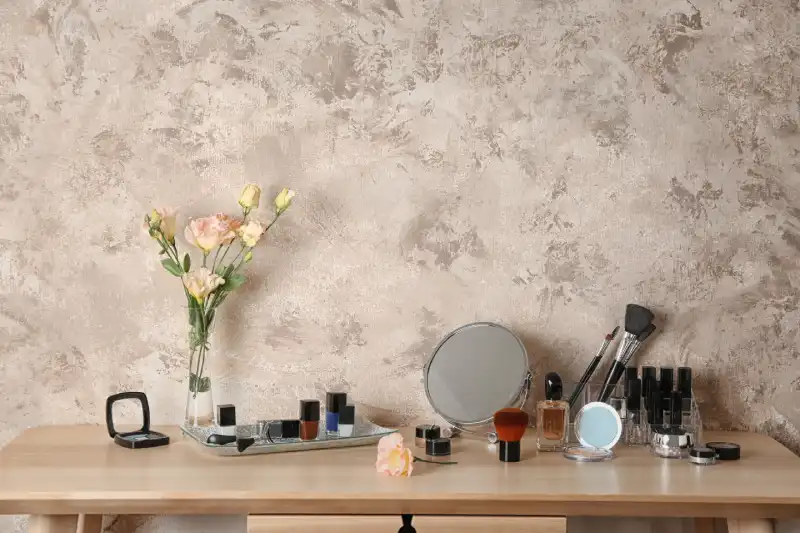
I’m not normally a wallpaper person—seems like a commitment—but my friend Jess put this tropical palm wallpaper behind her dressing table only. Just that one wall section. It transformed the entire corner.
She sits down to do her makeup, and she’s basically transported. The rest of her bedroom is pretty neutral and calm, but her dressing area feels like a vacation. It’s genius.
You don’t need to wallpaper your entire room. A mural or bold pattern behind just the dressing table creates a focal point and makes that space feel special and separate. Plus, if you get sick of it, you’re only removing paper from one small section.
Should you wallpaper behind a dressing table? If you want to create a distinct, special atmosphere in your dressing area, absolutely. A bold pattern or mural behind the table makes it feel like its own mini room without actual construction.
Your Seating Can Add Color Without Overwhelming
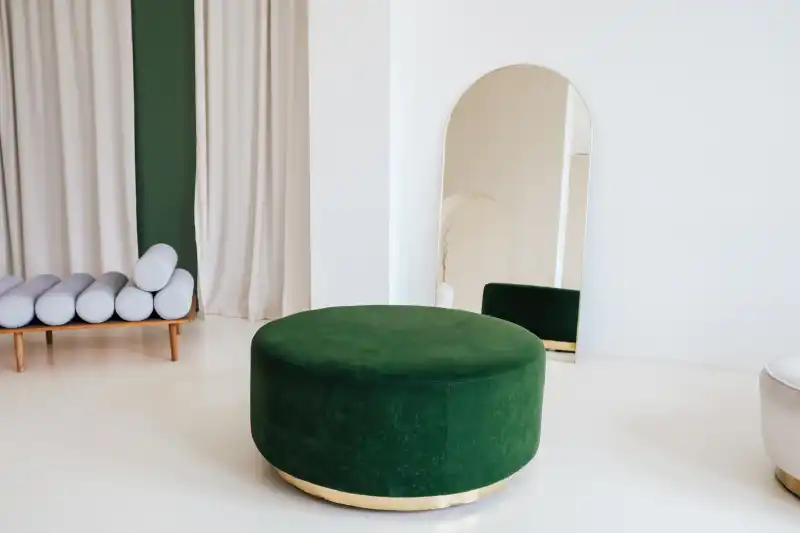
Neutral bedroom but want some personality? Your dressing table chair or stool is the perfect place to add a pop of color.
My bedroom is basically all white and soft gray—very calm, very boring. But my dressing table stool is upholstered in this rich emerald velvet. It’s the only bold color in the room, and it works because it’s small and contained. Adds interest without overwhelming the space.
This also lets you change things up easily. Reupholstering a small stool is way simpler than repainting walls or buying new furniture. Bored of emerald? Try blush pink next time. The flexibility is nice.
How do you add color with a dressing table and seating? Choose one bold, saturated color that pulls from (but intensifies) existing accent colors in your room. The seat becomes a jewel-like accent without clashing with your overall scheme.
Common Questions About Setting Up Dressing Tables
What actually needs to be on top of a dressing table?
Honestly? As little as possible. I know that sounds unhelpful, but cluttered surfaces stress me out. Keep your daily essentials in pretty containers—maybe a small tray for perfume and a ceramic dish for jewelry. Everything else should be tucked away in drawers. Fresh flowers or a small plant adds life without clutter. A lamp if you need additional lighting. That’s it. If your table looks like a beauty counter exploded on it, you’ve gone too far.
Where’s the best place to put a dressing table in a bedroom?
Near a window is ideal for natural light, but not directly in front of it—you’ll get glare. A corner with good light works. Bay windows are perfect if you have one. Awkward alcoves can be transformed into cozy dressing nooks. The worst places? Dark corners far from windows, right next to your bed where you’ll knock into it, or blocking important walkways. Think about your morning routine—you shouldn’t be obstacle-coursing around furniture to get ready.
How do you keep a dressing table looking nice?
Everything needs a home. Seriously, that’s the secret. Get containers, dividers, trays—whatever it takes so every item has a designated spot. When you’re done using something, it goes back to its spot immediately. Wipe down the surface weekly (daily if it’s mirrored). Keep only what you actually use regularly on top; seasonal or occasional items go in drawers. And this is key: if you haven’t used something in six months, it probably doesn’t belong at your dressing table anymore.
Should dressing table mirrors be attached or separate?
Depends on your style and flexibility needs. Attached mirrors (the traditional vanity setup) look cohesive, and you don’t have to worry about positioning. Separate wall mirrors give you more flexibility with height and angle, plus you can swap them out if you want a different look later. I prefer separate because I’m tall and need the mirror higher than most attached ones sit. But attached mirrors are cleaner-looking and less fussy to set up initially.
Can you use a regular desk as a dressing table?
Absolutely. I used a basic IKEA desk as my first dressing table for years. Just add a mirror and suddenly it’s a vanity. The reverse works too—dressing tables can be desks. The main difference is storage: desks usually have deeper drawers meant for files and office supplies, while dressing tables often have shallower drawers better suited for cosmetics and accessories. But functionally? They’re interchangeable. Don’t overthink it.
How much should you spend on a dressing table?
Whatever fits your budget honestly. My sister’s beloved estate sale table cost her $75. My friend’s custom built-in was several thousand. Both work perfectly for their needs. You can find decent tables starting around $150-200 new or hunt in vintage shops and secondhand sites for unique pieces at lower prices. Invest more if you’ll use it daily and want it to last years. Spend less if you’re renting or unsure about your long-term setup. Quality matters more than price—a well-made $200 piece beats a wobbly $500 one.
Why This Space Matters More Than You Think
Remember how I mentioned my sister’s morning ritual? I finally asked her why she’s so devoted to that twenty-minute dressing table time.
“It’s the only space in my house that’s completely mine,” she said. “Not for cooking or cleaning or working or entertaining. Just for me. Even if I’m not doing anything, I’m doing it for myself.”
That hit different.
We spend so much energy making our homes functional—optimizing kitchens for meal prep, arranging living rooms for guests, and setting up home offices for productivity. But when’s the last time you created a space purely for your own enjoyment? Not for output or entertaining or necessity. Just because it makes you feel good?
That’s what a proper dressing table setup does. It’s permission to take time for yourself without guilt. It’s a daily reminder that you’re worth the effort and the space.
So yeah, get the placement right and the lighting sorted and the storage figured out. But also give yourself permission to make it exactly what you want—impractical vintage mirrors, bold-colored stools, whatever makes you happy to sit there.
Your bedroom probably already serves fifteen different purposes. Your dressing table can just be yours.
