

The most effective way to reduce household dust is to match your method to the surface: dust top to bottom with a damp microfiber cloth, vacuum floors and entryways according to your home’s traffic, pets, and carpeting, clean before disinfecting, and keep indoor humidity near or below 50%. This won’t remove every allergen, but it steadily cuts buildup.
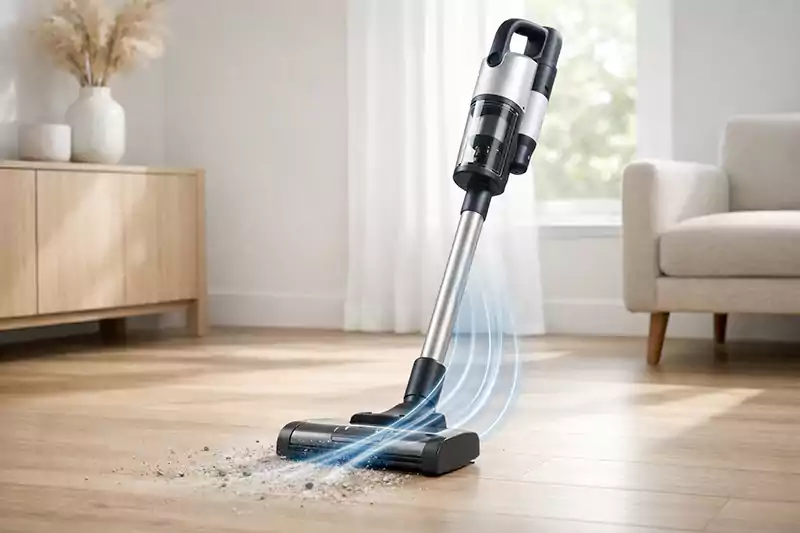
Household dust is more complicated than it looks. A single layer on a shelf can contain pollen, pet dander, dust-mite debris, mold particles, fabric fibers, and skin cells. Regular cleaning can meaningfully cut down how much of this material builds up in a home, though no routine will eliminate every indoor pollutant entirely. The good news is that an effective approach relies less on cleaning everything daily and more on using the right method for each surface. For floors, stairs, and hard-to-reach corners, many households find a cordless vacuum convenient as part of a broader dust-management plan, though it’s simply one tool among many rather than a required solution.
Understand What Household Dust Contains
Visible dust is only part of the picture. Some particles settle fairly quickly onto shelves, baseboards, blinds, and furniture, while others stay suspended in the air and get stirred up again by walking, dusting, or vacuuming. Dust also includes biological material such as pollen, pet dander, mold spores, and dust-mite debris, all of which behave differently than ordinary dirt.
It helps to separate two goals that are often lumped together. Routine cleaning removes dirt, dust, and many contaminants from surfaces. Disinfecting, on the other hand, targets specific germs on surfaces suited for it, and public health guidance generally recommends cleaning before disinfecting rather than treating disinfectant as a stand-in for basic cleaning. Thinking of these as two separate steps, instead of one combined task, makes it easier to figure out what a given surface actually needs.
It’s also worth being upfront about the limits here: cleaning can reduce dust and may ease allergy symptoms for some people, but it’s no guarantee of relief and shouldn’t replace medical evaluation for ongoing respiratory or allergy issues.
Start With a Simple Cleaning Prioritization System
Rather than attempting a full deep clean every day, it’s more sustainable to sort tasks into three tiers: high-touch surfaces cleaned often, dust-prone areas cleaned on a recurring schedule, and low-use spaces addressed every so often. Where each room falls depends on foot traffic, whether pets are in the picture, how much carpet or upholstery is involved, household allergies, moisture levels, and how often cooking or other activity happens there. Cleaning frequency should also tick up temporarily when someone in the household is sick or especially sensitive.
Start here checklist:
– Floors and entryways
– Bedding and upholstered furniture
– High-touch surfaces
– Baseboards and vents
– Kitchens and bathrooms
Use the Right Technique for Each Surface
Floors and carpets tend to collect dust, hair, and particles tracked in from outside, so how often you vacuum should match your household’s actual conditions rather than some fixed universal schedule. A vacuum with high-efficiency filtration may help limit dust redistribution, particularly in carpeted homes or those with allergy concerns, though following the manufacturer’s instructions for filters, attachments, and flooring compatibility matters more than any single feature on its own. Don’t overlook stairs, corners, the space under furniture, and entry mats, which often collect more debris than open floor areas do.
For hard surfaces and furniture, a damp microfiber cloth or similar tool that traps particles rather than scattering them generally beats a dry one. Working from higher surfaces down to lower ones lets dislodged dust get captured afterward instead of resettling on spots you’ve already cleaned. Commonly missed areas include baseboards, blinds, shelving, light fixtures, and the spaces behind and beneath furniture. Water and the right cloth are often enough without reaching for additional chemicals.
In kitchens and bathrooms, visible soil should come off first—this approach is the clean-before-disinfecting principle at work. Reading product labels, respecting listed contact times, and never mixing cleaning chemicals are basic safety habits worth keeping. Disinfecting every surface on a routine basis isn’t necessary for most households; it matters more when someone is sick or when a surface gets touched repeatedly throughout the day.
Key takeaway: Matching the cleaning method to the surface—damp instead of dry dusting, top-to-bottom order, cleaning before disinfecting—generally does more to cut dust than simply cleaning more often with the wrong technique.
Reduce Dust at Its Source
A few simple habits can limit how much dust gets into a home in the first place. Entry mats and taking off outdoor shoes cut down on tracked-in debris, while laundering bedding regularly, according to care instructions, addresses one of the most dust-mite-friendly spots in any home. Dust mites thrive in warm, humid conditions, and keeping indoor humidity below roughly 50% is a commonly cited benchmark for limiting their growth—though a hygrometer is really the only reliable way to know actual conditions in a given room.
Cutting down on clutter and choosing washable covers where practical also reduces the surfaces that can collect dust. For households with pets, grooming according to veterinary guidance, washing pet bedding regularly, and paying extra attention to floors near feeding and sleeping areas all help. An apartment with a shedding dog and a carpeted bedroom, for instance, will likely need more frequent vacuuming in that specific room than the rest of the home does. None of these steps eliminates allergens completely, and anyone dealing with ongoing allergy or asthma symptoms may want to talk to a healthcare professional for guidance beyond general cleaning practices.
Build a Sustainable Weekly Routine
A flexible routine tends to hold up better over time than a rigid timetable. Spills, kitchen surfaces, and entry areas often need daily attention; high-traffic floors may need several passes a week; dusting, carpet care, and laundering bedding can happen weekly; and vents, blinds, and behind-furniture spaces can be handled every now and then. Doing tasks in the same order each time, and keeping supplies together, can shave real time off how long cleaning actually takes.
Customize your schedule: Homes with pets, young children, carpeting, or allergy-sensitive occupants may need a noticeably more frequent routine than homes without these factors.
Common Cleaning Mistakes to Avoid
- Dusting with a dry cloth that scatters particles instead of capturing them
- Cleaning floors before clearing dust from higher surfaces
- Treating disinfectant as a substitute for regular cleaning
- Ignoring clogged filters, full containers, or damaged attachments
- Assuming any “HEPA” label guarantees identical performance across devices
- Overusing fragranced or harsh products when water and a cloth would do the job
- Cleaning in ways that worsen symptoms for allergy-sensitive household members
If disturbing dust triggers symptoms, stepping out of the room for a bit, improving ventilation, or asking another household member to handle the cleaning can help. Masks are a practical option for some people, not a guaranteed fix, and anyone with significant symptoms should talk to a qualified healthcare provider.
How to Measure Whether the Routine Is Working
Useful signs include less visible dust on frequently used surfaces, less debris piling up near entrances, fewer recurring buildup spots, and a cleaning workload that starts to feel more manageable over time. That said, the absence of visible dust doesn’t confirm that airborne particles or allergens are gone. Changing one part of the routine at a time makes it easier to tell which adjustments are actually helping, and keeping a few simple notes on recurring problem areas is especially useful in homes with pets or allergy concerns.
A Practical, Sustainable Approach to Cleaner Indoor Spaces
An effective routine prioritizes high-impact areas, matches the method to the surface, removes dust instead of just redistributing it, manages moisture, and stays consistent without turning every task into an emergency. A reasonable starting point is identifying the three spots in your home that collect the most dust and giving each a realistic frequency. A thoughtful routine can reduce dust and support a cleaner living space, but it can’t eliminate every allergen, and it’s no substitute for professional medical advice when symptoms persist.
