

Is A Shaker Kitchen Outdated In 2026?
No — shaker cabinetry isn’t a trend, it’s a shape, and that’s why it keeps adapting. Eight design moves keep it current: dark, saturated colours instead of pale neutrals; slimmer door frames for a crisper look; bold worktops like veined marble against the quiet cabinetry; contrasting handle styles to shift the era; two-tone colour schemes; full-height cabinetry to the ceiling; open shelving breaks in closed runs; and treating the island as a standalone furniture piece. The style dates only when the colour, frame and handles are chosen without intent.
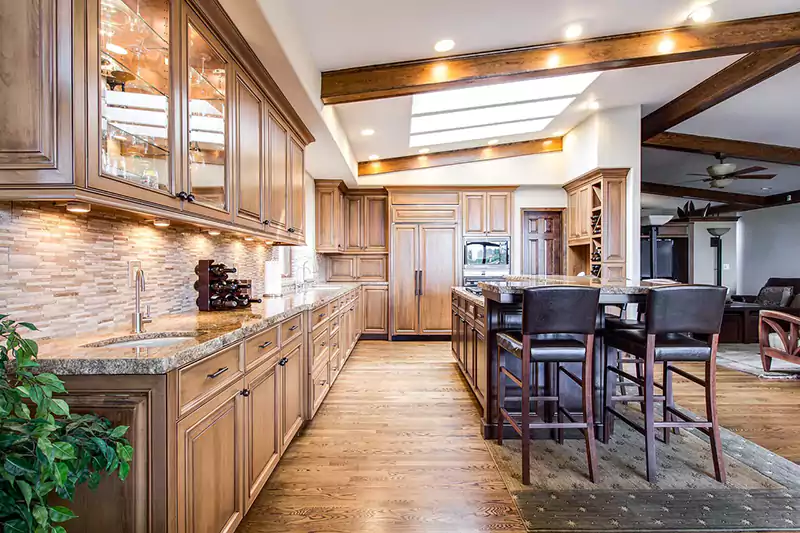
Shaker cabinetry has been around long enough to be called traditional, and that is exactly why people assume it must be looking tired by now. In practice, the opposite has been true. The recessed panel door has turned out to be one of the most adaptable shapes in kitchen design, and the kitchens being built around it today look nothing like the cream and oak schemes of twenty years ago.
If you like the idea of a shaker but worry it will feel safe, here are eight ways to use it that keep it firmly in the present.
Go Dark Instead Of Neutral
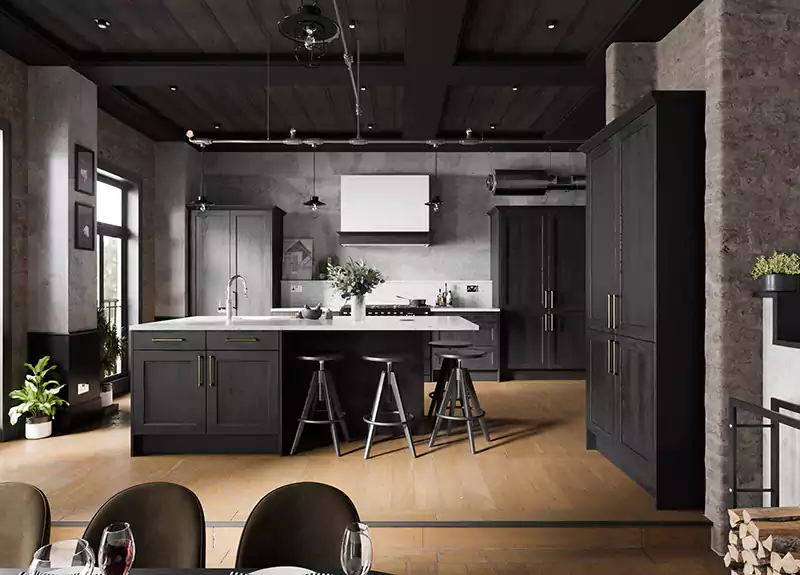
The fastest way to modernise a shaker kitchen is to stop treating it as a pale style. Deep greens, inky blues, charcoals and warm browns all sit beautifully against a recessed panel, because the frame catches light differently from the centre panel and gives the colour depth you never get from a flat slab door.
A dark shaker kitchen in a small room is not the mistake people expect either. The depth of colour blurs the edges of the cabinetry, often making a compact space feel larger, not smaller.
The Vård shaker range in Onyx shows how much depth a dark colour gains from a recessed panel.
Use a Slimmer Frame
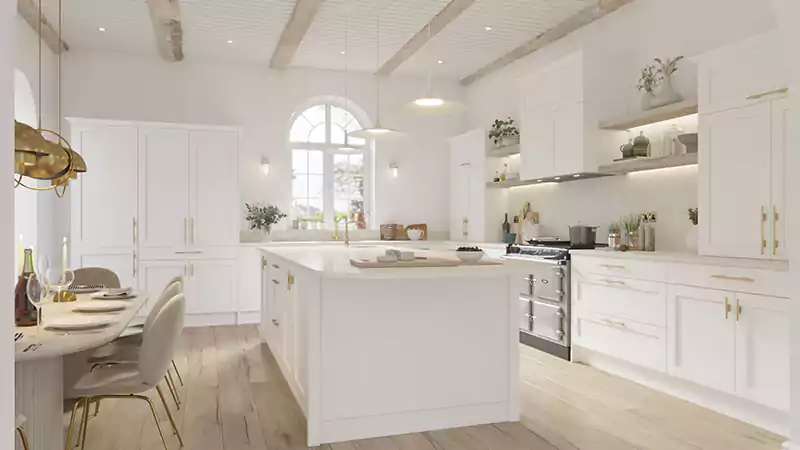
Not all shaker doors are the same. The width of the frame around the centre panel changes the kitchen’s whole character. A traditional shaker has a generous frame, which reads as classic and slightly rustic. A slim frame gives you the same recessed shape in a much crisper, more contemporary form.
This single detail is often the difference between a kitchen that feels period-appropriate and one that feels current, and it costs nothing to specify correctly at the design stage.
The Hambleton range in Chalk is a slim shaker frame that reads noticeably crisper than a traditional profile.
Pair It With A Bold Worktop
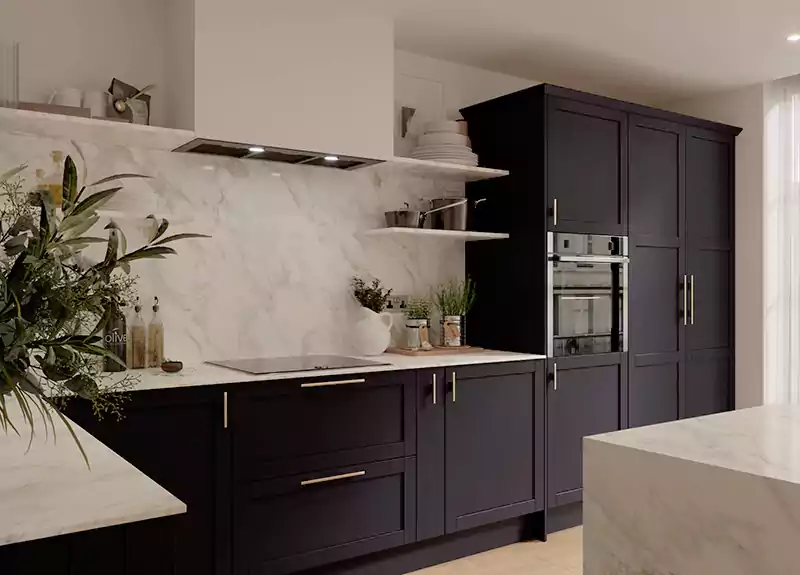
Shaker cabinetry is quiet by nature, which means it can carry a much more assertive worktop than a busy door style could. Heavily veined marble, dark honed granite, or warm timber on an island all work well because the cabinetry underneath does not compete for attention.
If you have been talked out of a dramatic stone before, a shaker kitchen is the place to revisit it.
The Kasper range in Indigo features a heavily veined marble worktop and splashback that carry the room, while the cabinetry remains understated.
Change The Handles, Change The Decade
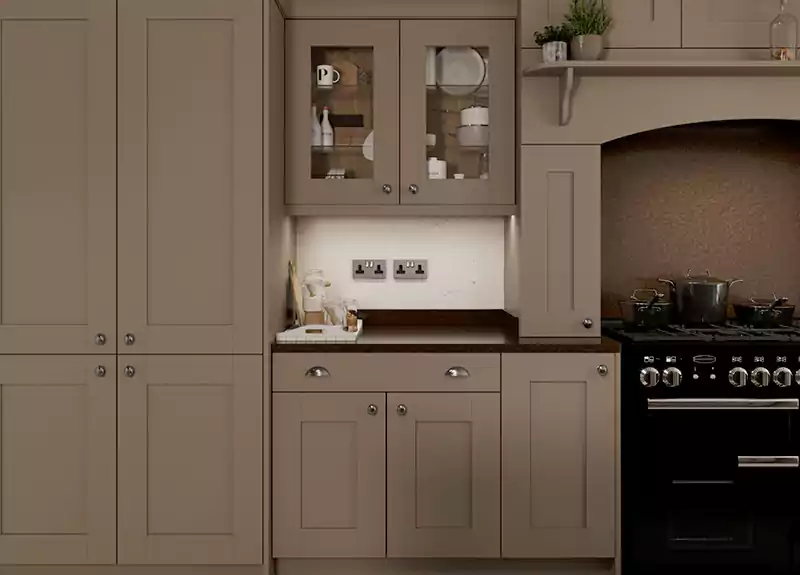
Handles do an enormous amount of work on a shaker door. Cup handles and knobs in antique brass give the kitchen a more traditional look. Long, slim bar handles in matte black or brushed steel pull it sharply towards a contemporary look. Same cabinet, completely different room.
It is also the cheapest thing in the kitchen to change later, so it is worth choosing deliberately rather than accepting whatever comes as standard.
The Hjerte range in Stone, with cup handles and round knobs, is the combination that pushes a shaker kitchen towards the more traditional end.
Mix Two Colours
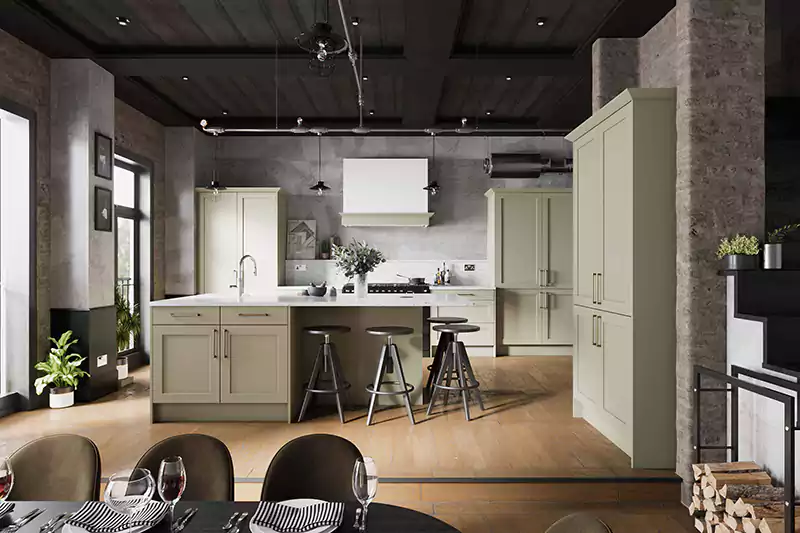
Two-tone schemes have stopped being a trend and settled in as a standard approach. Darker base units with lighter wall units keep the room feeling open while giving the lower half some weight. Alternatively, run the whole perimeter in one restrained colour and treat the island as the feature in something much stronger.
Shaker suits this scenario better than most styles, as the frame gives each colour a defined edge, rather than letting them blur into one another.
The Vård range in Eden features the island in a deeper tone than the perimeter run.
Take The Cabinetry To The Ceiling
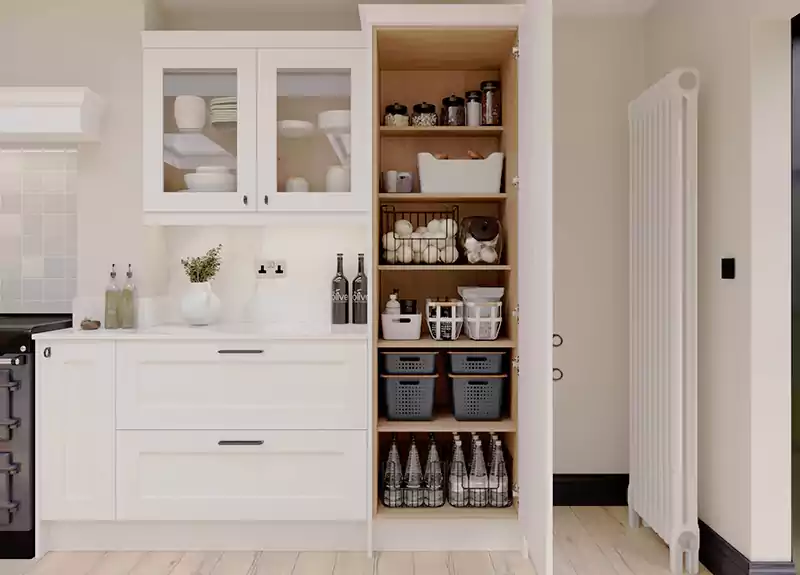
Nothing dates a kitchen faster than a dusty gap above the wall units. Running shaker cabinetry to full height, with a slim cornice or a flush finish, immediately reads as a considered design rather than a set of boxes fitted to a wall.
It also buys you a genuinely useful band of storage for the things you reach for twice a year.
The Eddison range in Chalk. Cabinetry was taken to full height rather than stopping short and leaving a dead band of wall.
Break The Run With Open Shelving
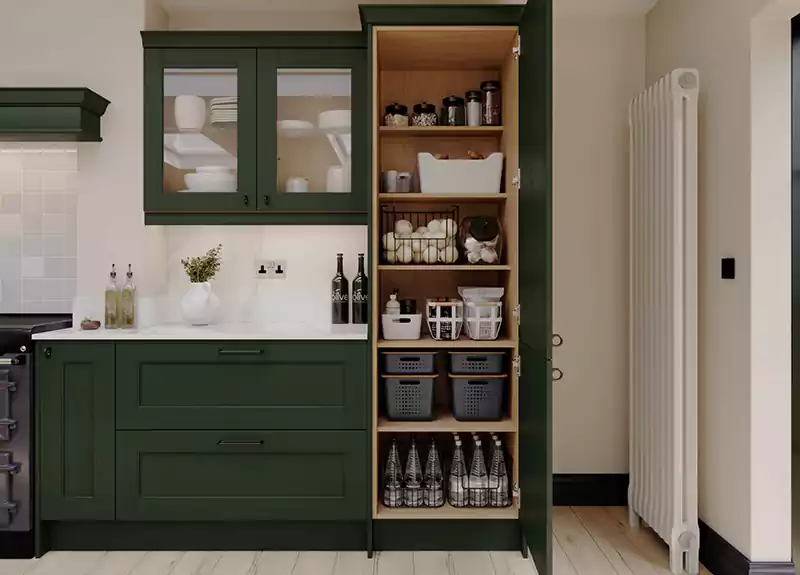
A continuous wall of closed cabinetry can feel heavy. Replacing one section with open timber shelving, or a glazed shaker door, gives the eye somewhere to rest and stops the kitchen from looking like a showroom.
Keep it to one area rather than scattering it around the room, and make it a place where you genuinely want to display something.
The Eddison range in Forest breaks a run of closed cabinetry with glazed doors and an open larder interior.
Rethink The Island
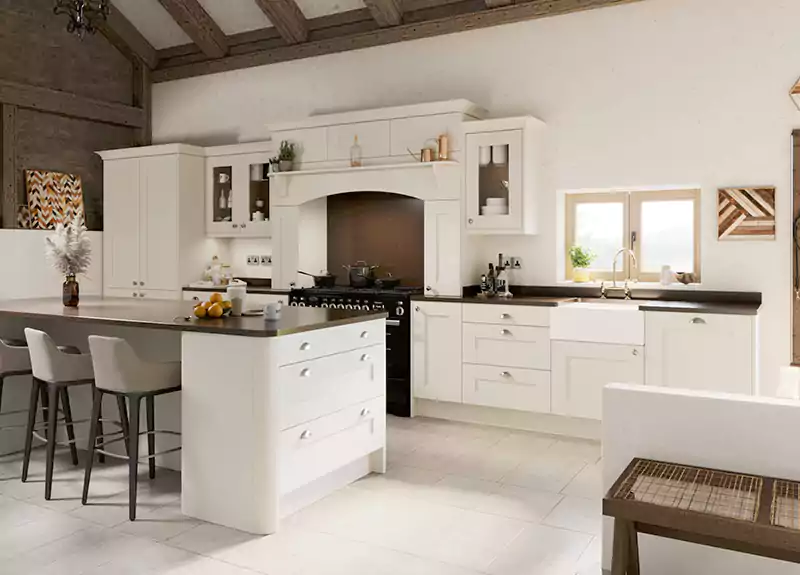
An island is often where a shaker kitchen either comes alive or starts to look like a showroom display. Treating it as a piece of furniture rather than another run of units changes the result completely. Panelled ends, a different colour to the perimeter, a thicker worktop, or a timber top on an otherwise painted scheme all help it read as a deliberate feature.
It is also the one place where a more expensive material is worth it, as the island is what people see from the rest of the room.
The Hjerte range in Clay, with the island treated as a piece of furniture and given a seating overhang, is a particularly effective example.
Let The Layout Do The Modernising
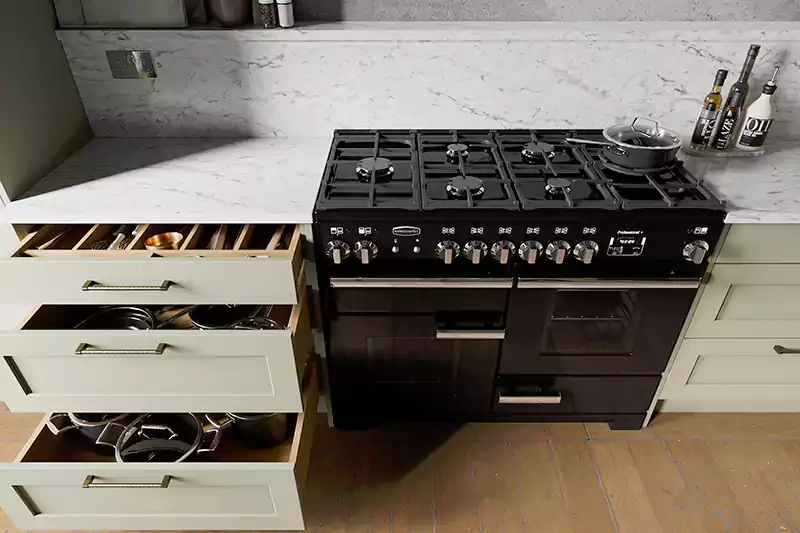
Some of the most contemporary shaker kitchens feel modern because of their arrangement rather than the appearance of their doors. A proper working triangle, a generous island with seating on one side, integrated appliances, and a dedicated zone for the things that usually end up cluttering a worktop will all make a classic door style feel completely out of the moment.
It is worth planning this properly before choosing a single colour, as no finish will rescue a layout that works against the way you cook.
The Vård range in Eden serves as a good example, with deep pan drawers placed directly beside the range instead of across the room.
Seeing It Put Together
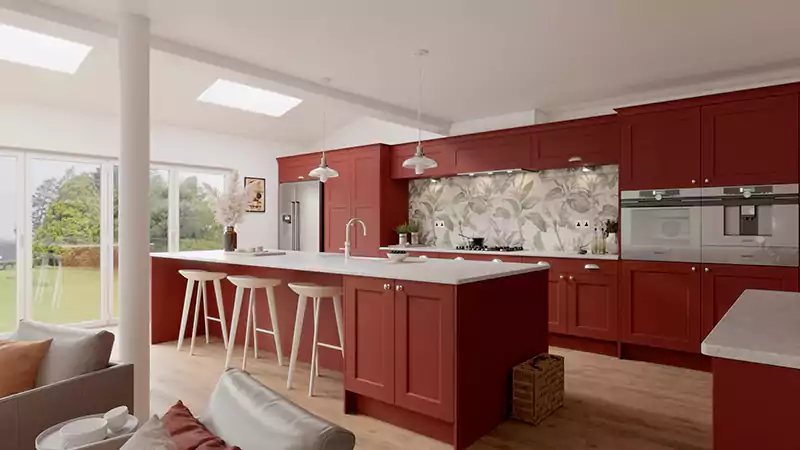
It is easier to judge all of these elements when you can see a finished kitchen rather than a door sample. Smile Kitchens design and supply online rather than through showrooms, and their shaker kitchen ideas pages show the style across a wide range of colours and finishes, from slim frames to more traditional profiles.
The Jenson shaker range in Crimson shows how far colour alone can push a classic recessed panel door.
The Reason The Style Keeps Working
Shaker has lasted because it is a shape rather than a trend. It carries colour well, it takes almost any handle, it sits comfortably in a Victorian terrace and a new build alike, and it never insists on being the most striking thing in the room.
That flexibility is precisely what makes it so easy to modernise. The question is rarely whether Shaker will date. It is whether the colour, frame width and handles around it have been chosen with any real intent.
