

To prepare the garden beds for summer, please install the borders first. Bury lawn edging 75 to 100 mm deep to block couch and kikuyu runners, weed next, then soak the beds and add about 75 mm of mulch. Steel edging holds its shape in extreme heat and heavy storms, so a November install stays straight through summer.
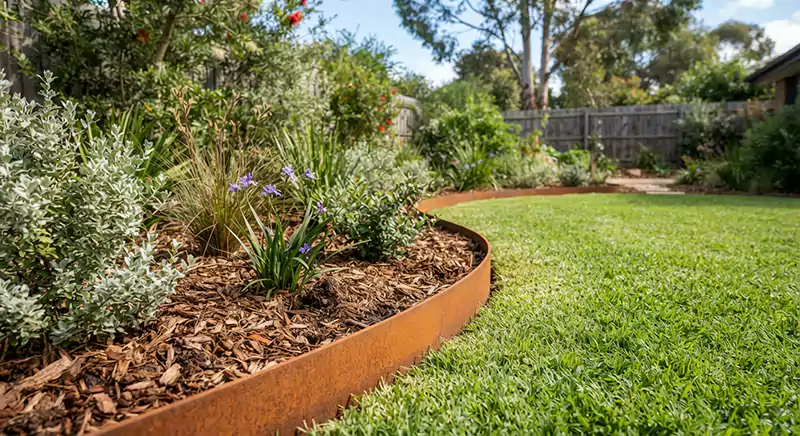
Whether it’s timber, brick, or ShapeScaper lawn edging, the border around a garden bed gets tested harder over summer than at any other time of year. By mid-November, couch grass has generally worked out where the gaps are, and a bed that looked tidy in October has grown a fringe of runners along its front edge. The mulch has thinned to bare soil in patches too, and the line between the lawn and the garden is starting to blur.
On hot afternoons, the top few centimetres of soil can dry out in a day. Warm-season grasses are also putting on their fastest growth of the year, and the first big storm tends to wash anything loose straight out onto the path. A few weeks of preparation now means the garden will hold its shape through to March, without needing a rescue in January.
Check the Edges Before You Buy a Single Seedling
Borders are usually the first thing to fail, and it’s rarely dramatic. Clay soil swells over a wet winter and shrinks as it dries out, and that slow push and pull can lift a run of edging or tip it a few degrees off line. Most people don’t notice until the grass is already through. Walk along each bed and observe where the edging is currently positioned, rather than where you recall placing it. Corners and the low end of a slope tend to move first.
A few things to look for:
- Lifted or leaning sections
- Gaps underneath where runners have slipped through
- Soft timber (once rot sets in, a summer of watering finishes it off)
- Mulch already sitting on the lawn, which is a sign the edge is too low
Runners Don’t Respect a Shallow Line
Couch and kikuyu do most of their growing when it’s warm. Their runners travel sideways and underground, and loose soil is where they head first. From above, a shallow border can look perfectly neat. Underneath, the runners have already gone straight past it. For these grasses, installers tend to bury lawn edging 75 to 100 mm deep so it works as a proper root barrier.
November is the easier month to get it in, while the soil is still soft enough to work.
Leave it until late January, and clay can bake almost as hard as the concrete next to it. Hammering stakes into that is slow, sweaty work.
Where the Mulch Ends Up
Around 75mm of fresh mulch slows evaporation and keeps roots cooler through the hottest weeks. It also smothers a lot of the weed seeds that sprout after the first warm rain, but only if it stays in place. Blackbirds scratch through it, and a heavy downpour can push a surprising amount onto the lawn in one go. Even a low border, sitting a few centimetres above the soil, gives it something to bank up against.
Choosing a Material That Copes With Heat
Steel is the one worth spending on for summer. It doesn’t soften in a 40-degree sun or swell after a storm, and a run laid straight in November is usually still straight at Easter.
Steel edging comes in a wide range of heights, from low bed borders of around 75 mm up to taller profiles that can handle small level changes, so the same style can carry right through a garden. Weathering steel is the finish most people picture. It develops a warm rust tone that sits beautifully against ornamental grasses and silver-leaved natives. Galvanised steel suits those who prefer a cool silver-grey finish. Either way, good garden border edging should stay in the background, so the planting gets to take over once everything fills out in February.
What Goes Down First
Order makes a difference on the day. The edges go in first, and the weeding comes second. Thereafter, give the beds a deep soak before the mulch goes down, so the moisture is trapped underneath and doesn’t evaporate off the top. A bed set up this way in November usually needs little more than a trim and a top-up of water until autumn.
FAQs: Getting Garden Beds, Borders and Lawn Edging Summer-Ready
How deep should lawn edging be buried to stop couch and kikuyu grass runners from spreading?
For these warm-season grasses, installers generally bury lawn edging 75 to 100 mm deep. At that depth it works as a proper root barrier, because the runners travel sideways and underground and slip straight past a shallow border.
Why does my garden edging lift or lean after winter?
Clay soil swells over a wet winter and shrinks as it dries, and that slow push and pull can raise a run of edging or tip it off-line. Corners and the low end of a slope usually move first, so check those spots before the grass finds the gaps.
When is the best time to install garden edging before summer?
November is the easier month, while the soil is still soft enough to work. By late January, clay can bake almost as hard as concrete, which makes driving stakes slow and exhausting.
Which garden border material copes best with extreme summer heat?
Steel is a strong choice because it doesn’t soften in a 40-degree sun or swell after a storm. Weathering steel develops a warm rust tone, while galvanised steel retains a cool silver-grey look.
What order should I tackle garden bed prep in?
Start with the edges, then weed, and give the beds a deep soak. Finally, add about 75 mm of mulch to keep the moisture trapped underneath instead of letting it evaporate off the top.
