

What makes modular cleanroom systems more efficient than traditional builds?
Modular cleanroom systems use pre-fabricated panels and components assembled on-site, cutting installation time significantly compared to conventional construction. This approach reduces production downtime, allows flexible reconfiguration as operational needs change, and supports consistent contamination control through standardized parts, making it a preferred choice for pharmaceutical, biotech, electronics, and aerospace facilities that need a controlled environment without the cost and disruption of traditional cleanroom construction.
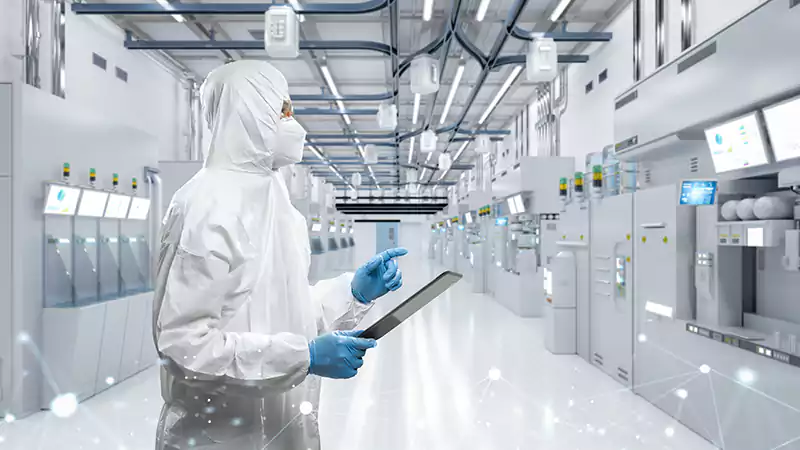
In such industries, where cleanliness and precision are key aspects, efficiency plays a crucial role in determining the quality of the manufactured products, the timelines within which they are manufactured, and the total cost. For pharmaceutical production, biotechnology, electronics, and aerospace, among other specialty industries, a controlled environment is important for maintaining high standards of cleanliness. Modular cleanrooms have emerged as a better approach due to the above reasons.
While traditional cleanrooms usually involve a great deal of construction work, modular cleanrooms make use of prefabricated elements that may be arranged in such a way as to meet the needs of any particular facility. This method can assist companies in establishing a controlled environment without excessive losses of time or resources.
Faster Installation and Reduced Downtime
One of the key factors that help improve the efficiency of modular cleanrooms is the speed of assembly. Conventional cleanrooms require complex architectural processes such as the construction of walls, ceilings, floors, ventilation systems, and many others.
The modular approach uses panels and other materials that manufacturers build to certain specifications before they reach the building site. Since much of the work is done beforehand, construction time can usually be faster than traditional construction methods.
An accelerated construction time frame allows companies to use the controlled environment quicker. Current activities will be relatively undisturbed, which is especially important for sites where production must continue during expansion or renovations.
Flexible Design and Configuration
Changes in operational requirements may arise. The firm may require additional production space, additional equipment, new room classifications, or altered workflow. These changes may be challenging within a non-flexible cleanroom environment.
The modular cleanrooms are more flexible since the modules can be configured to fit various needs. The walls, partitions, doors, ceiling, and other parts may be configured according to the needs of the particular facility.
With this adaptability, firms can construct cleanrooms according to their processes rather than designing their processes to fit a rigid cleanroom design. In case there is a need for future modifications to the cleanroom, the modular parts can easily be reorganized or extended.
Better Space Utilization
Utilization of facility space is another critical factor that modern organizations need to consider. Inadequate planning of layout design can result in increased flow of movement between stations, which leads to an inefficient production process.
A modular clean room system enables the planning of layouts in relation to processes. Effective planning can ensure that the production area, storage area, equipment area, access point for staff, and material handling area are well organized.
An effective layout design can minimize unnecessary movement and assist staff in accomplishing tasks easily. A well-designed layout design can also facilitate effective segregation of various operations to avoid cross-contamination.
Improved Contamination Control
The presence of controlled environmental conditions is necessary for various businesses. The dust, particles, microorganisms, and other contaminants may harm processes and products.
The modular cleanroom system may include the controlled air flow, filtration, pressure control, special surfaces, and other elements that are used for the provision of the necessary environment conditions. Such systems assist companies in creating an appropriate working environment.
Contamination control will lead to fewer chances of defective products and rejection of any batch. Consequently, companies will save time and money while maintaining consistency in product quality.
Efficient HVAC and Air Management
HVAC systems make a very significant contribution to cleanroom performance. The environment inside the cleanroom needs to be carefully controlled in terms of flow, temperature, humidity, and filtration.
Modern modular cleanrooms can easily integrate with HVAC and filtration systems to meet the building’s needs. Proper air management can help keep conditions constant without wasting energy.
Good airflow design can also help maintain the pressure differential between the rooms. This becomes especially significant in cases where there is a need for varying degrees of sterility in different areas.
Easier Maintenance and Cleaning
Maintenance of the cleanroom is critical in ensuring optimal performance. Any surface that is difficult to clean increases the duration of maintenance and increases the difficulty of cleaning.
Modular cleanrooms can be built with smooth, easily cleanable surfaces. Proper design of the walls and ceilings can reduce the accumulation points of dirt and contaminants.
If cleaning and maintenance activities are easy to execute, employees will spend less time on difficult maintenance tasks. The process of regular cleaning will become easier to accomplish as well.
Scalability for Growing Businesses
Businesses rarely stay still. Production quantities could rise, businesses could produce new products, or they may need to conduct other processes in controlled environments.
The modular clean room could help in future expansions. Rather than totally redesigning an existing building, businesses could simply add additional modules to the existing set-up.
Such flexibility enables companies to meet any operational challenges without having to make large-scale restructuring investments every time there is a need for space. This can also assist organizations in planning for expansion on an incremental basis.
Reduced Construction Costs
The cost efficiency of modular cleanrooms is another significant benefit. The conventional method of building cleanrooms can be time-consuming and expensive.
Due to standardization and prefabrication of components in modular systems, they can assist in making construction more efficient. Labor costs will be reduced due to shorter installation times and minimal disruptions.
Nevertheless, the total cost of building a cleanroom depends on several factors, such as size, classification, filtration system, materials, and other necessities. Companies need to consider the entire project instead of just the construction costs alone.
Greater Consistency and Quality
Consistency is critical in a controlled environment. The parts used in modular cleanrooms are made to specifications that will provide consistent results throughout the cleanroom.
Using standardized systems will be simpler when maintaining consistent conditions and controlling for quality in rooms. Using consistent construction will also simplify the process of modifications in the future since the extra or replacement parts will be compatible with the already constructed system.
Industries operating under high standards of quality can benefit from using standardized systems.
Supporting Regulatory Requirements
Regulatory and quality standards are often critical in many industries that make use of clean rooms. Industries such as pharmaceuticals, biotechnology, medical devices, and electronics may have unique requirements for the clean room.
A well-designed modular cleanroom can incorporate all relevant requirements from the outset. It makes it much easier to develop procedures for monitoring, cleaning, maintaining, and quality control of the environment.
The organizations must collaborate with cleanroom specialists to make sure that the chosen system is in compliance with all pertinent requirements.
Conclusion
The advantages of modular cleanrooms include improved efficiency due to the following factors: adaptability, controlled environment, quick assembly, ease of maintenance, and scalability. They are especially advantageous in sectors that require high levels of cleanliness and precision.
Be it better space usage and contamination control, a faster installation process, or even flexibility for future expansion, modular cleanrooms provide companies with an efficient way of creating controlled environments.
To make use of these advantages, it is important to properly plan a system. It is necessary to think about your production process, cleaning standards, air conditioning needs, maintenance process, and future development of your business. With appropriate design and proper installation, a modular cleanroom will be a useful addition to your company.
FAQs: Modular Cleanroom Systems and Operational Efficiency
How do modular cleanroom systems improve operational efficiency?
Modular cleanroom systems use pre-fabricated panels and components manufactured off-site, significantly cutting installation time compared to traditional construction. This means less downtime, faster access to a controlled environment, and reduced disruption to ongoing operations.
Are modular cleanrooms as reliable as traditionally built ones for contamination control?
Yes. Modular cleanrooms can incorporate controlled airflow, filtration, pressure differentials, and easy-to-clean surfaces just like traditional builds, meeting the same standards required for pharmaceutical, biotech, and electronics production.
Can a modular cleanroom be expanded later if my business grows?
Yes. One of the biggest advantages of modular systems is scalability—businesses can add modules to an existing setup instead of undertaking a full redesign, making incremental expansion far more cost-effective.
Do modular cleanrooms meet industry regulatory requirements?
A well-designed modular cleanroom can be built to incorporate the specific regulatory and quality standards required by industries such as pharmaceuticals, biotechnology, and medical devices, provided it’s developed in collaboration with cleanroom specialists.
Are modular cleanrooms more cost-effective than traditional cleanroom construction?
Generally, yes; standardization and prefabrication reduce labor costs and installation time. However, total cost still depends on factors like size, classification, filtration needs, and materials used.
