

Zeon Zoysia sod needs daily watering for the first week to keep the soil moist, tapering to deep, infrequent watering by week three as the roots establish. Avoid mowing or heavy foot traffic until the sod resists a gentle lift test, typically around two weeks post-installation.
Laying down Zeon Zoysia sod is a great way to achieve a lush, healthy lawn. The lawn’s health depends on care in the first weeks and throughout the growing season. The correct methods of taking care of the grass allow it to grow healthy roots and develop into healthy turf.
Features such as fine texture, dark green color, heat tolerance, and moderate traffic tolerance are common with Zeon Zoysia. Just like other kinds of sod that you install in your lawn, Zeon Zoysia requires regular maintenance until the roots become firmly established.
Here is a practical guide to caring for your lawn after Zeon Zoysia sod installation.
Water Your New Sod Immediately
Watering is the single most crucial activity associated with the maintenance of recently laid-down Zeon Zoysia sod. This type of sod is capable of drying up quickly due to the fact that its root structure has not developed within the underlying soil.
It is imperative to commence the process of watering the newly laid down sod straight away. One needs to ensure that it is the soil underneath the sod that gets watered.
In the initial few days, frequent watering is required, more so during hot and dry conditions. The sod can be lifted up in a corner to check whether the soil beneath is dry; this condition is an indication that the lawn requires watering.
However, care should be taken not to overwater and cause puddles to form.
Follow a Gradual Watering Schedule
When the roots of the Zeon Zoysia sod begin growing, gradually decrease the number of times the grass is watered but increase the amount of water provided each time.
This could be accomplished by following these steps:
- In the first week, ensure that the soil remains moist at all times through frequent watering.
- In the second week, decrease watering as the roots develop.
- In the third week, water infrequently but deeply.
After establishment, water regularly and deeply according to weather and soil conditions.
Weather becomes an important factor. When there is much rain in the weather, irrigation will be reduced. In hot and dry weather, the grass needs more water.
The aim is to have the roots penetrate deeper into the soil and not remain at the top.
Avoid Heavy Foot Traffic
The newly laid grass requires some time before it can get attached firmly to the ground. Too much walking on the grass can interfere with it, creating spaces where the roots cannot take hold.
Every effort should be made to keep children, pets, vehicles, and heavy equipment off the grass during its establishment phase.
If walking on the grass is unavoidable, do not do so when the soil is very wet, as such actions will compact the soil and affect root development.
However, once the sod becomes rooted in the soil, normal traffic can gradually commence.
Check for Proper Root Establishment
In about two weeks, try to see if the sod has rooted itself in the soil. Gently lift one end of the sod. If you feel resistance when lifting the sod and it looks rooted to the ground, then rooting has begun.
Do not keep pulling up the sod, as this can damage the newly developed roots.
Root establishment is arguably one of the most crucial stages after installing Zeon Zoysia sod. Once the roots become established, the lawn will be more efficient at absorbing water and nutrients.
Mow at the Right Height
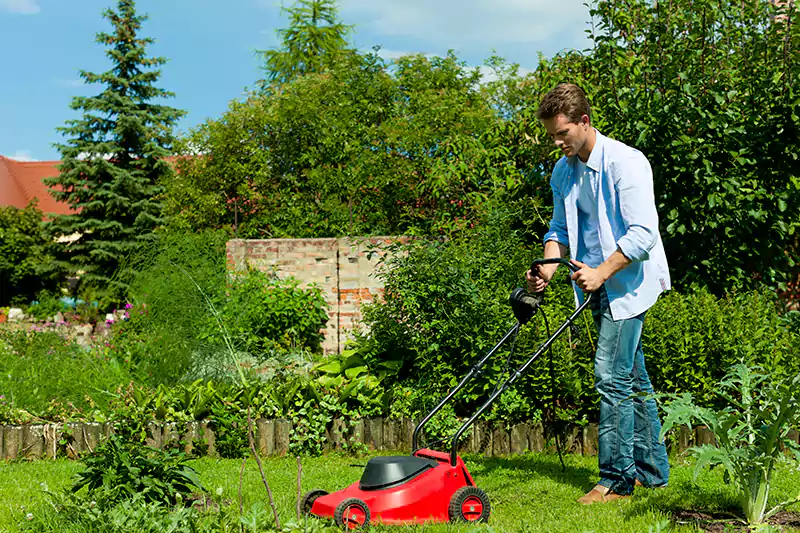
Mowing is yet another crucial aspect of Zeon Zoysia lawn maintenance. But it is important that you do not mow your Zeon Zoysia right away following its installation.
You must allow the turf to root adequately and grow to an acceptable length before doing any mowing.
With the grass ready for mowing, it is advisable to use a sharp blade and avoid cutting a lot of grass blades at once. A useful guideline is that you should never cut more than one-third of the grass blades’ height in a single mowing period.
It is important to note that Zeon Zoysia is normally kept short, but the preferred height may vary from lawn to lawn.
Mowing will make it possible to keep the dense and uniform look that Zeon Zoysia is famous for.
Keep Your Mower Blade Sharp
If a lawnmower blade is blunt, it tends to tear at the grass and does not cut neatly. The torn grass becomes brownish or ragged and may become susceptible to stress.
Your lawn mower blade should be checked periodically and should be sharpened if necessary. This will help your Zeon Zoysia grass lawn stay healthier and look neater.
Additionally, your mower should be appropriate for the cutting height that you wish to keep. This makes lawn maintenance simpler.
Fertilize Carefully
The newly planted sod has nutrients necessary for its growth, but eventually the Zeon Zoysia will require an effective fertilization plan.
Do not over-fertilize the newly planted sod unless you receive instructions from a lawn care specialist or a soil test. Excessive fertilizing will put undue stress on the new grass and cause unnecessary growth.
After the lawn is established, one can perform a soil test to see which nutrients are truly necessary. Fertilizer needs vary depending on the state of the soil, climate, age of the lawn, and the general health of the lawn grass.
Lawn care management can promote healthy color and growth without causing too much maintenance.
Watch for Weeds
A lush and thick Zeon Zoysia lawn can naturally fight a number of weeds. Nevertheless, weeds may still grow, especially while the sod develops.
We do not recommend starting the process of weed elimination right after installation until you are sure of the safety of the selected product for Zeon Zoysia grass.
Instead, monitor the grass and take care of any weed problems accordingly. If you are not sure about what would be the safe way, then you can always talk to a lawn specialist.
Look for Signs of Stress
Check your lawn regularly for any problems that could indicate a problem. Indicators of problems can be:
- Brown/yellow patches
- Wilted lawn
- Dry or curled blades of grass
- Standing water
- Bare spots between the pieces of sod
- Discoloration
- Too much weed growth
- Indicators of bugs or disease
Some discoloration right after laying the sod is due to transplant shock, but do not neglect further problems.
Early detection makes it easier to correct watering, drainage, mowing, or nutrient problems before they become more serious.
Pay Attention to Drainage
Drainage should always be optimal to ensure a healthy condition of the Zeon Zoysia lawn. Though it requires sufficient moisture, constant saturation of the soil might not be conducive to the roots.
After rainfall or watering, observe if the water remains on the surface for a long time. If some areas remain wet after watering, this may indicate a drainage problem.
Adjust Care During Different Seasons
There are seasonal differences in your lawn made up of Zeon Zoysia grass. During its growing seasons, there is a need for more frequent mowing and adequate watering.
As temperatures cool, growth will slow. You need to vary your mowing and watering depending on these changes rather than adhering strictly to the same regimen.
During times of drought and heat, be especially cautious of any signs of moisture stress. Seasonal lawn care will keep your grass healthy and looking good without excess water and maintenance.
Be Patient During the Establishment Period
One of the biggest mistakes people make when planting sod is assuming their lawn will grow instantly. While sod does give an immediate green cover, the roots will require time to develop.
Proper watering, minimal traffic, right mowing, and consistent care for a couple of weeks will do a lot for the future well-being of the lawn.
Thereafter, once the roots take hold, Zeon Zoysia will turn into an appealing turf.
Final Thoughts
Correct care after Zeon Zoysia sod installation is vital for establishing a healthy grass lawn. This begins with ensuring proper watering, protection of the newly installed sod from any weight, and allowing root establishment. With the growth of the grass lawn, mowing, proper fertilizer application, and weeding will follow.
The most crucial point is not to consider newly laid sod as a well-established lawn. In its early days, you will need to take care of certain things, and doing so will help you avoid many common issues.
With proper maintenance and patience, Zeon Zoysia sod will become a wonderful and durable lawn that will serve you with its beauty for many years.
FAQs: Caring for Your Lawn After Zeon Zoysia Sod Installation
How soon should I water Zeon Zoysia sod after its installation?
Water it immediately after laying it down. The soil beneath the sod needs to stay moist right from the start, since the roots haven’t yet developed enough to draw water from deeper in the ground.
How long does it take for Zeon Zoysia sod to root in?
Root establishment typically begins in about two weeks. Gently lift a corner of the sod; if it resists and feels anchored to the soil, rooting has started.
When can I mow my new Zeon Zoysia lawn for the first time?
Wait until the turf has rooted and grown to an appropriate length before mowing. Once you begin, never cut more than one-third of the grass blade’s height in a single session.
Can I walk on newly installed Zeon Zoysia sod?
It’s best to keep foot traffic, pets, and vehicles off the lawn during establishment. If walking on it is unavoidable, avoid doing so when the soil is wet, as such activity can compact the ground and hinder root growth.
Should I fertilize Zeon Zoysia sod right after installation?
No. Newly laid sod already contains the nutrients it needs to start growing. Hold off on fertilizing until after establishment, and ideally base your plan on a soil test or a lawn care specialist’s guidance.
