

Why Is Your Tankless Water Heater Suddenly Not Delivering Hot Water?
In Phoenix, tankless water heaters most often lose hot water in summer because of three factors: incoming supply water already at 85–90°F; mineral scale from 12–18 grains-per-gallon hard water coating the heat exchanger; and ambient temperatures above 104–110°F triggering safety shutdowns.
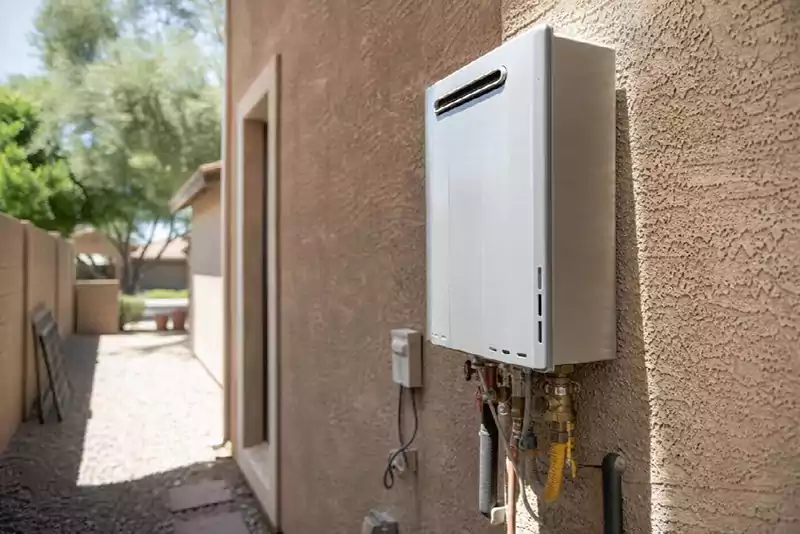
Your tankless water heater worked fine all winter. Now, in the middle of a Phoenix summer, it has stopped delivering hot water. Tankless units face real stress during peak summer demand, and the reasons they fail are not always obvious. Since 2011, Penguin Air, Plumbing & Electrical has served the Phoenix Valley, holds a BBB A+ rating, and dispatches licensed plumbers who diagnose these on-demand systems in more than a dozen East Valley and West Valley cities.
Why Is Your Tankless Water Heater Suddenly Not Delivering Hot Water?
In Phoenix summers, tankless water heaters lose hot water most often due to warm incoming supply temperatures, mineral scale buildup on the heat exchanger, and ambient heat triggering safety shutdowns. Municipal water arriving in Chandler or Gilbert can reach 85–90°F after sitting in sun-baked supply lines, causing the unit to misfire its burner and deliver inconsistent output. Phoenix municipal water averages 12–18 grains per gallon, among the hardest in the country, and warmer summer water accelerates scale deposits. A unit that passed its last flush in March can show serious flow restriction by July.
7 Reasons Your Tankless Water Heater Loses Hot Water in the Phoenix Summer Heat
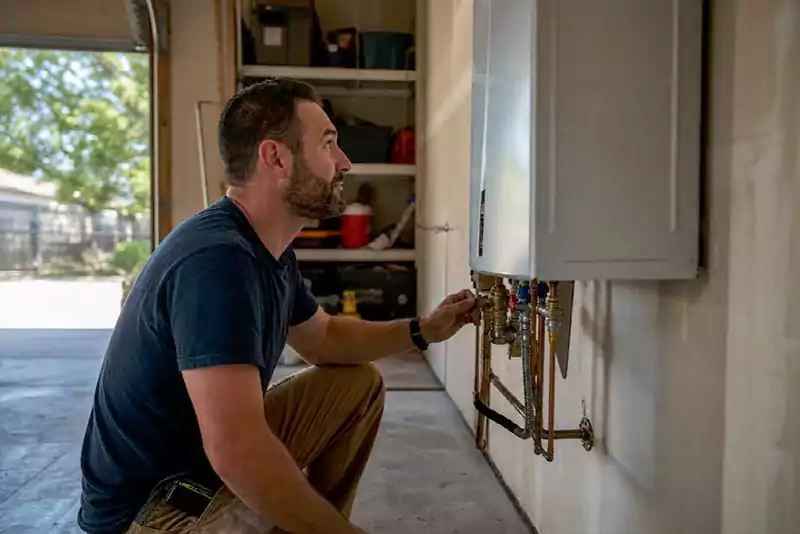
Incoming Water Temperature Is Already Too Warm
In summer, supply line water in the Ahwatukee and Arcadia neighborhoods can arrive at 85–90°F. If the set point is 110°F, the small required rise may trigger a false sensor signal and shut the unit off. Raising the set point slightly provides the unit a clearer target.
Mineral Scale Buildup on the Heat Exchanger
At 12–18 grains per gallon, calcium and magnesium deposits coat heat exchanger walls, acting as insulation. The unit works harder, trips its high-limit safety switch, and cuts off hot water mid-draw. Tankless water heater repair from Penguin Air, Plumbing & Electrical typically starts with a descaling flush and heat exchanger assessment, since scale is the most common cause of summer failures in the Valley.
The Cold Water Sandwich Effect
When the unit shuts off between uses, a slug of unheated water sits trapped in the pipe. The next draw pushes that cold slug out between two bursts of hot water. A small recirculation pump reduces how often this phenomenon occurs.
Flow Rate Falls Below the Activation Threshold
Most tankless units require 0.5–0.75 gallons per minute to activate the burner. Low-flow fixtures, a partially closed valve, or a conservatively set pressure-reducing valve can drop flow below that threshold so the unit never fires. Open supply valves fully and check the PRV setting.
Simultaneous Demand Exceeds the Unit’s Capacity
A unit sized for two bathrooms has a fixed BTU output. Running a dishwasher, washing machine, and two showers at once splits that output four ways, and no outlet reaches the set-point temperature. Stagger appliance use during peak morning hours, or consider adding a second unit.
A Clogged Inlet Filter Screen
A mesh screen on the cold water inlet catches sediment common in older central Phoenix and Arcadia homes. A clogged screen starves the unit of flow and mimics a pressure problem. Shut off the cold supply, unscrew the inlet fitting, rinse the screen, and reinstall. Do this procedure before any other troubleshooting step.
Ambient Heat Triggering an Error Code Shutdown
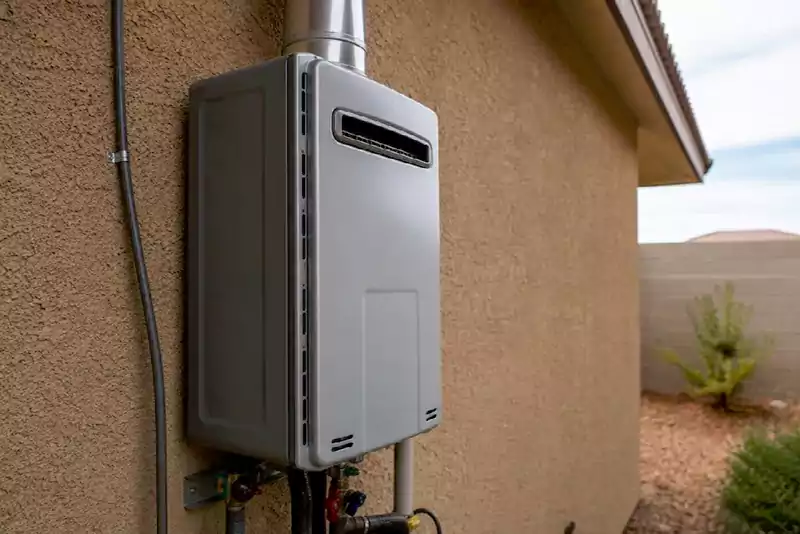
Many tankless units have a maximum ambient operating spec of 104–110°F. Units in garages, attics, or on south-facing walls in Gilbert and Mesa can exceed that limit on a July afternoon. Common error codes include Navien E003, Rinnai LC, and Rheem P1. Improving airflow around the unit can prevent repeated shutdowns.
When to Call a Professional Instead of Troubleshooting Further
Error Codes That Won’t Clear
A code that returns after a full power cycle points to a hardware or sensor fault requiring manufacturer-specific diagnostic tools most homeowners do not own.
Rumbling or Popping Sounds
Scale deposits vibrating against heat exchanger walls can crack the exchanger over time. Units in Scottsdale or Chandler that have never been descaled are especially at risk.
Pressure Drops at Multiple Fixtures
Simultaneous pressure drops at the kitchen sink, shower, and bathroom faucet point to a flow restriction deeper in the system or a failing pressure-relief valve, both of which require professional diagnosis.
Units Over 10 Years Old With No Descaling
Heavy scale in an older unit may be too severe for a DIY flush. A professional can assess whether repair or replacement makes more financial sense.
If You Smell Gas, Stop Everything
A gas smell near the unit is a safety emergency. Leave the house immediately, do not flip any switches, and call the gas company before contacting a licensed contractor.
When Tankless Water Heater Problems in Phoenix Require a Licensed Plumber
Tankless systems reward local experience. A technician who understands how Valley water chemistry, extreme ambient temperatures, and warm supply lines interact can pinpoint the real cause faster than a general troubleshooter. Licensed plumbers who descale and diagnose these units during the summer develop the pattern recognition needed to tell a false shutdown apart from a scaled exchanger or an undersized system. Technicians use on-board diagnostic equipment to service Navien, Rinnai, Rheem, Noritz, and other major brands and interpret manufacturer error codes immediately.
Frequently Asked Questions
How Long Does a Tankless Water Heater Typically Last in Phoenix?
Most tankless water heaters last 15–20 years under normal conditions, but Phoenix hard water can shorten that lifespan without regular descaling. Units that go 5 or more years without maintenance often show heat exchanger damage well before the 10-year mark. Annual flushing is recommended for any home on Phoenix municipal water.
Is It Safe to Keep Using a Tankless Heater While It Displays an Error Code?
In most cases the unit should not be used until the code is diagnosed, especially if it relates to overheating, venting, or gas pressure. Continuing to run a unit with an active fault can cause permanent heat exchanger damage or, in gas models, a safety hazard.
Can I Descale My Tankless Water Heater Myself, or Do I Need a Plumber?
DIY descaling kits can work on accessible units if the homeowner is comfortable isolating gas or electricity and the water supply. However, Phoenix water is particularly hard, and heavy deposits often require professional-grade equipment and longer flush cycles. If the unit has not been serviced in several years, a professional flush ensures the heat exchanger is fully cleared without risking damage to valves or connections.
Will a Larger Tankless Unit Solve My Hot Water Problems, or Is Repair a Better Option?
If the current unit is under 10 years old and was properly sized at installation, repair and descaling almost always resolve the issue for a fraction of the replacement cost. Upgrading makes sense when household demand has grown or when the unit has repeated failures. A load calculation can confirm whether the current unit is undersized before any upgrade is recommended.
How Much Does a Typical Tankless Water Heater Repair Cost in Phoenix?
A professional descaling service generally runs $100–$200, while replacing a flow sensor or igniter can range from $150 to $400, including labor. Major component failures such as a cracked heat exchanger can approach or exceed the cost of a new unit, which is why early maintenance saves money.
Does Phoenix Hard Water Void My Tankless Water Heater Warranty?
Many manufacturers require documented annual maintenance to keep the warranty valid, and some specifically exclude scale damage caused by skipped descaling. The owner’s manual or manufacturer’s website will show exact maintenance intervals. Keeping receipts from professional service visits provides documentation for any warranty claim.
What Should I Expect During a Tankless Water Heater Service Call?
A standard visit includes an error code diagnostic, inlet filter screen inspection, flow and pressure check, and a descaling flush if needed, typically completed within one to two hours. The technician also inspects venting on gas models and electrical connections on electric units.
