

To make an entrance useful without filling the hallway, measure the wall and the walking route first, including the front door’s swing. Choose a console table whose depth suits the space, give its top just a few clear jobs such as a key tray and a dish, and keep the passage to the next room open.
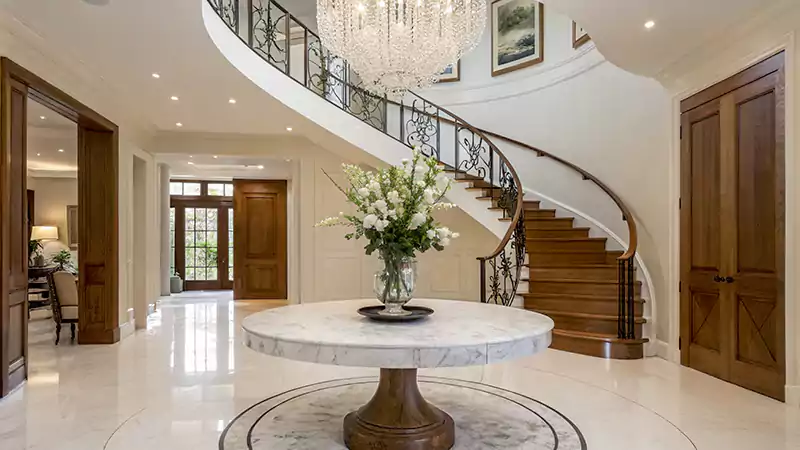
The first surface inside a home collects whatever arrives with you: keys, a bag, the post, and occasionally a shopping receipt that never quite gets thrown away. Without a clear place for these things, they spread across the nearest chair or dining table. A modest entrance arrangement can prevent much of that everyday clutter.
Measure Your Hallway Before Adding Furniture
Start by watching how the entrance is used. Notice where someone stands to close the front door, where shoes come off, and which route leads towards the kitchen. These movements are easy to overlook in an empty hallway. Furniture should support them, especially when more than one person comes home at the same time.
Measure the wall and the passage in front of it. Include the front door’s full swing and any neighboring cupboard doors. A narrow piece may look suitable against a wall, but it can still become an obstacle if a handle projects into the route. Mark the footprint on the floor before deciding that the space is available.
Choose a Console Table for Everyday Storage
A console table can provide a useful landing place without the bulk of a deep cabinet. Choose its depth according to the hallway rather than the objects you hope to display. If drawers are included, ensure that they open comfortably and that there is enough room to stand in front while using them.
Give the top a small number of clear jobs. A tray can collect keys, while a shallow dish may hold loose change. If letters regularly build up, decide where they go next rather than treating the entrance as permanent storage. A surface is easier to keep tidy when there is still some empty space on it.
Also consider what happens below the tabletop. An open shelf can hold a basket, but a large basket may catch feet or make cleaning awkward. If shoes are stored nearby, leave enough access to remove them without moving the furniture. Check any necessary wall anchoring against the manufacturer’s instructions and the type of wall.
Connect the Entrance to Your Living Room
In an entrance that opens directly into the living room, avoid making every surface serve as a drop zone. Keep arrival items near the door and give the seating area a different purpose. This small distinction helps the room feel settled even when the hallway has to work hard at the beginning and end of the day.
Well-placed side tables can then serve the seats rather than the entrance. Put a table where someone can reach a glass or a book without leaning across another person. Compare its height with the sofa or chair arm, and ensure that the base does not occupy the space needed for comfortable feet.
Check Lighting and Keep Walkways Clear
Lighting should follow these uses. An entrance lamp needs a nearby socket and a safe cable route. A lamp beside a seat needs to illuminate the person reading without shining straight into someone else’s eyes. Avoid choosing a larger surface simply to accommodate a lamp that is too big for the location.
Once everything is in place, walk through with a bag in each hand. Open the door fully, reach for the keys, and move towards the next room. Adjust anything that feels inconvenient. A useful entrance does not need many objects; it needs a few well-chosen pieces that make coming home easier and leave the route through the house clear.
FAQs: How to Make Your Entrance Useful Without Crowding the Hallway
How do I know if a console table will fit my hallway?
Measure the wall and the walking space in front of it, including the full swing of the front door and any nearby cupboard doors. Then mark the table’s footprint on the floor with tape. If you can still pass comfortably with a bag in hand, the piece is likely to work.
What should I keep on an entrance table to avoid clutter?
Give the surface a few clear jobs, such as a tray for keys and a shallow dish for loose change. Decide where letters go next instead of letting them stay there. Leaving some empty space on top makes the table much easier to keep tidy.
How can I use the space under a console table without making it messy?
An open shelf can hold a basket, but choose a size that will not catch feet or make cleaning awkward. If shoes are stored nearby, ensure you can reach them without moving the furniture. Check wall anchoring against the manufacturer’s instructions and your wall type.
How do I stop my entrance clutter from spreading into the living room?
Keep arrival items such as keys, bags, and post-clothes close to the door, and give the seating area a different purpose. Side tables can then serve the seats, holding a glass or a book instead of everyday drop-off items. This small distinction helps the room feel settled.
What is the best way to light a small entrance safely?
Place an entrance lamp near a socket and plan a safe cable route away from walking areas. Choose a lamp that suits the size of the surface rather than one that overwhelms it. Once it is set up, walk through with a bag in each hand to check that everything feels easy to use.
