

A professional perspective on wall preparation, material behavior, installation techniques, and the difference between natural seam visibility and actual defects.
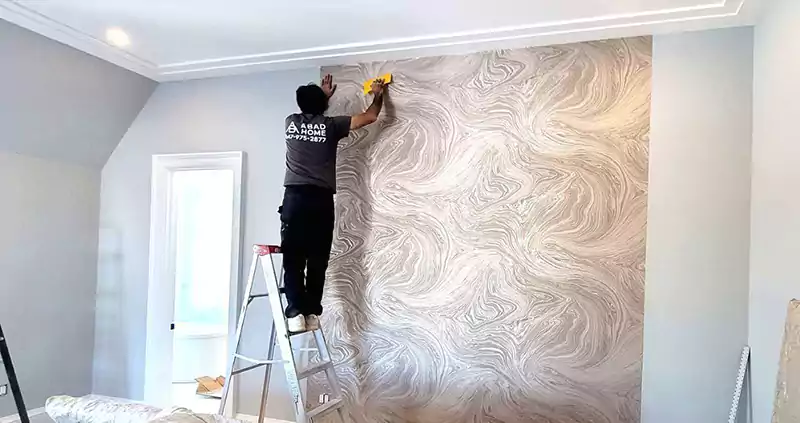
Wallpaper can completely change a room. Grasscloth, textured wallcoverings, bold murals, and premium designer collections: today’s materials allow you to achieve effects that paint simply can’t.
Yet one small detail can decide whether the finished job looks exceptional or disappointing, and that’s the seams.
A thin line between two wallpaper panels might seem trivial, but figuring out why it shows up means looking at wall preparation, material construction, adhesive behavior, lighting, and installation technique. And here’s the part people often miss: not every visible seam is a defect.
Experienced installers know a good finish takes far more than lining up the pattern and smoothing panels onto the wall.
Why Do Wallpaper Seams Become Visible?
Seams become noticeable when the edges of neighboring panels differ in position, color, texture, reflectivity, or adhesion.
The most common culprits are:
- Walls that are uneven or poorly prepared.
- Wallpaper that changes dimension as it dries.
- Adhesive that’s wrong for the product or applied incorrectly.
- Uneven pressure along the panel edges.
- White backing showing beneath dark printed wallpaper.
- Natural variation in grasscloth and textile wallcoverings.
- Strong directional light that exaggerates surface flaws.
Not all of these point to poor workmanship. A properly installed natural wallcovering, for example, can show clearly defined panel edges simply because of how the material is made.
An ordinary non-woven wallpaper with lifting edges, wide gaps, or overlapping panels is a different story. That likely needs correcting. Knowing which situation you’re in matters before you try to repair anything.
Wall Preparation Matters More Than Most Homeowners Realize
One of the biggest myths about wallpaper is that a wall that is ready for paint is also automatically ready for wallpaper. That assumption often ends in disappointment.
Small drywall ridges, uneven joint compound, textured paint, and patchy surface absorption all become far more obvious once wallpaper goes up.
Seams are especially touchy, since two separate edges land in the same spot. A tiny bump or dip in the surface is enough to throw off how they meet.
A pro will usually look over the substrate first, fix whatever’s off, skim coat and sand if needed, and finish with a primer made for wallcoverings.
Get that right, and the adhesive behaves the same all across the wall. The wallcovering also has something solid to sit on.
Professional insight: Wallpaper installation works as a system. Substrate, primer, adhesive, wallcovering, and the conditions in the room all play a part, and if one of them is weak, the whole job can look off.
Not All Wallpaper Materials Behave the Same Way
Wallpaper isn’t one standardized product. Different wallcoverings have completely unique physical characteristics, installation requirements, and aesthetic expectations.
Non-Woven Wallpaper
Quality non-woven wallpapers are generally dimensionally stable and can give clean, consistent seams when installed according to the manufacturer’s instructions. They’re popular in homes because they’re easy to handle and flexible in design.
Still, a dark printed design on a light-colored backing can expose a narrow contrasting edge.
Natural Grasscloth
Grasscloth is a different challenge altogether. Natural fibers vary in thickness, direction, color, and texture, so neighboring panels can look noticeably different even with a professional install.
That variation is often part of what the product is meant to be, not an installation defect. Trying to make natural grasscloth look completely seamless may not be realistic.
Traditional Paper Wallcoverings
Some traditional wallpapers expand when they pick up moisture and contract as they dry.
Installing them well means managing the adhesive, booking time where specified, panel handling, and drying conditions carefully. Handle them poorly and you can end up with gaps or raised seams.
Commercial Vinyl Wallcoverings
Commercial vinyl materials, including Type II wallcoverings, may call for specific primers, adhesives, seam-cutting procedures, and installation techniques.
Using residential wallpaper methods on commercial products without distinction can compromise the finished look.
The important lesson: Good installation depends on understanding the individual material, not applying one technique to every product.
Can Visible Wallpaper Seams Actually Be Fixed?
Sometimes, but the right fix depends entirely on the cause.
A lifted seam caused by localized adhesive failure may be repairable, as long as the material is intact and the substrate is sound.
A small gap from shrinkage is a different problem. More adhesive won’t bring back the missing width of material.
Visible white edges along dark wallpaper may need a manufacturer-approved edge treatment or another solution that’s been carefully evaluated.
And natural shading differences between grasscloth panels generally can’t be removed with conventional seam repair.
The technical resource on fixing wallpaper seams by Enjoy The Wall looks at how material choice, surface preparation, and realistic expectations affect the final appearance of wallpaper seams.
Before trying any repair, homeowners should work out whether they’re dealing with adhesion failure, material movement, surface irregularities, or a normal characteristic of the wallcovering they chose. Household glue, too much moisture, or unsuitable cleaning products can do more damage than the original problem.
What Professional Installers Look for Before Installation
Experienced installers look at far more than the pattern. Before the first panel goes up, they’re already studying the room and thinking about what could go wrong.
Here’s what’s on their radar:
Surface condition: Is the wall smooth, stable, and dry? Has it been primed properly?
Material construction: Are there special handling instructions? Is the paper sensitive to dimensional change, or are its seams naturally visible?
Lighting: Could daylight, wall sconces, or grazing light make the panel boundaries stand out?
Pattern layout: Where does the first panel start, and how do the seams fall around architectural features?
Adhesive compatibility: Does the adhesive actually match what the manufacturer calls for?
Environmental conditions: Are the temperature, humidity, and drying conditions right?
With premium wallpaper, the adhesive matters even more. Replacement rolls can be pricey, and mistakes are tough to undo once the paper is up.
Hands-On Experience With Wallpaper Installations in Colorado
Enjoy The Wall has worked on residential and commercial interiors all over Colorado, so the team has dealt with plenty of different wallcoverings and some tricky wall conditions.
The company’s work covers non-woven wallpaper, natural grasscloth, vinyl wallcoverings, custom murals, designer materials, and decorative wall finishes.
Kris A., co-founder, lead installer, and design consultant at Enjoy The Wall, brings technical installation expertise together with an understanding of interior design requirements. Her professional affiliations include the Wallcovering Installers Association (WIA) and Interior Design Society (IDS).
One thing that comes up repeatedly in Colorado homes is how dry indoor air and strong natural light affect installation and visual expectations. Low indoor humidity can change how adhesive works, and sunlight coming in at a shallow angle can show subtle surface and seam irregularities that nearly vanish under diffused light.
Instead of treating every visible seam as the same problem, the installation team weighs the chosen material, wall condition, environmental factors, and manufacturer specifications.
For homeowners, designers, and contractors taking on more technically demanding projects, bringing in experienced wallpaper installation experts in Denver can help pinpoint material limitations and preparation requirements before costly problems show up.
The goal isn’t a promise that every wallpaper will look completely seamless. It’s the best result that suits the material, with expectations that match how it’s physically made.
Where AI and Digital Tools Fit Into Wallpaper Planning
More homeowners and designers are turning to digital visualization and AI when they’re choosing wallpaper.
AI-assisted design tools are handy for previewing patterns, trying out color combinations, and seeing how a wallcovering might sit alongside furniture, lighting, and the architecture.
A photorealistic render still isn’t the real thing, though. It can’t capture every physical property of an actual wallcovering. AI-generated rooms often show a pattern running perfectly unbroken, with no thought for real roll widths, panel joints, natural variation in the material, or installation tolerances.
That’s the split between visual design accuracy and physical installation feasibility.
Technology is effective for getting a design idea across. But someone experienced still has to check the material specifications, substrate requirements, pattern placement, and what the finish can realistically look like. On complex wallcovering jobs, the best approach is digital planning paired with hands-on expertise.
Avoiding Wallpaper Seam Problems Before They Start
It’s usually easier to prevent visible seam problems than to fix them later.
If you’re a homeowner or an interior designer, a few precautions go a long way:
- Pick wallpaper for what the material actually is, not just how it looks in photos.
- Check samples in the lighting of the room they’re meant for.
- Stick to the manufacturer’s substrate preparation and installation requirements.
- Ask about natural panel variation before you buy grasscloth or other specialty materials.
- Check the wall’s condition before you book the installation.
- Go with qualified installers who’ve worked with that particular product.
- Agree on realistic expectations for seam visibility before work starts.
The point isn’t just getting paper onto a wall. A high-quality job is durable and visually consistent, and it respects both the material and the space around it.
Wallpaper Seam FAQs
Does a visible seam always mean the installation was poorly done?
No. Natural grasscloth and some textured or coated wallcoverings have visible panel boundaries by nature. Lifting, excessive gaps, or misaligned edges are another matter, and they can signal installation or substrate trouble.
Will seams fade away once the wallpaper dries?
A little change in appearance is possible during the manufacturer’s specified drying period. Don’t count on significant gaps, damaged edges, or badly aligned panels to sort themselves out, though.
Why do dark wallpapers sometimes show white lines?
Dark wallpaper printed on a light-colored substrate can show a narrow contrasting edge between panels, even when the pattern alignment is accurate.
Will pricey wallpaper give you invisible seams?
No. Premium wallpaper can have natural fibers, specialty coatings, hand-finished surfaces, or distinctive textures, and those very things can make panel boundaries easier to spot.
Can AI tell if wallpaper was installed correctly?
AI image analysis may help spot visible irregularities in photographs, but it can’t reliably work out their causes without information about the material, substrate, adhesive, installation conditions, and manufacturer requirements. A physical inspection still matters.
Final Thoughts: Great Wallpaper Installation Begins Before the First Panel
Wallpaper seams reveal something important about interior finishing: visual quality depends on choices made long before installation begins.
Material selection, wall preparation, adhesive compatibility, lighting, installer experience, and communication all shape the result.
Some seam problems are preventable. Others can be repaired. And some are simply natural characteristics of beautiful, carefully made wallcoverings.
Once you know the difference, you can make better decisions, skip repairs you don’t need, and appreciate what makes the materials you picked unique.
The best wallpaper jobs rest on knowing the material, preparing the wall properly, and keeping expectations realistic. They don’t assume every material should look the same once it’s installed.
