

The 5 Best Hardwood Floors for Modern Homes:
- White oak – most versatile, neutral tones, accepts any stain
- Hard maple – smooth, bright, ideal for minimalist spaces
- Black walnut – rich, dark contrast; softer, shows wear
- Hickory – hardest option, bold natural variation
- Ash – light color with bold linear grain, hides wear well
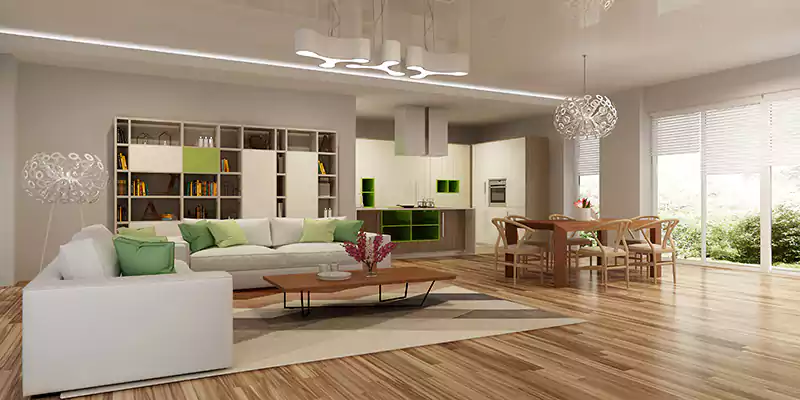
Hardwood flooring fits naturally into modern homes, but choosing the right wood involves more than selecting a light or dark color. The species influences the floor’s grain, hardness, color variation, and how well it handles everyday wear.
The finish and plank style matter too. Wide boards, natural colors, subtle textures, and matte or satin finishes generally create a cleaner, more contemporary appearance than narrow strips with a glossy coating.
Some hardwoods work especially well with this style. The following five options offer different combinations of durability, character, and modern appeal.
White oak
White oak is one of the most versatile choices for a modern home. Its natural color generally ranges from light beige and tan to soft medium brown. It has visible grain, but it is usually less red and less visually busy than traditional red oak flooring.
This neutral appearance allows white oak to work with several modern design styles. Natural or lightly stained white oak complements Scandinavian, minimalist, and coastal interiors. Warmer honey or medium-brown stains work well in contemporary homes that use earth tones, stone, and natural fabrics.
White oak also accepts many stain colors well. It can be finished in natural beige, warm brown, muted gray, or greige without fighting strong red or pink undertones.
For a cleaner appearance, consider rift-sawn white oak. Its straighter grain creates long, consistent lines that feel especially appropriate in minimalist rooms. Quarter-sawn white oak has more visible ray patterns and character, while plain-sawn boards show the familiar cathedral-shaped grain.
White oak is also a practical flooring material. It is sufficiently durable enough for active households and can handle normal residential traffic when properly finished and maintained. It works particularly well in wide-plank engineered construction, which provides greater dimensional stability than expansive solid boards.
Best for: Homeowners who want a versatile, natural-looking floor that can work with changing furniture, wall colors, and design styles.
Hard maple
Hard maple has a smooth, understated appearance. Its color typically ranges from creamy white to pale tan, sometimes with subtle reddish or golden tones. The grain is tighter and less pronounced than oak, giving the floor a calmer and more uniform surface.
That clean appearance makes maple a strong option for modern, minimalist, and Scandinavian-inspired homes. It reflects natural light well and can make a smaller room feel brighter and less visually crowded.
Maple is also one of the harder domestic flooring species. It can be a practical choice for living rooms, hallways, and other areas that receive regular foot traffic.
However, maple requires careful finishing. Its dense grain does not always absorb traditional stain evenly. Dark stains may produce blotchy or inconsistent areas if the wood is not prepared correctly. For this reason, maple often looks best with a clear protective finish, a light stain, or a professionally applied factory finish.
The grade of the flooring also makes a difference. Select-grade maple provides a more consistent color and minimal markings, which works well in a highly controlled modern interior. A natural grade contains more mineral streaks and color variation, giving the floor a less formal appearance.
Best for: Bright, uncluttered interiors where subtle grain and a smooth, consistent floor are more important than dramatic wood character.
Black walnut
Black walnut brings a darker and more luxurious appearance to modern interiors. Its natural colors can include medium brown, deep chocolate, and occasional purplish tones. Lighter sapwood may appear beside the darker heartwood, creating natural variation between boards.
Walnut works particularly well in rooms with large windows, light-colored walls, and simple furniture. The darker floor creates contrast without requiring a heavy or overly formal design. It also pairs well with black metal, warm white paint, natural stone, and modern walnut cabinetry.
Unlike oak, walnut does not need a dark stain to create depth. A clear or lightly tinted finish usually allows its natural color and grain to remain visible.
One important consideration is hardness. Walnut is softer than white oak, hard maple, and hickory. In homes with large dogs, active children, or frequently moved furniture, walnut can show dents and scratches more easily.
This does not automatically make walnut a poor flooring choice. Some homeowners appreciate the patina and small signs of wear that develop over time. Using a matte finish can also make minor scratches less noticeable than a reflective gloss finish.
Walnut tends to work best when its natural character is part of the design rather than something the homeowner expects to remain completely untouched.
Best for: Modern rooms that need warmth, contrast, and a richer natural color.
Hickory
Hickory is one of the hardest commonly available domestic hardwood flooring species. It is well suited to active households, but its appearance is very different from the quiet uniformity of maple.
Natural hickory can contain cream, tan, golden brown, and darker brown within the same floor. It usually has noticeable grain, knots, and color variation. In a traditional finish, these characteristics can feel rustic. With the right selection and treatment, however, hickory can also look surprisingly modern.
Wide planks help display the grain without creating too many seams. A matte finish softens the contrast, while a light natural or warm neutral stain can bring the different board colors together. Selecting a cleaner grade with fewer knots will create a more controlled appearance.
Hickory is a good choice when a modern home needs more personality. It can balance plain white walls, flat-panel cabinetry, and simple furniture by adding natural variation underfoot.
Homeowners who want a completely uniform floor may find hickory too active. Samples should be evaluated as a group rather than one board at a time because the finished installation can contain substantial variation.
Best for: Busy households that want high durability and are comfortable with noticeable natural character.
Ash
Ash offers a light color similar to some oak flooring, but its grain tends to be bolder and more linear. The sapwood is usually creamy white, while the heartwood can range from light tan to deeper brown.
Its long grain patterns can reinforce the clean lines found in modern architecture. Ash works well in open floor plans, especially when the boards run continuously through the living, dining, and kitchen areas.
The floor can be kept pale for a Scandinavian-inspired interior or finished in a warmer natural tone for a softer contemporary look. Rift-sawn or carefully selected boards provide a more consistent linear pattern, while plain-sawn ash creates stronger grain movement.
Ash is reasonably durable for residential flooring, although the exact hardness can vary by species and product. It generally provides a useful balance between strength and visual warmth.
Because ash has a more pronounced grain than maple, it hides some minor wear and everyday marks more effectively. At the same time, its light coloring keeps the room from feeling dark or enclosed.
Availability can vary by region and manufacturer, so homeowners should confirm that enough matching material can be ordered for the entire project. Keeping an extra box after installation is helpful for future board repairs.
Best for: Light modern interiors that need more visible grain than maple but a different appearance from oak.
FAQs: Best Hardwood Flooring Types for a Modern Home
Should you choose solid or engineered hardwood?
White oak, maple, walnut, hickory, and ash may be available as either solid or engineered flooring. Both can contain genuine hardwood at the visible surface, but their construction is different.
Solid hardwood is made from one piece of wood. Depending on its thickness and condition, it can usually be sanded and refinished multiple times.
Engineered hardwood has a real wood wear layer over a layered core. Its construction provides additional stability, making it a common choice for wide planks, concrete subfloors, and areas where indoor humidity changes throughout the year.
For a modern floor with boards seven inches wide or wider, engineered construction may be the more practical option. However, check the thickness of the real wood wear layer. A thicker wear layer provides more opportunities for future refinishing than a thin veneer.
Can the finish change the entire appearance?
The wood species is only part of the decision. The same white oak floor can look traditional, rustic, or contemporary depending on its stain, board width, grade, and finish.
Modern interiors generally benefit from finishes that allow the wood to look natural. Matte and satin coatings reflect less light than high-gloss finishes and tend to make the floor feel softer and less formal. They can also make dust, footprints, and small surface scratches less noticeable.
Smooth boards create a refined appearance, while a light wire-brushed texture adds depth and can help disguise everyday wear. Heavy distressing and deep hand scraping usually produce a more rustic style.
Consider the room as a whole. Flooring should coordinate with cabinetry, doors, stairs, and furniture without matching every wood element exactly. A room often feels more natural when the materials are related but not identical.
Which hardwood is best for your modern home?
White oak is the strongest all-around choice because it combines durability, neutral coloring, and design flexibility. Maple provides a cleaner and more uniform look, while walnut creates darker contrast and warmth. Hickory offers greater hardness and natural variation. Ash falls between these styles with its light color and bold linear grain.
Before making a final decision, bring several full-size samples into the home. View them during the day and at night, then place them beside the cabinets, walls, and furniture. Small showroom samples can look completely unique once the flooring covers an entire room.
The best hardwood floor is not simply the most popular species. It is the one that complements the home, handles the household’s level of activity, and still feels appropriate after short-lived design trends have passed.
